
Rising Food Prices Squeeze Kenyan Households as Weather Disrupts Supply
Higher food prices, transport costs and disrupted supplies are forcing some Kenyan households to reduce groceries and meals, while food vendors report falling incomes. Expected El Niño rains could...

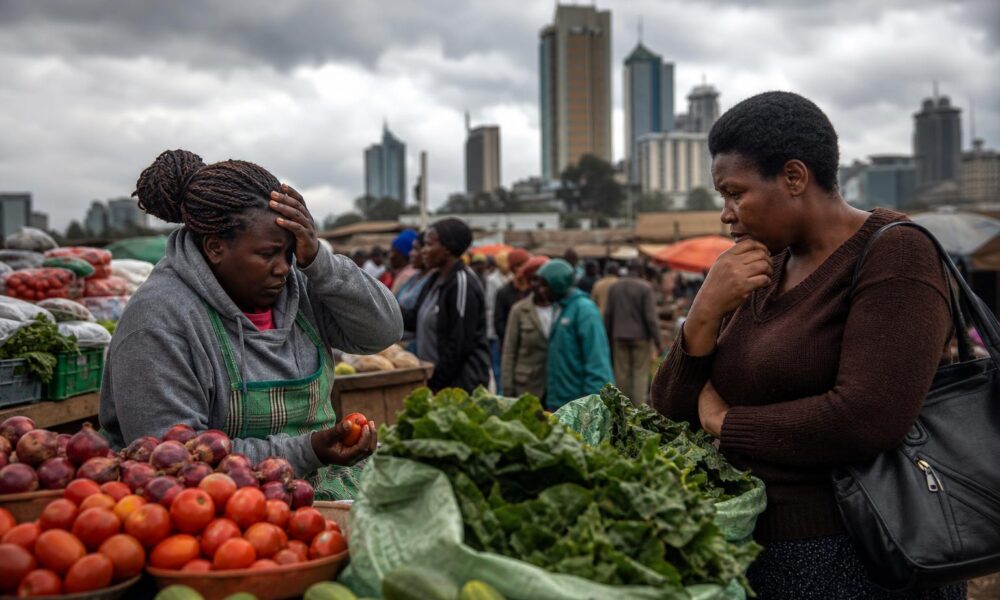
Rising food prices are putting growing pressure on households and food vendors in Nairobi and other parts of Kenya, as weather disruptions, transport costs and supply-chain problems reduce the availability of basic items.
Families are responding by buying less food and cutting back on meals. Some households have reduced their meals to once a day, according to the report.
Jackline Aywa, a mother of three, said she has been leaving a shopping centre in Nairobi with fewer items than before.
“The cost of food has really gone up, starting with flour, maize and vegetables. Everything is really expensive,” Aywa said.
She also described how her household has reduced its meals. “If you take black tea in the morning, it’s enough. You skip lunch and come back to have your supper. That’s all,” she said.
Weather and distribution pressures
Market vendors have identified transport expenses and disruptions in the supply chain as factors contributing to the higher costs. Rising distribution costs linked to global events have added to the pressure on food supplies.
Food shortages have also affected the incomes of people selling food. David, a food vendor, said sellers were struggling as conditions became more difficult.
“We are persevering and if we get a little money, we are grateful, but things are really hard right now,” he said.
Climate scientists have pointed to changing weather patterns as a broader cause of the supply problems. A dry period before the expected rains has affected agricultural yields in some farming regions. Reduced pasture has also been linked to a shortage of milk.
Lower harvests mean less food reaching consumers and contribute to higher prices. Kenya’s agriculture is largely dependent on rainfall, leaving production vulnerable when weather conditions change.
Jackson Koimburi, a climate change analyst, said the reliance on rain-fed agriculture exposed the country to the effects of drought and shifting weather patterns.
“Most of our agriculture is rain-fed. That means that it depends on the mercies of nature and rainfall,” Koimburi said. He added that when weather patterns change and drought brings a lack of water, agricultural production is affected.
Uncertain outlook for coming rains
Weather scientists expect heavy rains associated with the El Niño phenomenon to begin this month. The rainfall could improve supplies and help stabilize food prices, but families also fear that unusually heavy downpours could damage crops and push prices higher.
The impact of the rains remains uncertain. Their effect will depend on whether they support production or destroy produce in farming areas.
Food costs are also likely to remain an issue in Kenya’s political debate. The country is expected to hold an election next year, and voters may seek clear plans from candidates on how to reduce the impact of shortages and protect household food budgets.





No Comment! Be the first one.