
Investigation alleges painful feather removal at South African ostrich farms
An investigation by World Animal Protection and Collective Fashion Justice alleges that workers at South African ostrich farms removed feathers from living birds using painful methods for supply to...

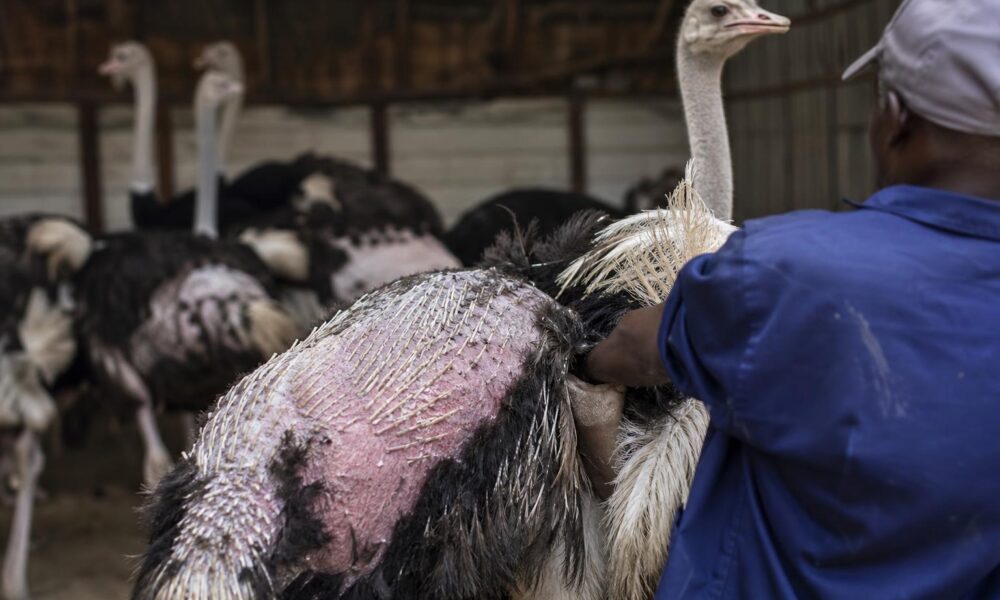
An investigation by World Animal Protection and Collective Fashion Justice has raised concerns about the treatment of ostriches on South African farms supplying feathers to the fashion industry.
Table Of Content
In a report titled Blood Feathers, the organisations said workers cornered ostriches, covered their heads with bags and cut or pulled out their feathers without pain relief. World Animal Protection also said some farms used mechanical pluckers to remove feathers from living birds.
Investigation reports repeated feather removal
According to World Animal Protection, some farms cut feathers above the bloodline before pulling them from the birds’ skin with pliers. The organisation said the procedure was repeated on some ostriches every six months.
The investigation also reported seeing injured birds, including ostriches that appeared unable to stand. It said some birds had wounds caused by pecking at one another’s eyes and feathers.
World Animal Protection said the findings challenge claims that ostrich feathers used in fashion are gathered during the birds’ natural moulting process. The organisation described the removal of feathers above the bloodline as extremely distressing for the ostriches involved.
“Feathers are the new fur –- it’s the same cruelty just with a different animal,” Olivia Charlton, a campaign manager at World Animal Protection, said.
Charlton also said: “There’s nothing natural about pulling out a bird’s feathers with pliers. It’s time fashion took its head out of the sand.”
Brands named in supply-chain findings
The investigation said South African farms and feather-processing facilities supplied feathers to YSL, Louis Vuitton, Dior, Chanel and Shein.
Emma Hakansson, founding director of Collective Fashion Justice, called it “utterly inconsistent” for fashion brands to reject fur while using ostrich feathers, which she said come from a slaughtering industry marked by suffering.
Hakansson said alternatives were available, including fabric-manipulation techniques and biomaterials capable of producing the lightness, volume and movement associated with feathers.
The material reviewed for the report does not include responses from the named brands, ostrich farms, feather processors or industry representatives. It also does not establish that every ostrich farm in South Africa uses the methods described in the investigation.
Major global ostrich producer
South Africa accounts for about 75 percent of the global ostrich market. Its ostrich industry produces meat, leather and feathers.
World Animal Protection, citing data obtained from the South African government, said more than 150 tonnes of ostrich feathers were exported from South Africa during the 2024-25 season. The organisation also reported that about 150,000 ostriches were slaughtered for the feather, meat and skin trades during that period.
The term “blood feathers” refers to feathers cut above the bloodline, where blood is often found in the shaft. South Africa has a long history in the ostrich-feather trade. In the early 1900s, ostrich feathers ranked as the country’s fourth-largest export, after gold, diamonds and wool, while demand from the fashion industry helped fuel a boom in the trade.






No Comment! Be the first one.