
Three Scientists Win Nobel Prize in Medicine for Light-Based Nerve Cell Research
Karl Deisseroth, Peter Hegemann and Georg Nagel have received the Nobel Prize in medicine for research that enables scientists to control and study nerve cells with light.

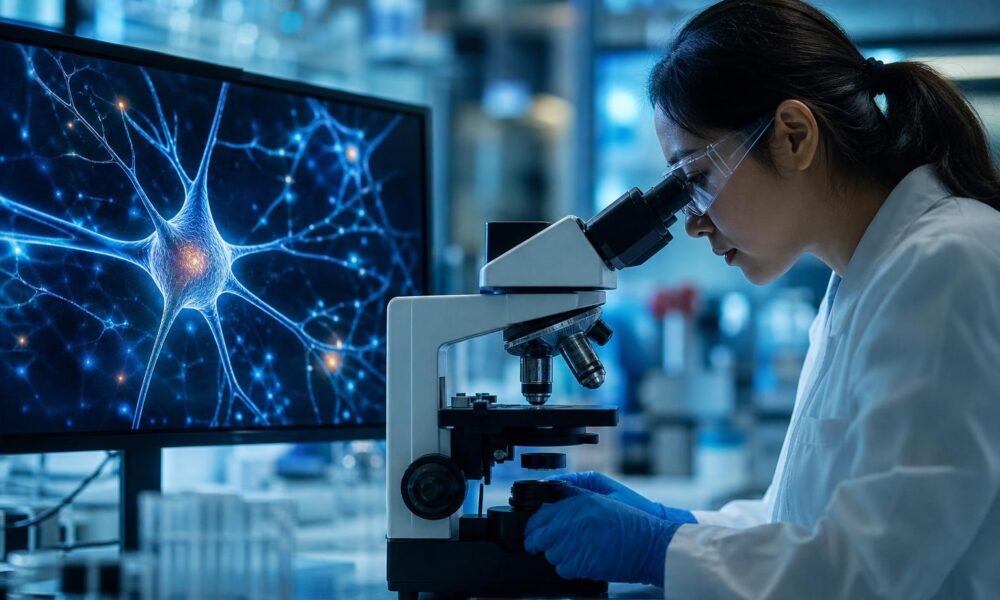
Three scientists have been awarded the Nobel Prize in medicine for research that has made it possible to control and examine nerve cells using light.
Table Of Content
The winners are Karl Deisseroth, Peter Hegemann and Georg Nagel. Their work on light-gated ion channels and optogenetics has helped scientists understand how individual nerve cells can be switched on and off.
Research into nerve cell activity
Optogenetics and light-gated ion channels provide techniques for studying nerve cells with a high degree of control. The Nobel committee said the approach is being used in laboratories around the world to investigate the brain.
The research has also helped explain how nerve cells respond to signals and how their activity can be regulated. The recognised work links the behaviour of cells to the use of light as an experimental tool.
Scientists based in three institutions
Deisseroth is based at Stanford University in California in the United States. Hegemann works at Humboldt University in Berlin, Germany, while Nagel is at the University of Würzburg.
The medicine prize was announced at the Karolinska Institute in Stockholm. Thomas Perlmann, secretary of the medicine committee, said he managed to reach all three winners by phone on Monday.
The three laureates will share prize money of 12 million Swedish kronor, described as being worth around 1.2 million US dollars.
Nobel announcements continue
Last year’s medicine prize was awarded to three scientists researching the immune system. This year’s remaining Nobel announcements were scheduled to include physics on Tuesday, chemistry on Wednesday and literature on Thursday.
The peace prize was scheduled for Friday, followed by the Nobel Memorial Prize in Economic Sciences on Oct. 12.






No Comment! Be the first one.