
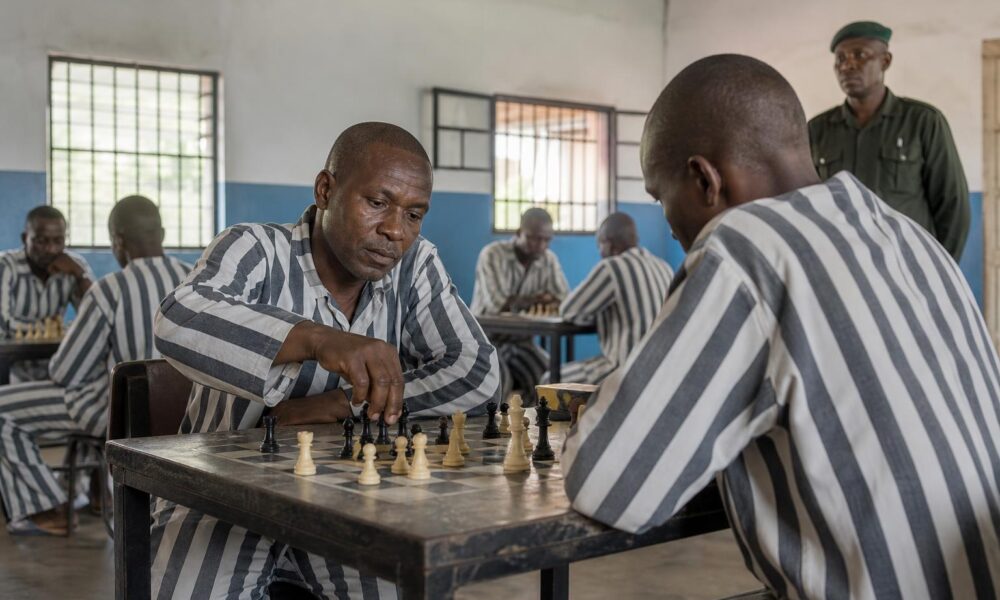
Chess is becoming part of rehabilitation efforts in Kenyan prisons, with a growing number of inmates taking up the game for recreation and personal development.
Programmes have operated in some Kenyan prisons for several years and have received support from non-governmental organisations, the Kenyan government and the international chess federation.
From recreation to rehabilitation
Among those playing is Brian Gatonye, a 28-year-old prisoner who has served about 18 months of a three-year sentence for assault. He is due to be released in November next year.
Gatonye says chess has influenced how he responds to situations and makes decisions. “Chess has taught me a lot. It has taught me being wise, being calm, choosing my decisions wisely,” he said.
He added that he now considers the possible consequences of an action before making a decision, describing the game as an influence on his behaviour and self-control.
The approach is also being used at Maranjau Prison. Humphrey Young, the prison’s superintendent, said chess was introduced as a way of helping offenders manage anger and prepare to live more peacefully within society.
“Through chess, they can learn how to manage their anger and even learn how to live amicably with the members of their society,” Young said, explaining why the game was adopted as a rehabilitation tool.
Support for prison chess programmes
The Gift of Chess programme, a nonprofit initiative that distributes chess sets, is among the organisations supporting access to the game in Kenyan prisons.
Phyllis Ngigi, director of the programme, said chess was contributing to rehabilitation rather than simply keeping prisoners occupied. She said the game can help inmates develop patience, make better decisions and reduce anger.
“Research has shown it is helping in rehabilitating instead of reconfining the prisoners in the walls,” Ngigi said. She added that chess was giving prisoners what she described as a second chance.
Ngigi also said the programme could help prevent inmates from committing further crimes after their release. That view reflects the wider aim of using structured activities to support rehabilitation during imprisonment.
The exact number of prisoners participating in chess programmes, and the number of facilities running them, has not been specified. However, the game has continued to expand in Kenyan prisons in recent years as officials and programme organisers promote it as both a recreational activity and a means of supporting behavioural change.







No Comment! Be the first one.