
eSusFarm Africa Uses Agricultural Data to Expand Smallholder Finance
Watson Matsa, founder of eSusFarm Africa, says the company is using agricultural data and partnerships to connect smallholder farmers with finance and insurance.

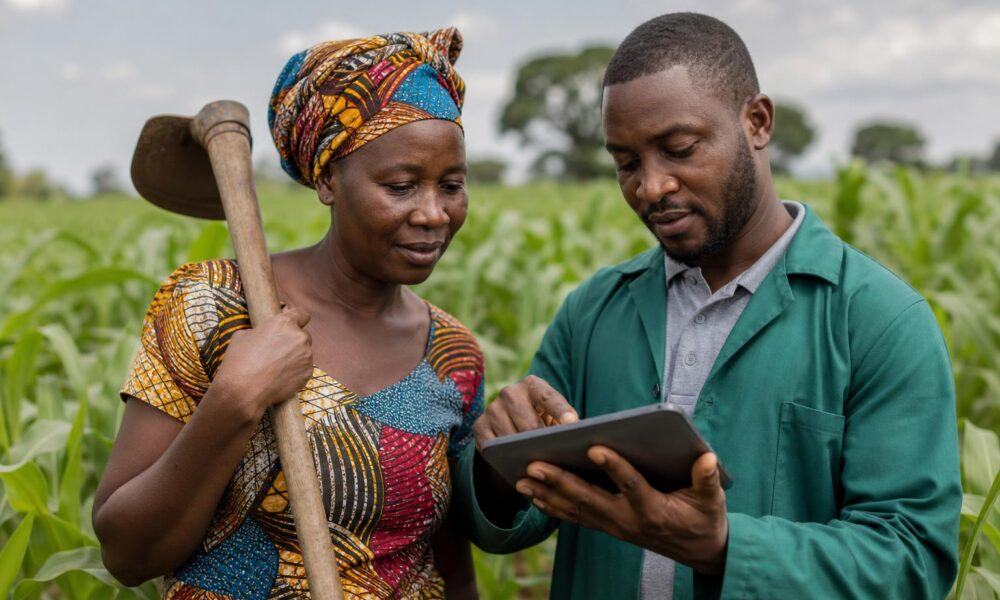
Watson Matsa’s experience in banking and credit analytics led him to build eSusFarm Africa, a platform focused on improving how financial institutions assess and serve smallholder farmers.
Table Of Content
Matsa studied economics and accounting at Rhodes University in South Africa before working at FNB as a project manager in credit analytics. He said the role gave him insight into how banks evaluate borrowers and develop credit-scoring systems.
He initially considered using data to help small businesses gain better access to capital. The idea shifted toward agriculture after his co-founder, who has a PhD in agricultural economics, raised the possibility of applying the approach to farmers.
Addressing a mismatch in banking
Matsa said conventional banking products are often designed around salaried workers who receive income each month. Farmers, by contrast, may earn seasonally or receive smaller amounts daily or weekly, depending on their activities.
“Money isn’t flowing to small farmers because there isn’t enough information,” Matsa quoted his co-founder as saying during the early discussions that shaped the company.
He also recalled advice from Benny van Rooy, the former chief executive of Grobank, who told him that banks could not lend without insurance. Matsa said farmers are generally treated as an unsecured portfolio, making risk assessment and protection important parts of agricultural finance.
Data, insurance and existing channels
eSusFarm Africa collects and maps information on soil, climate, crops and details reported by farmers. Matsa said the data is used to support risk assessment and decisions involving finance and insurance.
The company initially expected farmers to report information voluntarily, but Matsa said many did not understand why the reporting was necessary. eSusFarm Africa therefore linked the process to the possibility of gaining access to finance.
Rather than build a standalone application, the company aims to provide its services through systems farmers already use, including mobile money, WhatsApp and USSD. Matsa identified MTN as a partner, Sanlam as an insurance partner and Microsoft as a technology partner.
He said farmers who actively used the solution were trained in person and later became community ambassadors. According to Matsa, they helped bring in other farmers through word of mouth.
Reported reach and expansion needs
Matsa said eSusFarm Africa has profiled approximately 380,000 smallholder farmers and has about 20,000 active users across Uganda, South Africa, Zimbabwe and Eswatini. The figures were provided by Matsa and were not independently verified in the source material.
He said the company is focused on payroll and on securing capital to expand its teams and continue building for the future. Potential funding sources include grants, he said, as the business expands into more countries.
Matsa described agriculture as an industry that requires a longer period of training, change management and investment before results become visible. He also said some African investors tend to prioritise profitability, while American investors may be more prepared to fund technology before it becomes profitable.
For Matsa, the work is ultimately connected to food production. Explaining his role to his child, he said: “I help make food. You’re eating today, aren’t you?”






No Comment! Be the first one.