
Sierra Leone Launches Nationwide Campaign Against Mobile Money and Online Fraud
A nationwide awareness programme addressing mobile money fraud, WhatsApp scams, cyber hygiene and online safety has been launched in Freetown.


Sierra Leone has launched a nationwide public awareness programme focused on mobile money fraud, WhatsApp scams, cyber hygiene and online safety.
Table Of Content
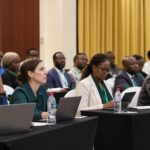
The initiative was launched on Thursday, October 8, 2026, at the National Communications Authority (NatCA) Auditorium in Freetown. It was organized in collaboration with the Ministry of Communication, Technology and Innovation, the National Cybersecurity Coordination Centre and the Sierra Leone Digital Transformation Project.
The campaign is intended to strengthen public awareness of digital threats, encourage safer telecommunications practices and help protect consumers from online scams, identity theft, fraudulent transactions and other forms of cybercrime.
Broad participation
Participants included representatives of government institutions, mobile network operators, civil society organisations, religious bodies, schools and community groups. Commercial motorbike riders, kekeh operators, market women, teachers and school pupils also took part.
The wide participation reflects the programme’s aim of extending digital safety education across different sections of society as mobile phones, mobile money services and internet-based communication become increasingly important in daily life in Sierra Leone.
Advice on avoiding scams
Amara Brewah, Director General of NatCA, cautioned consumers against sharing passwords and confidential account details with unauthorised individuals. He also advised the public to be extremely careful with unfamiliar links received through WhatsApp, text messages, emails and other digital platforms.
Participants were encouraged to protect personal information, financial accounts, passwords and mobile money PINs. The campaign also promoted the use of multi-factor authentication, keeping sensitive information private and checking suspicious links before opening them.
The public was urged to verify suspicious messages, links, advertisements and promotions before responding or making financial commitments. Mariama Yormah, Coordinator of the National Cybersecurity Coordination Centre, said cybercriminals use convincing messages, emotional appeals and digital applications to manipulate people into disclosing confidential information or taking part in fraudulent transactions.
Yormah also urged the public to be cautious of unusually attractive online offers and to verify them before taking action.
Threats and reporting channels
The programme addressed phishing, impersonation, ransomware, data breaches, cyber espionage, attacks on critical infrastructure, identity theft and fraudulent transactions. Salima Monorma Bah, Minister of Communication, Technology and Innovation, identified several of these risks as serious threats facing countries around the world.
People who suspect they have experienced cybercrime were advised to preserve screenshots, suspicious messages and transaction records. Reports can be made to the National Cybersecurity Coordination Centre by telephone on +232 30 952027 or by email at reporting@nc3.gov.sl.
NatCA reaffirmed its commitment to protecting telecommunications consumers, regulating mobile network operators and keeping consumer protection central to telecommunications services. Brewah also encouraged participants to act as cybersecurity awareness ambassadors by sharing safety information with their families, colleagues and communities.
The campaign further highlighted provisions of Sierra Leone’s Cyber Security and Crime Act, 2021. According to the source report, the law criminalises computer-related fraud, identity theft, unlawful disclosure of access credentials, cyberstalking and the non-consensual sharing of intimate images.
The programme is expected to support continued cooperation among regulators, service providers and the public while promoting more vigilant and secure online behaviour.





No Comment! Be the first one.