
Egypt Builds Rail Alternative to Suez Canal Freight Route
Egypt is developing an $8.7 billion electrified rail network to move freight between Red Sea ports and Mediterranean export terminals, offering an overland alternative to maritime routes affected by...

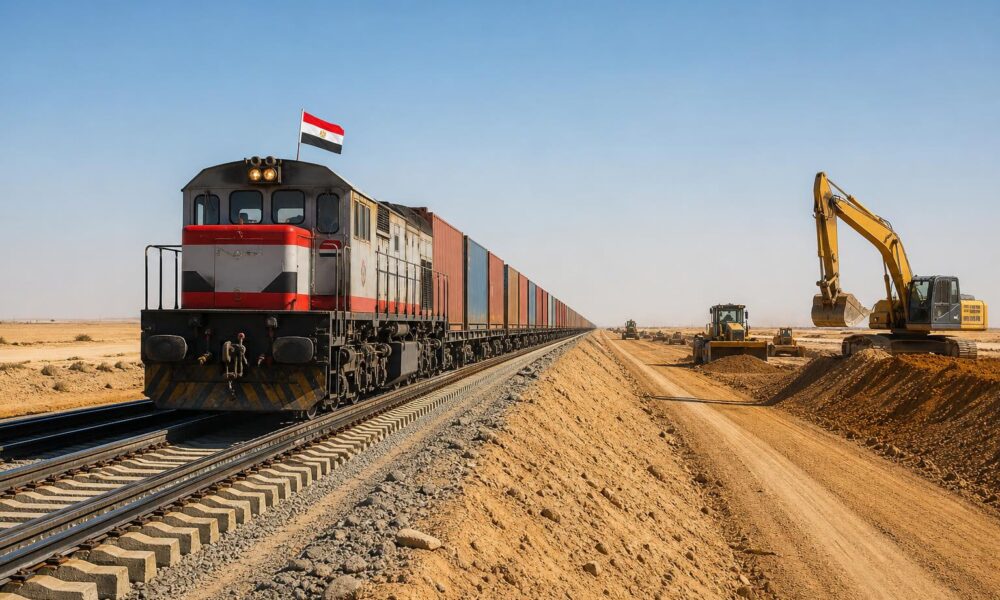
Egypt is building an electrified high-speed rail network intended to provide an overland route for freight moving between the Red Sea and the Mediterranean, as disruptions affecting maritime traffic continue to expose risks along key shipping corridors.
The 2,000-kilometre project, reported to cost $8.7 billion, is centred on the Suez Canal Economic Zone. It is designed to connect Red Sea ports directly with Mediterranean export terminals, allowing cargo to cross Egypt by rail rather than relying entirely on maritime routes.
Alternative to maritime bottlenecks
The planned network is being developed as an alternative for merchandise moving through Egypt and is intended to help bypass maritime bottlenecks. The project has also been referred to as the “Suez Canal on Rails”.
The Suez Canal has served as Egypt’s main commercial artery for more than a century and handles roughly 12% of global maritime trade, according to the source material. Security disruptions in the Red Sea have forced ships to take longer routes around the Cape of Good Hope. Those diversions have been associated with lower transit revenues and significant disruption to global supply chains.
The rail line is expected to carry up to 13 million tonnes of freight annually once it is fully operational. No completion date has been provided, and the available information does not establish how effectively the network is currently operating.
Logistics and regional integration
The project forms part of wider infrastructure investment around the Suez Canal Economic Zone, which has attracted more than $16 billion in investment, according to the source.
Ahmed Rostom, Egypt’s minister of economy and planning, said the country had invested heavily in roads, ports and railroads to give trading partners more options for moving merchandise across Egypt and reaching the European market through Mediterranean routes.
“In addition, we’ve invested heavily in our infrastructure, be it roads, be it ports, as well as railroads, to give options to our trading partners to mobilize their merchandise and to move their merchandise across Egypt,” Rostom said.
Egypt also regards the infrastructure as a potential contribution to wider African integration. Under the African Continental Free Trade Area, the land links could connect North African ports with trade corridors extending towards East and sub-Saharan Africa.
The available details do not include a full route map, the names of all connected ports and terminals, the project’s funding breakdown, contractors or its expected completion date. The annual freight figure remains a projected capacity rather than a current transport volume.



No Comment! Be the first one.