
Negative Ebola Test in Wajir Raises Questions Over Kenya’s Remote-Care Readiness
A suspected Ebola case in Kenya’s Wajir county tested negative, prompting scrutiny of isolation capacity, trained staff, protective equipment and response systems outside Nairobi.

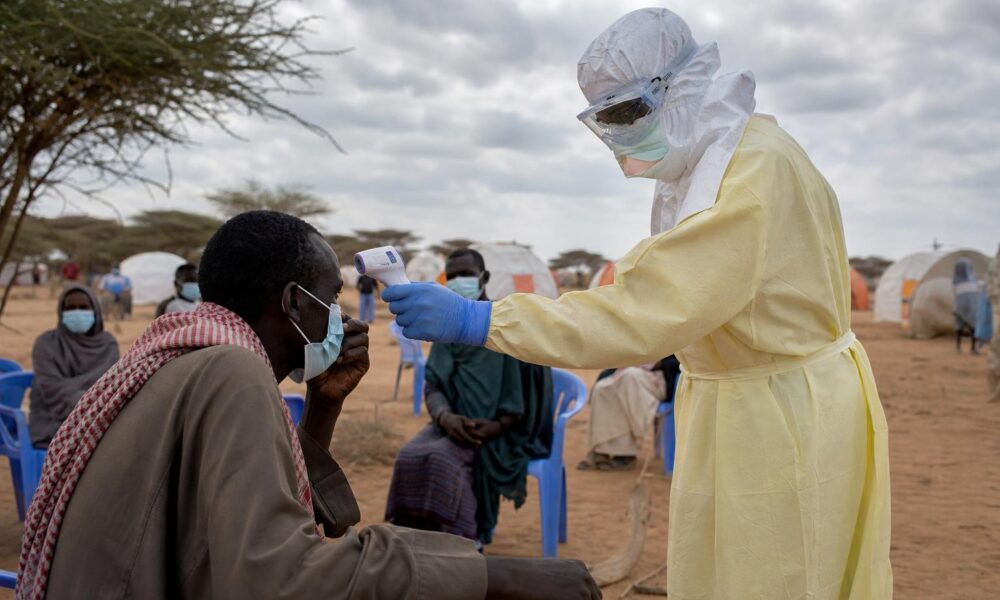
A suspected Ebola case in Wajir county, Kenya, has tested negative, according to county officials, while raising questions about whether remote areas have the facilities and personnel needed to manage a confirmed infection.
The case involved a 20-year-old man who travelled from the Democratic Republic of the Congo through Uganda before reaching his home in Wajir on September 20. He was later assessed at Habaswein Subcounty Hospital in Wajir South after developing a severe febrile illness.
County officials said the man’s sample was negative for Ebola. He was nevertheless expected to remain under observation while receiving medical care.
Local response measures
Garad Saney Mohamed, Wajir county’s communications director, said the county had established an isolation centre in Wajir town and formed a rapid response team.
He said the county had also introduced a preparedness plan and budget, alongside public awareness activities using radio campaigns, community health promoters, school health programmes and posters.
However, details were not provided on the isolation centre’s capacity, the number of health workers trained specifically for Ebola response or the amount allocated in the preparedness budget. Those gaps leave the county’s full operational capacity unclear if a confirmed case were to occur.
Wajir is about 110km from Somalia to the east, adding to the importance of preparedness in communities located far from Kenya’s main urban and health facilities.
National response expands
Kenya’s national response intensified after an Ebola case was linked to a Kenyan who travelled from the Democratic Republic of the Congo through Uganda. The World Health Organization said the patient arrived in Nairobi on October 3, was diagnosed with Bundibugyo virus disease and died on October 5. Kenya notified the WHO about the case on October 6.
The Ministry of Health confirmed a second Bundibugyo virus disease case on October 14. The patient was a 39-year-old close family member of the first patient and had been in quarantine and under daily monitoring when symptoms developed. The ministry said the two cases were linked, with no evidence of transmission in the wider community, and that the second patient was transferred to a designated treatment centre for supportive care.
Laboratory testing at the National Virology Reference Laboratory and the Kenya Medical Research Institute confirmed the first patient’s infection. Authorities have intensified surveillance at points of entry, contact tracing and public communication.
Ministry figures showed that, as of October 6, Kenya had screened 652,584 travellers, tested 267 samples and trained 4,971 healthcare workers in Ebola prevention and management. The WHO later reported that more than 665,000 travellers had been screened by October 12, while 127 contacts had been listed and 94 were in quarantine. Five laboratories had been designated to test for the disease, and nearly 5,000 health workers had received training.
Pressure on frontline services
The WHO said Kenya’s national preparedness score increased from 66 percent in May to 82 percent in July. The assessment covered surveillance, laboratory testing, isolation and treatment facilities, and trained response teams.
Those national figures do not by themselves show how resources are distributed among counties or whether individual facilities have adequate equipment, staffing and referral arrangements.
Kenya Red Cross has supported preparedness and public awareness efforts and highlighted the need to counter misinformation. Dr Mary Muthoni, Kenya’s principal secretary for public health and professional standards, said in remarks delivered on behalf of Health Cabinet Secretary Aden Duale that “No health worker in this country should be asked to attend to a suspected Ebola case without the right protective equipment.”
The negative result in Wajir has avoided confirmation of another case there, but the incident has drawn attention to the practical demands of responding to suspected Ebola infections beyond Nairobi and formal border points.




No Comment! Be the first one.