
Mekelle Reopens Slowly as Tigray Faces Unpaid Salaries and Renewed Conflict Fears
Mekelle is gradually returning to daily life after Ethiopian federal forces and allied fighters retook the Tigray capital on October 4, but unpaid salaries, disrupted education and military tensions...

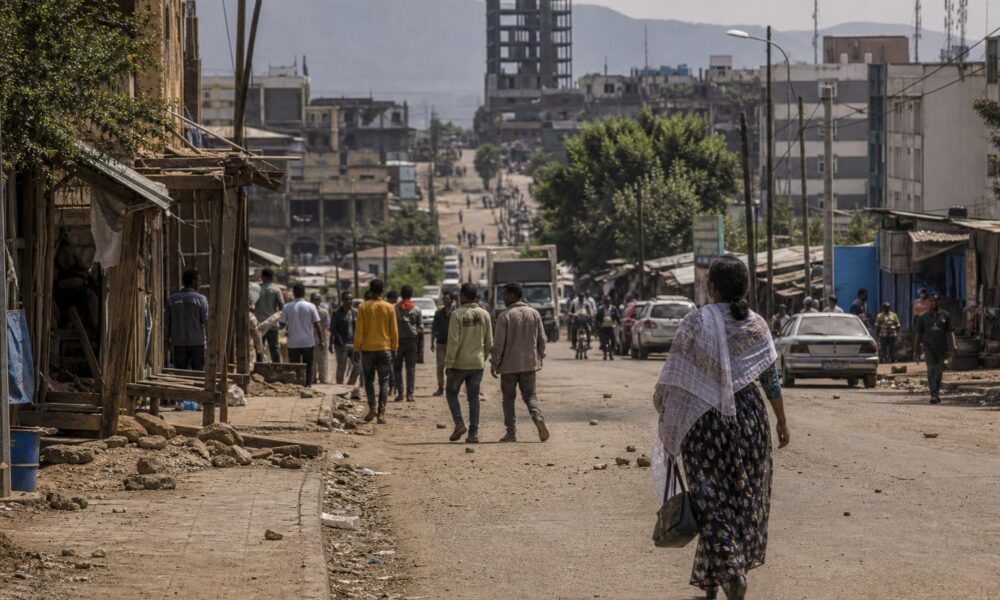
MEKELLE, Ethiopia — Shops are reopening and banks are restoring services in Mekelle after Ethiopian federal forces and allied fighters retook Tigray’s regional capital on October 4. Yet the return of commercial activity has not eased widespread concerns over unpaid salaries, disrupted education and the risk of renewed conflict.
Table Of Content
Tigray is still recovering from the 2020–2022 war between Ethiopia’s federal forces and the Tigray People’s Liberation Front, the region’s dominant political movement. Residents in Mekelle and other towns remain uncertain about security, public services and the region’s political future.
“Things may be reopening, but that does not mean our problems are over. We still have expenses every day, and without our salaries, it is difficult to know how we will manage,” said Gebregziabher, a public servant in Mekelle.
Salary delays deepen household pressure
Delayed wages and reduced family savings are making it harder for households to pay for food, rent and school expenses. The Tigray interim administration said in March that it could no longer cover the monthly salaries of approximately 137,000 civil servants because expected federal budget transfers had not arrived.
The Tigray regional finance bureau later reported an 8.5-billion-birr funding shortfall affecting salary payments and development projects. The timing and reliability of future salary payments remain uncertain.
The Ethiopian federal government has established a six-month caretaker administration for Tigray. Prime Minister Abiy Ahmed said the arrangement was intended to restore public services, support the return of displaced people and prepare the region for elections. The federal government said the temporary administration would restore stability and pave the way for elected regional leadership.
Students fear another interruption
Education has also been affected by the renewed instability. Students who lost study time during the previous war fear further interruptions as fighting and insecurity continue.
“I have already lost so much time because of the war. I am afraid that if our education is disrupted again, I will lose another year and fall further behind,” said Shewit, a grade 10 student in Adigrat.
Some university students have travelled to Addis Ababa to seek transfers to public universities elsewhere in Ethiopia. More than 5,000 returning students had applied for temporary placements outside Tigray by September 17–18 under a programme announced by the Ethiopian Ministry of Education.
Abel, a third-year student at Axum University, said he travelled to Addis Ababa because he wanted to continue his studies.
“I didn’t want to leave, but I also can’t keep putting my education on hold. I came to Addis to see if I can transfer to another university and continue my studies. I just want to finish what I started,” he said.
Border tensions raise wider-war concerns
Military movements and conflicting reports near the Eritrean border have added to fears that fighting could spread beyond Tigray. Ethiopia and Eritrea have exchanged accusations over troop movements and alleged incursions.
An Ethiopia-aligned commander, as reported by The Associated Press, claimed that Eritrean troops had entered Adigrat and Idaga Hamus. The AP said it could not independently verify the claim. ACLED separately reported that Eritrean troops crossed the border at Zalambessa, while Reuters reported that Ethiopian government forces advanced into the town. It remained unclear which forces were still present there.
Ethiopian Foreign Minister Gedion Timothewos accused Eritrean troops of moving as far as 60 kilometres into Ethiopian territory in several areas of Tigray. Eritrea denied invading Ethiopia and said the accusations amounted to a declaration of war. The Eritrean government called on the United Nations Security Council to take action against Ethiopia, while Timothewos appealed to the council over alleged Eritrean troop movements.
Residents in border areas remain wary. “People are worried because we know what war means for this area. We have already suffered enough, and nobody wants to see things reach that point again,” said Gebrehiwot, a resident of Zalambessa.
As Mekelle resumes parts of its daily routine, uncertainty remains over the effectiveness of the caretaker administration, the restoration of services and the safe return of displaced families.




No Comment! Be the first one.