
Africa’s Digital Economy Needs Infrastructure Beyond Apps, Panel Hears
A panel at Moonshot by TechCabal 2026 examined the infrastructure challenges affecting Africa’s digital services, from unreliable power and connectivity to logistics, payments and vehicle financing.

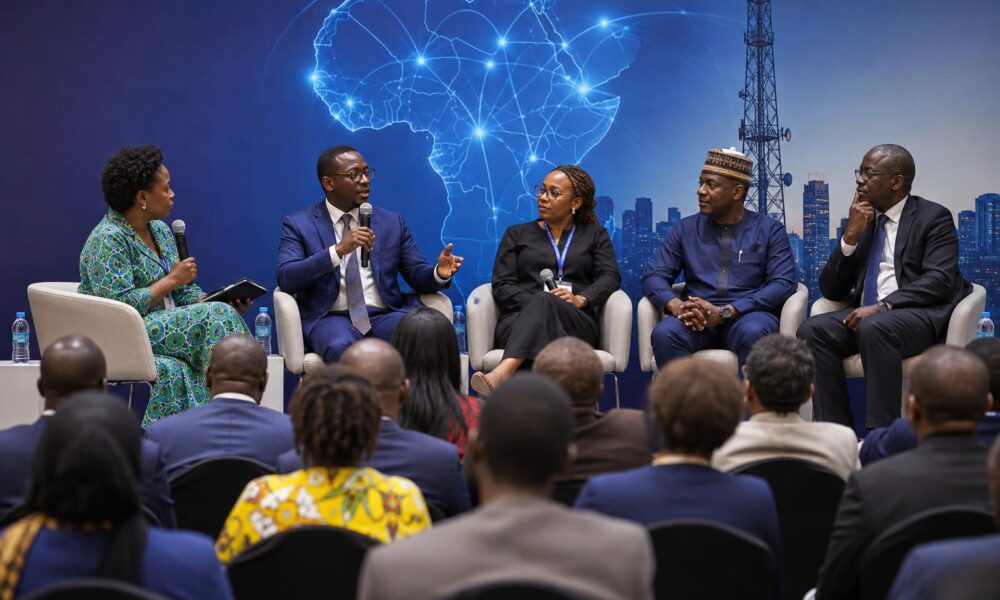
Africa’s digital economy will require investment in physical, financial and data infrastructure alongside mobile applications, speakers at Moonshot by TechCabal 2026 said.
Table Of Content
The discussion took place during a panel titled “Beyond the App: Building the Infrastructure Behind Africa’s Everyday Economy”. It brought together Sanusi Adedamola, chief operating officer of Fez Delivery, representing the company’s chief executive officer Seun Alley, and Chinwe Adighiogu, identified as Senior Vice President and vice president of Products at MAX.
Infrastructure behind digital services
Adedamola said applications are only the visible layer of services such as ride-hailing, delivery and electric mobility. “The app is just the front-end,” he said.
The discussion examined how vehicle availability, customer location, operating costs and service reliability can affect businesses that depend on digital platforms. Speakers also addressed unreliable electricity, uneven internet access, fragmented logistics and disconnected cross-border payment systems.
According to the discussion, these constraints can raise operating costs, make services less dependable and create difficulties for companies seeking to expand across markets.
Lagos was cited as an example of the connectivity challenge. Although the city is Nigeria’s leading commercial and technology hub, businesses there can still be affected by uneven internet connectivity.
Data and access to finance
Adighiogu highlighted the role of operational data in determining whether vehicle financing is affordable. Information on riders’ activity, daily earnings, maintenance expenses and battery use can provide insight into the economics of operating a vehicle.
The panel also discussed how such information can help lenders assess borrowers who may not have conventional banking histories. The approach links the day-to-day performance of a digital service to wider access to finance.
World Bank research published in The World Bank Economic Review in 2024 was also cited during the discussion. The research found that investment in roads and electricity increases activity in Africa’s manufacturing and services sectors.
Case for shared systems
Another focus of the panel was whether companies should build infrastructure independently or share the costs and systems required to operate.
Mapping streets and neighbourhoods, for example, can be expensive, while the resulting location data may be useful to several businesses. The panel also considered shared charging networks and battery-swapping systems that could serve multiple electric mobility operators.
The discussion reflected the wider dependence of digital services on systems outside the application itself. A delivery platform may still be affected if a driver cannot reach a customer, a payment is delayed or a vehicle cannot find a charging point.
The panel’s central message was that stronger digital services across Africa will depend on coordinated development of connectivity, transport, energy, logistics, payments and shared data infrastructure.






No Comment! Be the first one.