

DAKAR, Senegal — Senegal’s hosting of the Dakar Youth Olympics has brought international sporting attention to the country, while also intensifying concerns among some residents about displacement, public spending and rising living costs.
Table Of Content
The Games, Africa’s first Olympic event, are being held in Dakar and nearby cities through November 13. About 2,700 athletes are competing.
Senegalese authorities and Olympic officials say the event is designed to create opportunities for young people through a learning academy and volunteer programme. The country’s national statistics agency says around 75% of Senegal’s population is under 35.
Artisans moved for stadium expansion
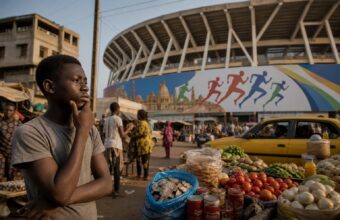
For some people in Dakar’s informal economy, however, preparations have brought disruption. Mamadou Wadji, who inherited his father’s shoemaking shop in the working-class Medina neighbourhood, was evicted in September to make way for a stadium expansion linked to the 2026 Youth Olympics.
Wadji and other artisans were moved into an unfinished school behind a neighbourhood market. He questioned whether people working in the informal sector had benefited from the Games.
“We, the general population, and especially those of us in the informal sector, should have been the first to benefit from it, unfortunately that has not been the case,” Wadji said.
The supplied account does not identify which authorities carried out the evictions or give the exact date in September when they took place.
Questions over government spending
The Senegalese government committed 36 billion CFA francs, equivalent to about $60 million, to organising the Games. A further 11.3 billion CFA francs, or about $19 million, was allocated for renovations to sports venues.
Some residents have questioned whether the money could have been directed towards more immediate economic needs. Senegal is facing rising living costs, while a debt crisis has left limited funds to support families dealing with higher prices.
Momar Assane Diouf, a 33-year-old entrepreneur who works several jobs to support his family, said the spending should have been assessed against the needs of ordinary citizens.
“These expenses are neither mandatory nor essential for the Senegalese people, who believe these funds could have been better spent elsewhere, for instance, on lowering the cost of living or boosting the purchasing power of the average citizen,” Diouf said.
Youth unemployment stands at about 23%, and most employed Senegalese work in the informal sector. Against that backdrop, many young people remain focused on earning enough to meet daily needs.
Benefits highlighted by officials
Authorities and Olympic officials have presented the Games as a longer-term investment in Senegal’s youth, pointing to the learning academy and volunteer programme as avenues for participation and development.
The competing priorities have created a contrast between the event’s stated youth opportunities and the experience of residents who say construction and preparations affected their livelihoods. While the Games continue through November 13, debate remains over whether their economic benefits will reach the wider population.




No Comment! Be the first one.