
ICJ Rohingya Genocide Ruling May Shape Legal Review of Gaza Case
The International Court of Justice has found Myanmar responsible for genocide against the Rohingya, a ruling experts say could offer a legal framework for examining South Africa’s case against Israel...

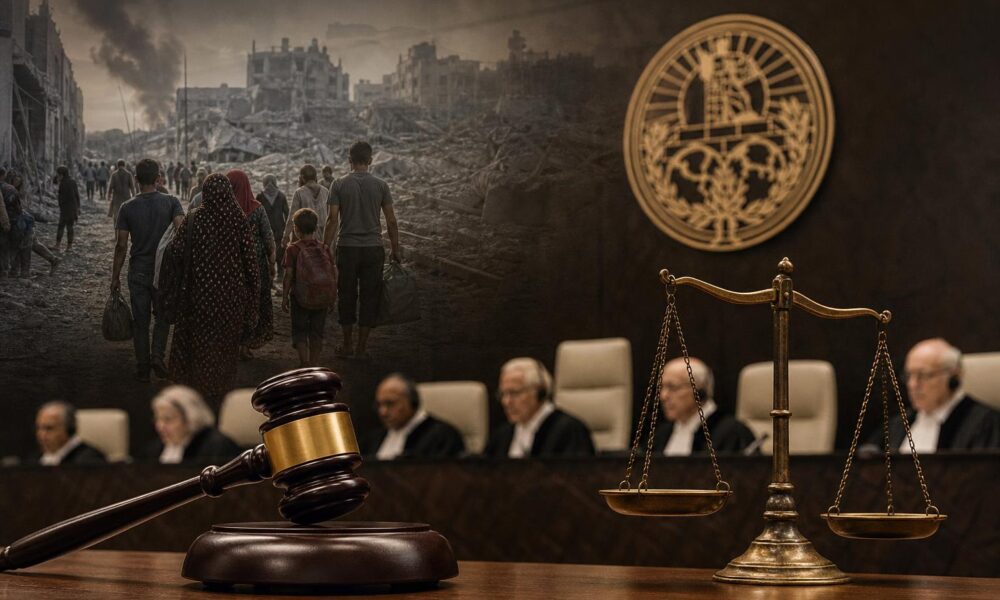
The International Court of Justice has ruled that Myanmar committed genocide against the Rohingya, issuing the court’s first genocide verdict since it was established in 1945.
The decision, delivered after seven years of deliberations and investigations, found that Myanmar’s security forces killed thousands of Rohingya civilians, carried out widespread sexual violence, committed extreme violence against children and attacked people fleeing to Bangladesh, according to ICJ President Yuji Iwasawa.
Nine members of the 15-judge panel concluded that “the only reasonable inference” from the evidence of widespread atrocities was that genocide had taken place.
Findings against Myanmar
The court determined that Myanmar’s authorities acted with intent to destroy the Rohingya group and prevent births. It also found that civilian militias were knowingly allowed to take part in attacks, that culpable commanders were not properly investigated or punished, and that Myanmar violated provisional measures issued by the court in 2020.
The ruling orders Myanmar to provide reparations and restitution. The measures include steps linked to the safe return of Rohingya people, the replacement of damaged property, compensation, accounting for missing people, family reunification, dignified burials and medical and trauma care. Myanmar was also ordered to take steps to prevent similar violations in the future.
The Gambia brought the case against Myanmar in November 2019 under the Genocide Convention. Myanmar’s military had described its 2017 operations in Rakhine State as clearance operations responding to attacks on police posts by the Arakan Rohingya Salvation Army.
Possible implications for Gaza case
The judgment is being examined for its possible relevance to South Africa’s pending genocide case against Israel over the war in Gaza. South Africa filed that case at the ICJ on December 29, 2023, alleging that Israel’s conduct amounted to genocide against Palestinians.
The court has already issued provisional measures in the Gaza proceedings. In January 2024, it ordered measures intended to prevent genocide. It later ordered Israel in March to ensure food entered Gaza and in May to halt a ground invasion in Rafah.
Human Rights Watch and Amnesty International, as reported by Al Jazeera, have concluded that Israel did not comply with the orders. Israel has said it is acting in self-defence and targeting Hamas rather than civilians. The allegations and assessments concerning the conduct of the parties remain contested.
Ahmed Najar, a Palestinian political analyst, said the Myanmar judgment would not decide the Gaza case but could influence the legal approach used to evaluate it.
“This judgement will not decide the Gaza case. But it may determine the legal lens through which Gaza is eventually judged,” Najar said.
He added that the ICJ must assess the Gaza evidence independently, while arguing that the Myanmar ruling provides South Africa with “a much clearer legal road map”.
Triestino Mariniello, a law professor at Liverpool John Moores University, said the circumstances in Myanmar and Gaza were different, but that the court’s approach could potentially be applied to Gaza in light of what he described as widespread and systemic violations.
Intent at the centre
The Myanmar case may be significant because the court accepted that genocidal intent could be established through a cumulative pattern of conduct rather than an explicit written order. Najar said intent could be inferred from the combined evidence of actions carried out against a protected group.
Under the Genocide Convention, genocide requires prohibited acts committed with the intention of destroying, in whole or in part, a national, ethnic, racial or religious group. The ICJ rules on disputes between states, and the state bringing a case must establish the intent of the state being accused.
A final ruling in South Africa’s case is expected to take several years. South Africa’s next submission is scheduled for November 2027, meaning the Myanmar judgment is likely to inform legal arguments without determining the outcome.





No Comment! Be the first one.