
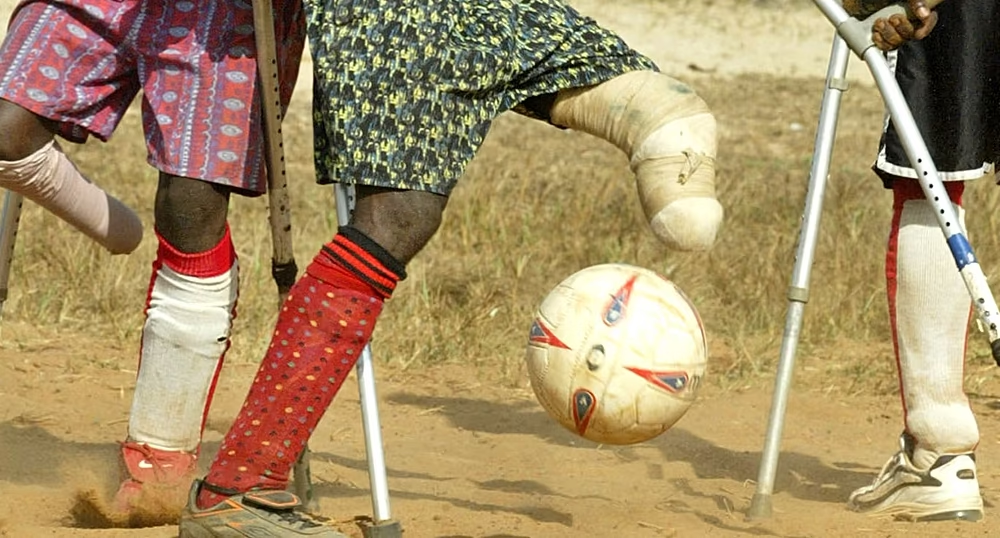
UVIRA, Democratic Republic of the Congo — Uvira hosted the first national amputee football tournament in the Democratic Republic of the Congo, bringing together players from North Kivu, South Kivu and Tanganyika for three days of competition from 23 to 25 September.
Table Of Content
The event combined football with efforts to support recovery, social reintegration and inclusion for athletes living with disabilities, including people affected by armed conflict. Players competed with crutches, challenged for possession and celebrated goals during the tournament.
Sport as a path to recovery
For participants, the matches offered more than a sporting contest. The gathering created an opportunity for players from different provinces to connect and regain confidence while demonstrating their abilities on the field.
Félix Bisengimana, a player from North Kivu, said football had given him a reason to look ahead after losing his leg during the war.
“When the war broke out, I fled with our soldiers. We took refuge in a banana plantation. That is where a bomb fell on us. The shrapnel severed my leg,” Bisengimana said.
Ngongo Lambert, captain of the Tanganyika team, described the personal importance of taking part in the sport.
“I feel like I am being reborn, despite my disability. Today, I feel free, at peace and completely fulfilled thanks to football,” Lambert said.
Promoting disability inclusion
The Congolese National Paralympic Committee organised the competition with support from the International Committee of the Red Cross. The tournament had two stated aims: to give athletes the opportunity to practise their sport and to raise the visibility of sport for people with disabilities in the DRC.
Betty Myangindula Mbenza, president of the National Paralympic Committee, said the event could help participants recognise their value and encourage others.
“It is also an opportunity for them to value themselves, showcase their talents and, why not, inspire other young people with disabilities who can take part in sport,” Mbenza said.
Eva Bonjele, a disability inclusion adviser at the ICRC in the DRC, said the organisation’s support reflected the impact of armed conflict on many of the people it assists.
“Ninety percent of our beneficiaries are victims of armed conflict. They are players or young people who have been affected by armed conflict. We want to promote inclusion through sport,” Bonjele said.
Travel and funding barriers
Five provinces had initially been expected to participate, but only three were able to travel to Uvira because of limited resources. The distances between provinces created logistical and financial difficulties for athletes with disabilities and restricted participation in the first edition.
The organisers and players also identified the continuation of the initiative beyond its opening tournament as a challenge. No winner of the competition or schedule for a second edition was provided.
In eastern DRC, where armed violence and displacement continue, people living with war-related injuries face challenges that extend beyond medical treatment and rehabilitation. The Uvira tournament placed sport at the centre of efforts to strengthen connection, challenge perceptions of disability and support reintegration.


No Comment! Be the first one.