
Kenyan Quakers Turn to Music and Youth Leadership to Renew Worship
Quaker congregations in western Kenya are adapting worship with faster music, contemporary instruments and youth-led services, while a church archive project seeks to preserve the movement’s...

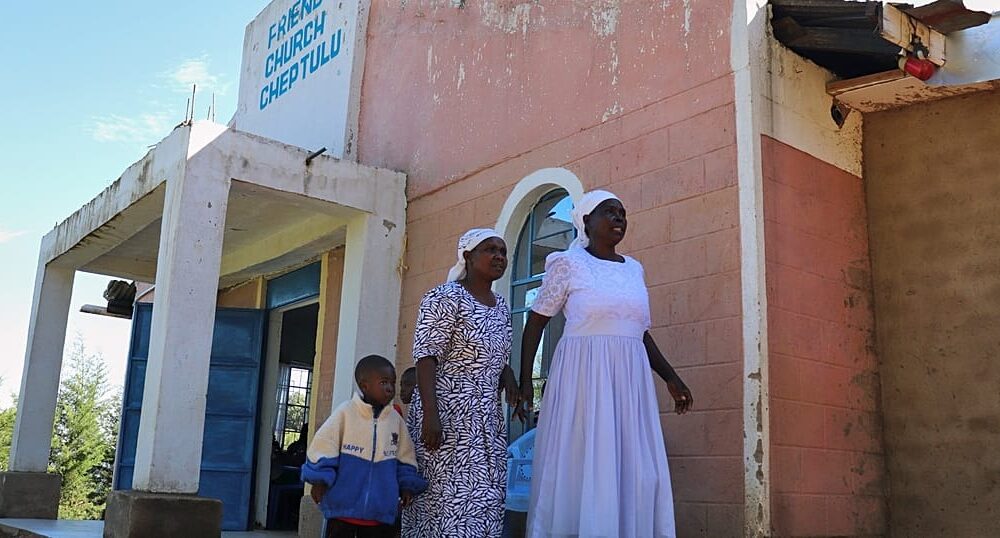
CHEPTULU, Kenya — Quaker congregations in western Kenya are reshaping their worship services with faster music, contemporary instruments and greater participation by younger members.
Table Of Content
At a recent Sunday service at Friends Church in Cheptulu, young people led praise and worship as congregants sang, danced and clapped. A choir performed a local hymn with instrumental accompaniment, while mostly female worshippers in white dresses joined the dancing.
The changes reflect an effort to make services more engaging for young people while giving older congregants renewed energy. Kennedy Shiverenje, the church’s senior pastor, said the music had to suit the local setting.
“We needed to capture the youth and re-energize the elderly so that our service is vibrant,” Shiverenje said.
A faster sound for younger worshippers
Kenyan Quaker worship has traditionally differed from the silent, unprogrammed services commonly associated with Quakers in the United States. In that tradition, worshippers may sit quietly and await individual messages from God.
In Kenya, however, services have become louder and more musically active, incorporating faster songs, keyboards and other modern instruments. Catherine Ikalakala, who has been a Quaker for almost 50 years, said young people had previously compared the church’s slower music with the faster worship found elsewhere.
“The young people used to see us singing slow motion while other churches had faster music,” Ikalakala said.
She said some young people began attending other churches because of the difference in musical style. After the congregation purchased a keyboard, she said, more young people returned to church.
Rose Oside recalled the earlier approach with humor, saying older women sometimes sang so slowly that a single song seemed to last a long time. She said they did not clap or play African drums.
Not all older worshippers have been comfortable with the changes. Thomas Amalemba, 90, said some older members feel uneasy when contemporary music replaces the slower songs they knew. He has also criticized what he sees as excessive emphasis on congregants giving money, warning that it could create a perception of “buying blessings.”
Even so, the new approach brings generations together. During a baby dedication, older women sang while a young Quaker man played the keyboard, helping guide the tempo.
Keeping a connection to Quaker roots
The musical changes are taking place alongside efforts to preserve the movement’s history. Friends Theological College in Kaimosi provides theological training and houses a Quaker Archive program.
Linet Mmbone, an assistant librarian at the college, said researchers had spoken with early Quakers and gathered historical material, including notes from early yearly meetings. The archive also includes an old Bible written in the local Maragoli language and used by early Quakers and first converts.
Mmbone said the project was intended to give young people a reference point and help the community maintain its connection to the tradition.
“Because we don’t want to lose our dignity as Quakers, we want to go back to the roots and conduct our services the way the early Quakers used to do it,” she said.
Quakerism originated in 17th-century England, where George Fox promoted a personal relationship with Christ described as the Inner Light. American missionaries brought a form of Quakerism to Kenya, arriving in Kaimosi in 1902 and helping establish schools and hospitals that contributed to the movement’s growth.
The Religious Society of Friends is estimated to have about 400,000 members worldwide, with roughly half living in Africa. Cheptulu Church is about 100 years old.
Training and peace-building
Friends Theological College has more than 400 students studying on campus and online. Principal Robert Wafula said the training helps ensure that congregations receive what he described as the correct message.
Wafula also said Quaker doctrine, founded on peace, has been useful during ethnic tensions and postelection violence in Kenya, as well as in regional conflicts. He cited Quaker involvement in peace-building in Rwanda and Congo, while noting that one college-trained pastor works at a peace center in Rwanda.
The Kenyan congregations now face the task of funding their own programmes after relying initially on donor support. Alongside those financial pressures, church leaders are balancing the appeal of energetic worship with the traditions that shaped Quaker identity in the region.





No Comment! Be the first one.