
Sesay Calls for Stronger Institutions to Unlock Sierra Leone’s Talent
Oumar Farouk Sesay’s essay argues that Sierra Leone’s challenge is not a lack of talent but institutions that fail to coordinate, reward and retain it for the national good.

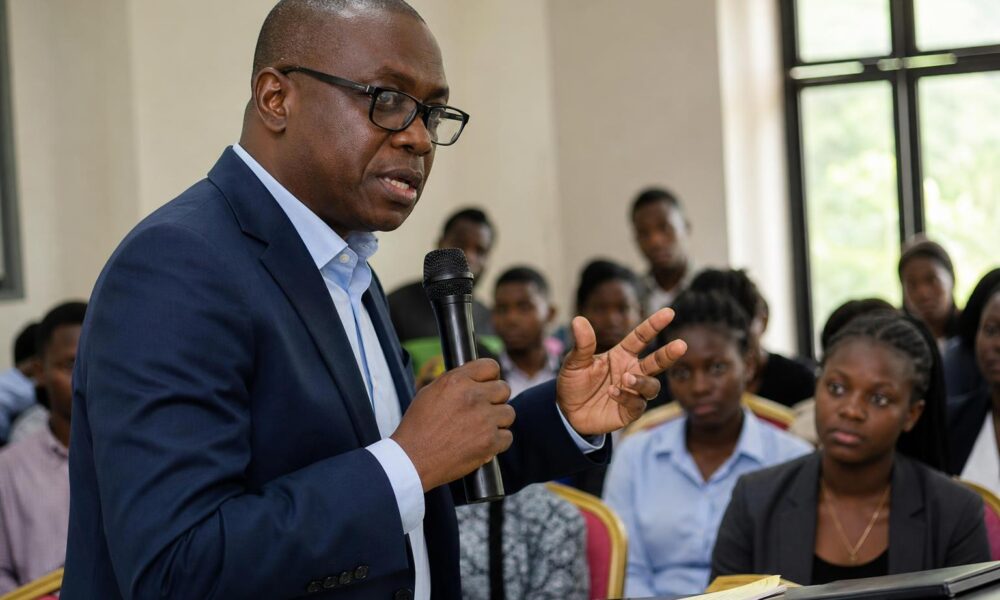
Oumar Farouk Sesay has argued that Sierra Leone’s development challenge lies less in a shortage of capable people than in institutions that fail to organise and sustain their abilities for the national good.
In an essay published by The Sierra Leone Telegraph on 5 October 2026, Sesay examines why Sierra Leoneans have distinguished themselves in universities, medicine, diplomacy, engineering, literature, international organisations and other professions, while national outcomes have not consistently reflected that talent.
“Sierra Leone has never lacked brilliant people. Our deeper failure has been our inability to build institutions that can multiply that brilliance,” he writes.
Institutions and national coordination
Sesay uses examples including football teams and orchestras to argue that individual ability is not enough to produce collective achievement. Talent, he says, must be positioned, disciplined and coordinated around a shared purpose.
He suggests that the country’s central difficulty may be “not a shortage of intelligence but a failure to organize it.” In his assessment, cooperation often works within smaller circles but does not consistently extend to the national level.
The essay calls for institutions that can make integrity sustainable, professionalism ordinary, competence repeatable and fairness predictable. Sesay argues that a functioning state should not require exceptional individuals to defend basic standards of honesty and competence.
“A republic should not demand heroism for routine competence or exceptional courage for ordinary honesty,” he writes.
Loyalties and trust
Sesay identifies political, ethnic, regional, family and personal networks as possible competing sources of loyalty. He argues that some institutions may reward these narrower connections more generously than commitment to the wider national interest.
At the same time, the essay recognises established forms of cooperation among Sierra Leoneans, including family resource pooling, community projects, religious institutions, osusu groups, hometown associations and diaspora organisations.
Citing Afrobarometer findings, Sesay says Sierra Leoneans show high tolerance toward people from other ethnic and political groups, although trust across some of those boundaries is weaker. The essay does not provide figures or details of the survey’s methodology.
“We know how to cooperate. The harder question is how large the circle of cooperation becomes,” he writes.
Institutional reform
Sesay argues that institutional failure can waste ability without appearing in official accounts. He describes talented people becoming frustrated, leaving the country or falling silent, while noting that “no line in the national budget is headed – Wasted Genius.”
His recommendations include changing institutional incentives, protecting institutional independence, rewarding excellence, building trust and ensuring that access to justice, employment, protection and opportunity is not determined by family, regional, ethnic, party or patronal connections.
The essay also distinguishes political change from institutional continuity. “Governments are temporary. Citizenship is permanent,” Sesay writes, arguing that changing administrations alone will not resolve the country’s deeper problems if institutions do not endure.
Sesay references Dr Davidson Nicol, whom the essay’s caption identifies as the first black African elected as a Fellow of a Cambridge college, as well as a physician, diplomat and writer. The reference forms part of the essay’s broader discussion of Sierra Leonean achievement.
Sesay concludes that Sierra Leone’s institutional weaknesses are a matter of design rather than destiny. “It is not fate. It is design. And what has been badly designed can be redesigned,” he writes.




No Comment! Be the first one.