
Nurse Killed in Attack on Ebola Response Team in Eastern DRC
A nurse was killed and another health worker was severely injured while responding to an Ebola alert in Bafwasende, eastern Democratic Republic of the Congo, according to the World Health...

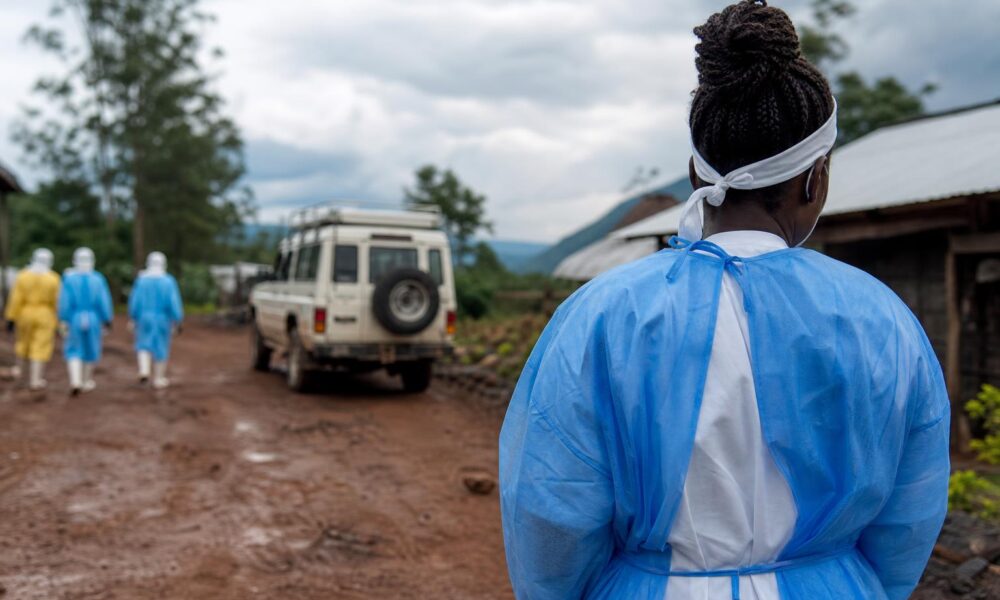
A nurse was killed and another health worker was severely injured while responding to an Ebola alert in eastern Democratic Republic of the Congo, the World Health Organization said.
The attack took place in Bafwasende, in Tshopo province, according to WHO Director-General Tedros Adhanom Ghebreyesus, who referred to the incident in a post on X on Sunday. The identities of the two health workers and the suspected attackers were not disclosed.
Local authorities had not commented on the attack or identified any suspects at the time of the report.
WHO condemns violence
Tedros said people working to protect communities from Ebola must be able to operate safely.
“Everyone working to protect communities from this deadly disease must be able to work in dignity and safety. Healthcare must always be protected,” he said.
Dr Mohamed Yakub Janabi, the WHO regional director for Africa, also condemned the attack. “Health is NOT a target,” he wrote, adding that Ebola responders must be protected and that misinformation and fear should not fuel violence.
The WHO has described the attack as part of wider security challenges affecting health workers and responders. Authorities have said such incidents are hampering efforts to slow the outbreak.
Outbreak spreads across four countries
Data from the DRC Ministry of Health showed that more than 9,800 Ebola cases, including more than 4,700 deaths, had been recorded since the outbreak began in May. The outbreak has been described as the deadliest in the DRC’s history.
It had also been reported in four countries across eastern, central and western Africa, giving it the widest geographic spread of any Ebola outbreak on the continent to date, according to the report.
Community scepticism has complicated the response. The DRC government’s handling of the outbreak, together with longstanding corruption, has contributed to distrust, while some people have dismissed Ebola as a hoax. Responders have also reported threats or the detention of team members in designated health zones.
In May, residents set fire to two tents at health centres in separate attacks within one week. A politician in North Kivu was also beaten to death after publicly defending the government’s Ebola response and urging people to follow social-distancing and hand-washing measures.
Regional precautions
Uganda announced that citizens returning to the country who had a history of travel to the DRC would be quarantined for 21 days. The period corresponds to the maximum time the WHO says Ebola symptoms can take to appear.
Uganda had declared an end to its latest Ebola outbreak in July, but health experts remained on alert after two people who had recently passed through the country later tested positive in Kenya and Nigeria.
In an update dated October 23, the WHO urged stronger monitoring and cooperation across borders. It also advised against imposing restrictions on travel or trade with countries affected by the outbreak.
The current outbreak involves the Bundibugyo strain of Ebola, which the report said has no approved vaccine or specific treatment. Ebola spreads through direct contact with the bodily fluids of infected people.



No Comment! Be the first one.