
Southern Madagascar Farmers Prepare for El Niño Drought Risk
Residents and farmers in southern Madagascar are facing worsening water shortages and declining crop quality ahead of an expected El Niño pattern, while World Food Programme workers assist people at...

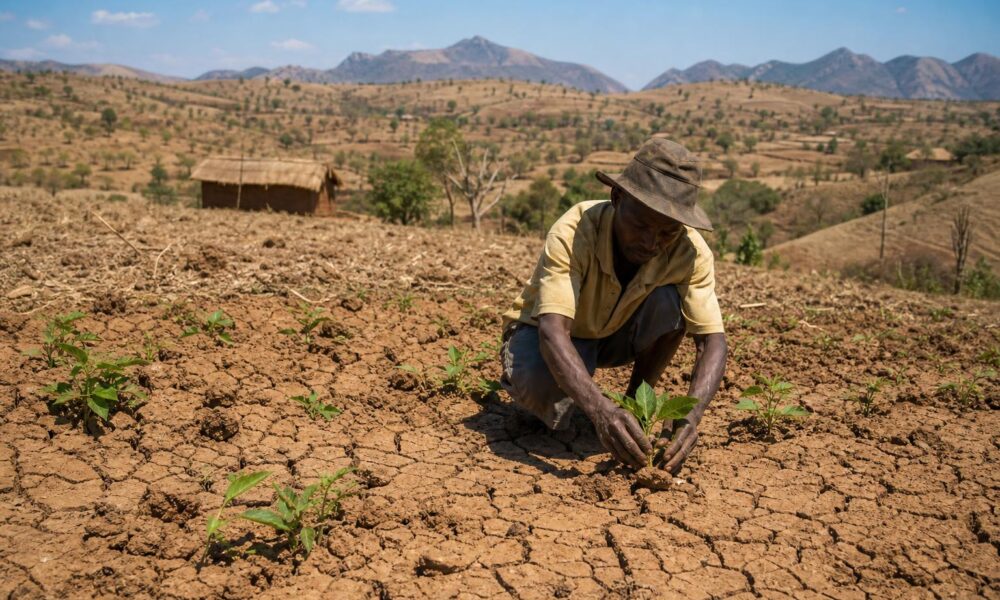
Residents and farmers in southern Madagascar are preparing for worsening drought and food-security pressures as an El Niño warming pattern is expected to begin in October and continue for several months.
Experts expect the phenomenon to be the strongest on record, while the World Meteorological Organization has warned of an increased risk of drought. The warning comes as communities report reduced rainfall, deteriorating crops and growing difficulty obtaining water.
Rainfall disruption affects farming
Farmers say the changing rainfall pattern is making it harder to follow the usual agricultural calendar and is reducing the quality of crops and seeds.
Bien Aimée Mampisaina, a farmer, said rain had become less reliable than in the past. She said farming once took place during the rainy season, but the timing of the seasons had changed. Farmers are now sometimes forced to plant when conditions are unsuitable, contributing to crop deterioration and poor-quality seeds.
Odile Mamenosoa, president of the Mifagnavotse Association, said the lack of rain was making farming increasingly difficult. She said communities were requesting boreholes and access to pumps and generators to maintain their livelihoods, but obtaining water remained difficult.
“Access to water is difficult, but we must do our best because farming is our whole life,” Mamenosoa said.
Food insecurity and malnutrition
Parts of southern Madagascar are already affected by famine, and climate change is expected to increase the pressure on food supplies. The report also links international aid cuts and rising inflation associated with the Middle East war to a greater risk of severe hunger in the country.
World Food Programme workers are providing assistance to people at risk. Support includes care for children identified as suffering from moderate acute malnutrition.
Mamy Razanamahefa, a World Food Programme nutrition officer, said children were identified through door-to-door screening carried out across all the Fokontany. Those found to have moderate acute malnutrition are then assessed at a basic health centre.
The coming months are expected to test farming communities already dealing with limited rainfall and fragile access to water. The anticipated El Niño conditions could add further strain to food production and humanitarian assistance efforts in the south.



No Comment! Be the first one.