
Eritrea Appeals to UN Security Council Amid Escalating Dispute with Ethiopia
Eritrea has asked the UN Security Council to intervene in its confrontation with Ethiopia, as both governments trade accusations over military operations, Tigray and access to the Red Sea.

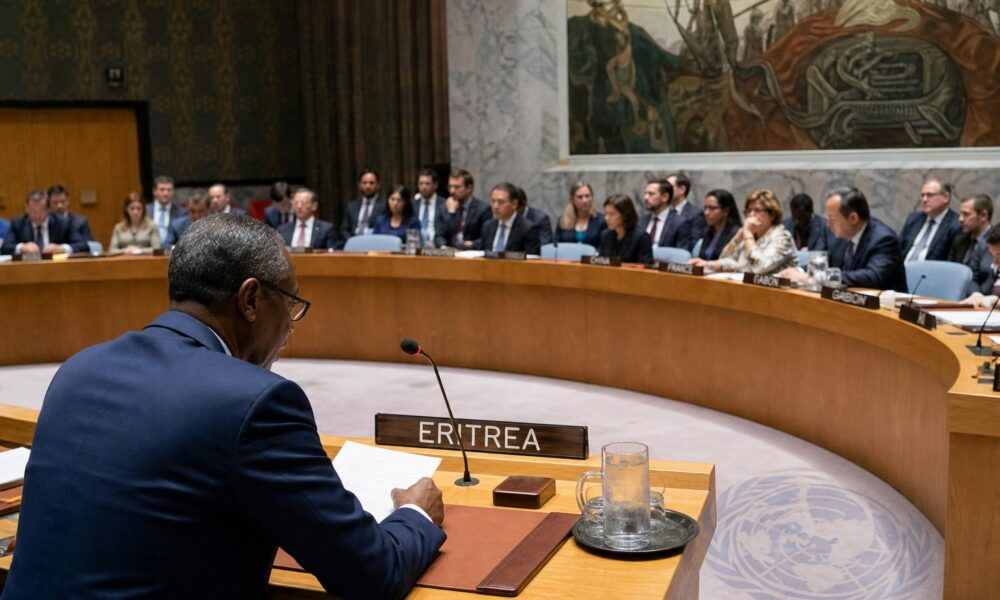
Eritrea has called on the United Nations Security Council to intervene in its worsening standoff with Ethiopia, urging the body to condemn what it described as a declaration of war and adopt deterrent measures.
Table Of Content
Eritrean Foreign Minister Osman Saleh made the request in a letter to the council. Eritrea also invoked Chapter VII of the UN Charter, which allows the Security Council to consider measures ranging from sanctions to military action.
Saleh accused Ethiopia of trying to create grounds for a war of aggression by alleging that Eritrean forces had entered Ethiopian territory. He said Ethiopia’s stated justifications were “hollow in substance” and warned that the confrontation could cause “huge devastation to the peoples of both countries and destabilise the whole region”.
Competing accounts of the fighting
Ethiopia has presented a sharply different account. In its own communication to the Security Council, the Ethiopian government accused Eritrea of launching an “all-out invasion” and said Eritrean troops had advanced as far as 60 kilometres into Ethiopia’s Tigray region.
Addis Ababa also accused Eritrea of supporting the Tigray People’s Liberation Front. The Ethiopian government said its army had pushed TPLF fighters back, taken control of Mekelle and carried out drone strikes against Eritrean troops in the area. The reported strikes have not been independently verified.
Ethiopian Foreign Minister Gedion Timothewos described Eritrea’s alleged actions as “a blatant act of aggression that engages Ethiopia’s inherent right to self-defence”. He invoked Article 51 of the UN Charter, which recognises a state’s right to self-defence. The available account does not specify what further measures Ethiopia said it was taking under that provision.
Eritrean Information Minister Yemane Gebremeskel accused Ethiopia of pursuing aggression through demands for sovereign access to the Red Sea. He did not explicitly confirm or deny reports that Eritrean troops had crossed into Ethiopia.
Red Sea access adds to tensions
The dispute has unfolded against a history of conflict and strained relations. Eritrea became independent from Ethiopia in 1993, and the two countries fought a deadly border war between 1998 and 2000.
Relations improved after Abiy Ahmed became Ethiopia’s prime minister in 2018 but have deteriorated again in recent years. Ethiopia is landlocked and has repeatedly maintained that it should have direct access to the Red Sea. Eritrea has viewed those demands as a threat to its sovereignty and to its port at Assab.
The two governments also remain connected to the legacy of the 2020-2022 war in which TPLF fighters fought Ethiopian federal forces backed by Eritrea.
Analyst warns of open conflict
Faisal Roble, a Horn of Africa specialist speaking to Al Jazeera from Nairobi, said both sides appeared to be moving towards a wider confrontation. He characterised their appeals to the United Nations as efforts to secure international backing and said the countries were preparing for what he called the “last phase of an open conflict”.
The source account presents competing allegations over which side initiated the latest escalation and does not independently establish whether Eritrean forces entered Tigray or backed the TPLF. It also does not report a response from the UN Security Council.



No Comment! Be the first one.