
Supreme Court Ends Contempt Case Against Joseph Fitzgerald Kamara
The Supreme Court of Sierra Leone has discharged contempt proceedings against lawyer Joseph Fitzgerald Kamara after Chief Justice Komba Kamanda accepted his apology and retraction.

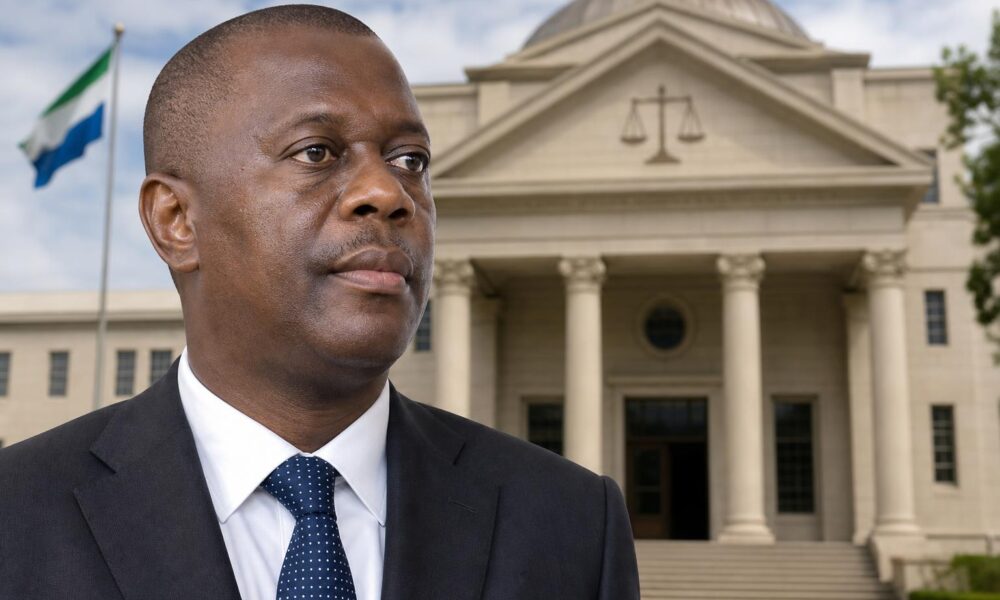
The Supreme Court of Sierra Leone has brought contempt proceedings against lawyer Joseph Fitzgerald Kamara to an end after Chief Justice Komba Kamanda accepted his formal apology and retraction.
The development took place on Tuesday, 13 October 2026. Kamara had been representing Osman Timbo in proceedings challenging aspects of the Constitution of Sierra Leone (Amendment) Bill, 2025.
In court, Kamara acknowledged that the incident had diverted attention from the constitutional questions before the court. He expressed regret, withdrew the remarks that led to the proceedings and assured the court that similar conduct would not occur again.
S.K. Koroma, who represented Kamara in the contempt proceedings, supported the apology and formally retracted the remarks. He also assured the Chief Justice that the professional relationship between the Bar and the Bench would be maintained.
Detention followed courtroom disagreement
The contempt matter arose from a disagreement during proceedings on 7 October. On 8 October, the Chief Justice ordered Kamara’s detention after remarks made during the earlier hearing.
Kamara was directed to remove his lawyer’s wig and proceed to the dock before being taken into custody. He was later transferred to the Male Correctional Centre on Pademba Road in Freetown.
Senior legal practitioners and representatives of the Bar subsequently made representations concerning his detention.
Chief Justice Kamanda cautioned against public comments on matters pending before the court, saying: “Some of the statements have the tendency to undermine the administration of justice.”
Constitutional case remains pending
The discharge of the contempt proceedings does not resolve the separate constitutional dispute. The substantive case remains before the Supreme Court for determination.
The dispute concerns proposed amendments approved by Parliament in August 2026 and whether the process complied with the 1991 Constitution. Among the issues are the interpretation of Sections 91 and 108 and the parliamentary voting threshold required for the amendments.
The competing arguments include whether the proposals required a simple majority of Members of Parliament present and voting or the support of at least two-thirds of Parliament’s entire membership.
On 7 October, Kamara also raised a preliminary objection concerning the participation of the Office of the Attorney-General and Minister of Justice. The objection referred to the alleged absence of procedural documents, including a Statement of Case.
The Supreme Court overruled that objection and allowed the consolidation of the constitutional references before it.
Chief Justice Kamanda described the constitutional proceedings as matters of national importance affecting the State and every citizen whose rights and responsibilities are governed by the Constitution. He said the court would deal with the case expeditiously and base its determination on the law and the interests of justice.
The Chief Justice also encouraged the public to exercise patience while the proceedings continue.




No Comment! Be the first one.