
Frontline Workers Receive Ervebo Vaccine as Ebola Outbreak Intensifies in DR Congo
Health care and other frontline workers in Beni have received Ervebo during the Democratic Republic of Congo’s Bundibugyo Ebola outbreak, although its effectiveness against the virus remains under...

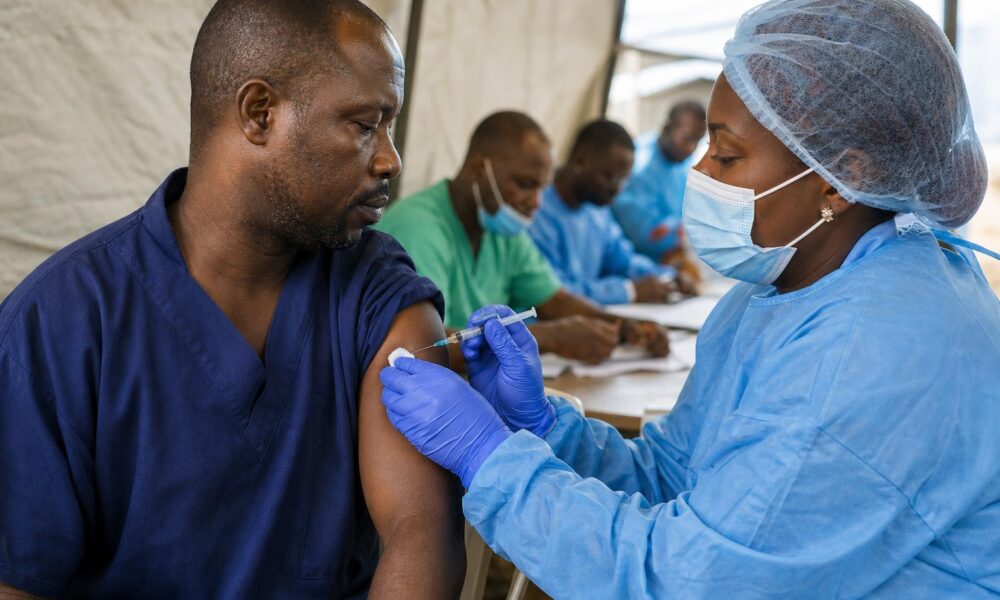
Health care and other frontline workers in Beni, Democratic Republic of Congo, have received the Ervebo vaccine as authorities respond to an Ebola outbreak caused by the Bundibugyo virus.
The vaccine is being used under a compassionate-use programme, which allows a medical product to be administered in a serious disease situation even when it has not been specifically approved for that particular use.
Ervebo has previously proved effective during outbreaks caused by the more common Zaire strain of Ebola. Health authorities say the Zaire and Bundibugyo viruses are related, meaning Ervebo could provide some protection. However, whether it can prevent illness caused by Bundibugyo Ebola remains under study.
Frontline protection under review
Stella Nyota, a nurse who received the vaccine, said she felt safer because her work regularly brings her into contact with patients.
“I’m happy to have received it because I know it gives me some reassures since I’m always around patients,” Nyota said.
The World Health Organization said in August that 70,000 doses had been approved for use in Congo. About 50,000 doses were intended for frontline and health workers, while 20,000 were allocated to a clinical trial examining whether Ervebo protects against the Bundibugyo virus.
The source report does not provide the number of workers vaccinated or details about the trial’s design, timetable or results.
Outbreak faces difficult conditions
The outbreak is concentrated in Ituri province and has been described as the deadliest of the country’s 17 Ebola outbreaks. Its spread is occurring amid insecurity, displacement, a health workers’ strike and intense population movements.
Bundibugyo virus has no licensed vaccine or treatment. The World Health Organization has said the outbreak remains out of control and is on track to surpass the 2014–2016 Ebola outbreak in West Africa, which killed more than 11,000 people, primarily in Guinea, Liberia and Sierra Leone.
Despite the lack of a licensed vaccine or treatment for the current virus, Dr Mohamed Janabi, the WHO regional director for Africa, said supportive care was available for patients.
“If your blood (level) has gone down, we can give you blood to you. If your oxygen is not very good, we can give you oxygen. If you have an infection, we will give you antibiotics,” Janabi said, referring to services available during the outbreak.
Janabi also announced that 2,400 people had survived Ebola during the 17th outbreak. Government figures cited by the Health Ministry showed 9,066 confirmed cases and 4,381 deaths as of Wednesday.


No Comment! Be the first one.