
Bio Sets Out Five Priorities for Lasting Peace in Africa
President Julius Maada Bio has outlined five priorities for lasting peace in Africa, including stronger democratic institutions, early conflict prevention and sustainable financing for African-led...

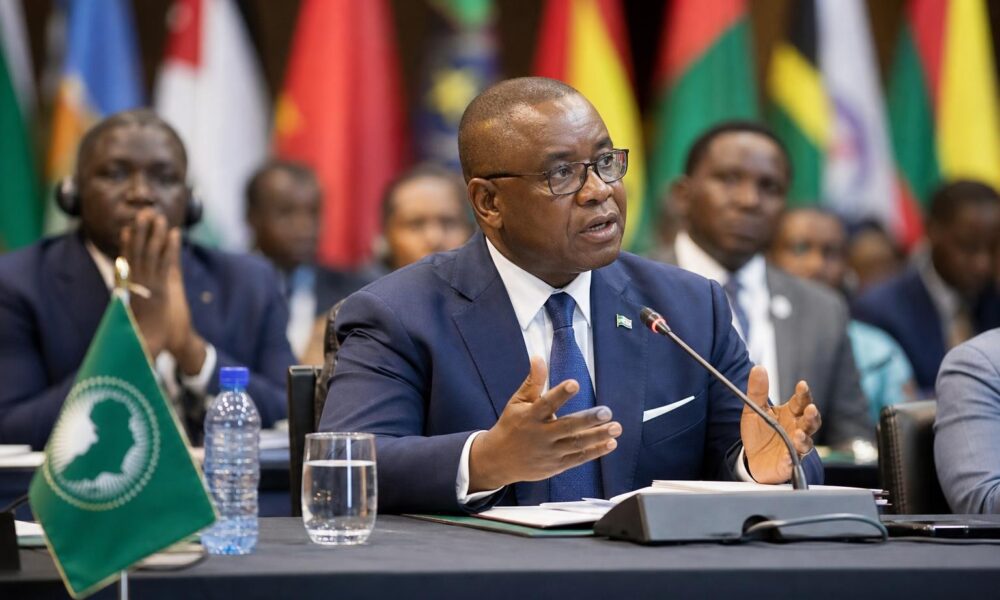
President Dr. Julius Maada Bio has called for a broader approach to peacebuilding in Africa, arguing that lasting peace depends on more than ending active hostilities.
Table Of Content
Bio made the remarks on Tuesday, 13 October 2026, while delivering a keynote lecture titled “Building Lasting Peace in Africa: The Catalytic Role of ECOWAS” at the Geneva Graduate Institute in Geneva, Switzerland. The lecture was part of the institute’s Director’s Global Leadership Series.
He outlined five priorities for securing lasting peace across the continent: stronger democratic institutions, preventive diplomacy, regional cooperation, people-centred security and sustainable financing for African-led peace operations.
Institutions and prevention
Bio said peacebuilding must address the conditions that drive conflict, rather than focusing only on the cessation of violence. He identified national ownership, justice and effective institutions as essential to maintaining peace after conflict.
He also described preventive diplomacy and early intervention as critical tools for stopping crises before they escalate. As part of that approach, Bio proposed a Regional Prevention Compact under which agreed early-warning triggers would automatically initiate mediation.
The proposal’s detailed design, participants and implementation timeline were not specified.
“The absence of war is the beginning of peace. It is not its guarantee,” Bio said during the lecture.
ECOWAS and regional cooperation
Bio called for continued dialogue between ECOWAS and Burkina Faso, Mali and Niger. He also said the regional organisation must learn from its shortcomings and deliver tangible results for citizens.
In discussing collective responses to shared security threats, he used the term “cooperative sovereignty” to describe a proposed approach to regional action.
Bio said peaceful political transitions and public confidence in institutions were fundamental to preventing instability. He cited Sierra Leone’s peaceful transfers of power in 2007 and 2018 as examples.
His remarks drew on his experience as a former soldier, Sierra Leone’s post-war recovery and his tenure as the immediate past Chairman of the ECOWAS Authority. Sierra Leone, which moved from receiving international peacekeeping support to contributing to peacekeeping efforts abroad, was part of that context.
Security, opportunity and financing
Bio said peace would be difficult to sustain where insecurity, injustice and economic exclusion continued. He advocated greater investment in opportunities for young people and argued that people-centred security should form part of broader peacebuilding efforts.
He also urged policymakers to judge peacebuilding by both the conflicts brought to an end and those prevented from beginning.
“The greatest achievements in peacebuilding are the wars that never began, the elections that passed peacefully, the young people who found work instead of weapons,” he said.
Bio further called for sustainable financing for African-led peace operations and reiterated Sierra Leone’s support for reform of the United Nations Security Council, saying Africa should have a fairer voice in global peace and security decisions.

No Comment! Be the first one.