Iran Erupts as Thousands Flood Streets in Rare, Nationwide Show of Defiance
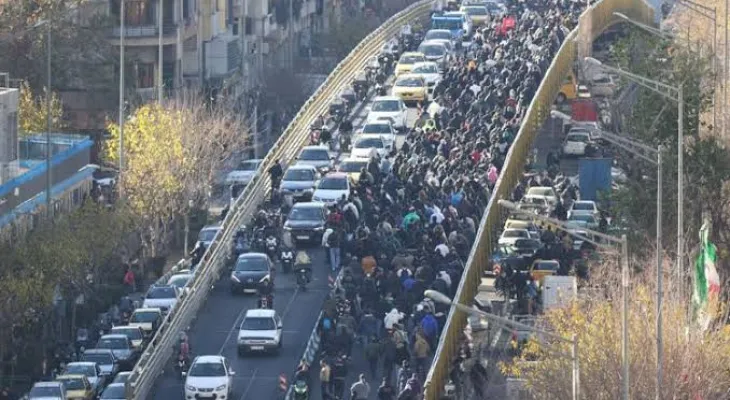
Massive anti-government protests swept through Tehran and dozens of other Iranian cities on Thursday night, with thousands of people taking to the streets in what is being described as one of the boldest challenges to Iran’s leadership in years.
Videos shared online show huge crowds marching peacefully through major roads in Tehran and Mashhad, chanting slogans against the country’s top leadership and calling for political change. In several clips, protesters can be heard demanding the removal of Supreme Leader Ayatollah Ali Khamenei and calling for the return of Reza Pahlavi, the exiled son of Iran’s former shah.
Despite the size of the demonstrations, security forces did not immediately disperse the crowds in some areas. However, reports later emerged of a nationwide internet blackout, cutting off communication as unrest spread.
This latest wave of protests marks the 12th straight day of demonstrations, sparked by deep frustration over Iran’s collapsing currency, rising inflation, and worsening living conditions. According to rights groups, protests have now reached more than 100 cities and towns across all of Iran’s provinces.
Footage from different regions captured powerful scenes: crowds chanting “Don’t be afraid, we are all together,” protesters dismantling surveillance cameras, and others confronting security forces. In cities such as Isfahan, Tabriz, Babol, and Dezful, chants calling for an end to dictatorship echoed through the streets. Some videos showed clashes, with gunfire reportedly heard in certain areas.
Casualties have continued to mount. Human rights groups report dozens of protesters killed, including children, along with thousands arrested. Security forces have also suffered fatalities. The true scale of the violence remains difficult to verify due to restrictions on international media operating inside Iran.
The protests have drawn comparisons to the 2009 uprising that followed a disputed presidential election, as well as the 2022 demonstrations triggered by the death of Mahsa Amini in police custody. Many believe the current unrest reflects even deeper anger, driven by economic hardship and a sense of hopelessness among young people.
Calls for continued protests have come from opposition figures abroad, Kurdish groups, university students, and prominent activists inside Iran. Some imprisoned rights activists have also issued statements saying that peaceful political change is no longer optional but necessary for the country’s future.
Iranian state media has played down the scale of the unrest, in some cases denying that protests took place at all. Meanwhile, officials have issued mixed messages — urging restraint on one hand, while warning that those labelled as “rioters” will be dealt with harshly.
Behind the chants and marches are personal stories of despair. Many Iranians say they feel trapped, unable to plan for the future as inflation soars and opportunities disappear. “Life here has become unbearable,” one woman said, explaining that the protests are driven by a loss of hope rather than politics alone.
As night falls and internet access remains restricted, uncertainty hangs over Iran. What is clear, however, is that a growing number of citizens are no longer willing to stay silent.
Comment / Reply From
You May Also Like




Recent News

Popular Posts