
Spanish Police Find 28 Undocumented Migrants Hidden in Ceuta Flats
Spanish police have found 28 undocumented migrants hiding in flats in Ceuta, where authorities say the properties failed to meet basic hygiene and habitability standards.

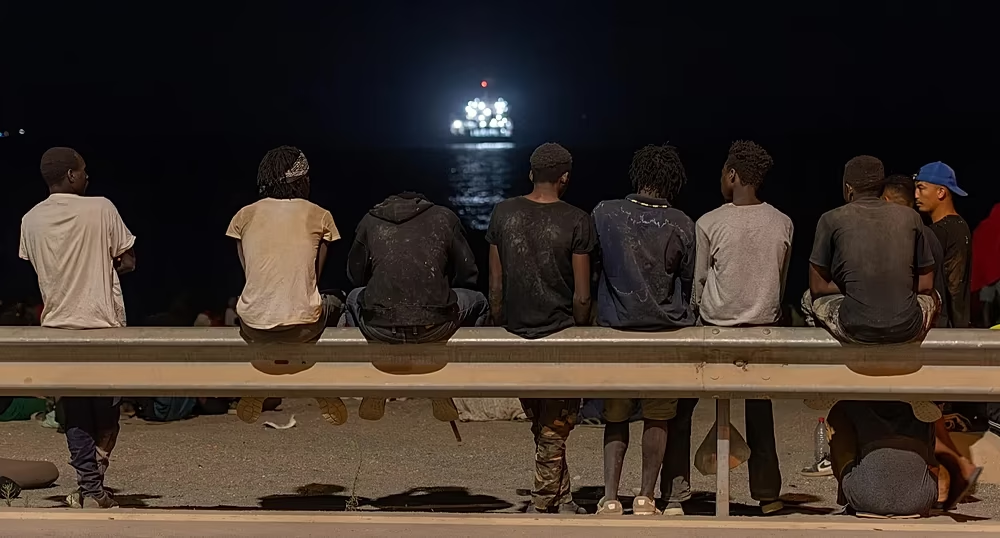
Spanish police have discovered 28 undocumented migrants hiding in flats in Ceuta, amid a continuing humanitarian and political crisis in the Spanish territory.
Police said the properties did not meet adequate hygiene and habitability standards. Some of the migrants were found in a building under construction that had no water or electricity supply.
Three people were arrested in connection with the discovery, according to police. Three minors were referred to support services. Authorities have not identified the arrested individuals or disclosed any charges against them.
Ceuta crisis continues
The discovery came after an earlier influx in which more than 70,000 people entered Spanish territory from Morocco. Most of those who reached Ceuta in late July returned shortly afterward, while thousands remained in difficult conditions, according to the supplied account.
The influx overwhelmed resources in the small territory and contributed to a humanitarian crisis that lasted several weeks. It also triggered political pressure on Prime Minister Pedro Sanchez, who faced criticism from Spain’s right-wing parties over security while seeking to avoid a diplomatic confrontation with Morocco.
Authorities have since detected fresh calls on social media for another rush to Ceuta and Melilla, Spain’s other North African territory. The calls coincided with Morocco’s parliamentary election. Authorities have not established that another rush took place after those messages appeared.
Sanchez addresses Morocco’s role
Sanchez told CNN on Tuesday that Morocco’s “border control failed” during the July rush. At a press conference on Wednesday, he said there had been “a very large police deployment” at both the Ceuta and Melilla borders.
Speaking in New York while responding to criticism from the right-wing opposition, Sanchez said, “We should acknowledge this too.” He also said Morocco needed to provide “explanations and changes” to help prevent a repeat of the influx.
At the same time, Sanchez said there was no “solid proof” to blame Rabat for the influx. Morocco claims sovereignty over Ceuta and Melilla, although both territories are administered by Spain.






No Comment! Be the first one.