
Algeria Grants Djezzy First Authorization to Form a Payment Services Provider
Algeria's Monetary and Banking Council has authorized Djezzy Payment Services to constitute itself as a payment services provider, opening a possible route into mobile-based financial services.

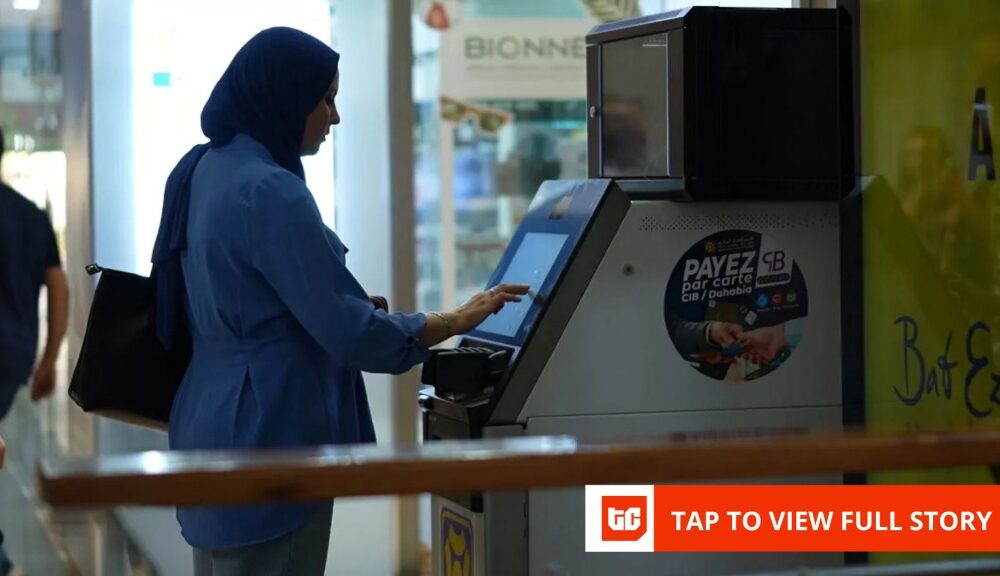
Algeria has authorized Djezzy Payment Services to constitute itself as a payment services provider, marking the first approval of this kind since the country created the category.
Table Of Content
The decision was taken on 23 September 2026 by the Monetary and Banking Council, chaired by the Governor of the Bank of Algeria. Djezzy Payment Services is a subsidiary of Optimum Telecom Algeria, described as Algeria’s second mobile operator.
The authorization does not amount to permission to begin operating as a payments provider. Djezzy has 12 months from the date it receives notification to submit an accreditation application to the Bank of Algeria. It will not be able to process customer funds until that separate accreditation is granted.
A new stage for Algeria’s payments market
The payment services provider framework was established under Law 23-09, Algeria’s monetary and banking law adopted in June 2023. Regulation 25-02, issued on 14 April 2025, sets out the rules governing the category.
Algeria has not yet developed a mobile-money market on the scale seen in much of Africa. Its existing digital-payment infrastructure is operated mainly by banks and Algérie Poste. The Edahabia card and the BaridiMob application account for much of the country’s retail digital-payment activity, while card processing involves GIE Monétique and SATIM.
Telecom operators already maintain a nationwide network of distributors and kiosk resellers where customers pay cash for mobile-credit flexy recharges. That network is considered the closest existing equivalent to a cash-in agent structure in Algeria.
GIE Monétique reported 939 billion dinars in electronic payments during 2025, an annual increase of 46 percent. Cash withdrawals through automated teller machines reached 4,397 billion dinars, while Algeria had 78,774 payment terminals in December 2025.
Djezzy’s potential reach
Djezzy reported 17 million subscribers and held approximately 31 percent of Algeria’s mobile market in early 2025. It ranked behind Mobilis, with 43.7 percent, and ahead of Ooredoo, with 25.4 percent.
The operator’s large customer base could provide a foundation for a phone-based wallet supported by physical locations for depositing and withdrawing cash, although the authorization does not specify which products Djezzy will ultimately offer. The source indicates that telephone credit could be an initial focus, followed by wallets and merchant payments if the necessary infrastructure is developed internally.
The Algerian state holds a majority stake in Djezzy through the Fonds National d’Investissement. The state acquired VEON’s stake in the operator in 2022 for 682 million US dollars.
The authorization may increase competitive pressure on Mobilis and Ooredoo and give other Algerian fintech companies a clearer route toward seeking payment licenses. However, the source does not report formal applications from other operators or fintechs.
Interoperability remains a key question
The eventual impact of the decision will depend partly on whether payment-service-provider accounts can work with bank accounts, BaridiMob and the systems operated through GIE Monétique. Without interoperability, separate providers could create closed payment networks rather than a connected national system.
A PSP license would also not remove Algeria’s foreign-exchange restrictions. Multi-currency services would remain subject to Bank of Algeria rules and to relationships with partner banks.
Safa Korti, co-founder and chief executive of North African fintech VaulFi, said the significance of licensing would ultimately depend on how it is used: « Au bout du compte, peu importe qui l’obtient en premier, en deuxième ou en troisième — ce qui compte, c’est ce qu’on va en faire ».
For now, Djezzy remains at the authorization stage. Its ability to handle customer funds and launch payment services will depend on the outcome of the required accreditation process.





No Comment! Be the first one.