
Burkina Faso dancers use floor vibrations to follow music
Deaf and hard-of-hearing dancers in Bobo-Dioulasso are using the Vibra-Signe technique, which combines floor vibrations and body gestures to help them follow rhythm without hearing music.

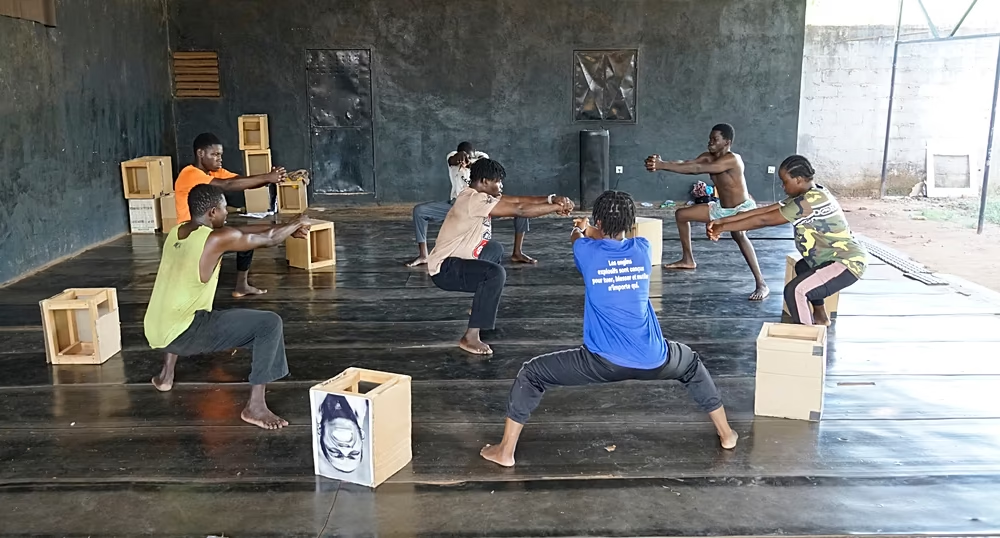
BOBO-DIOULASSO, Burkina Faso — Deaf and hard-of-hearing dancers in Burkina Faso are using vibrations and visual cues to experience rhythm and take part in cultural performances.
At the headquarters of Au Déla de l’Handicap in Bobo-Dioulasso, dancers follow the Vibra-Signe technique developed by instructor Yaya Sanou. The method allows them to sense vibrations through the floor while observing Sanou’s body gestures, helping them keep pace with music they cannot hear.
Sanou also runs the dance group. He said he began teaching deaf children and young people after observing that they often remained isolated and rarely joined socio-cultural activities.
“I saw these children, these young people, they were always among themselves, they did nothing, they did not participate in socio-cultural activities,” Sanou said. He added that the positive changes in the dancers’ daily lives showed him there was a need for the programme.
Dance as a route to participation
The approach has become associated with Fientan, a dance organisation whose name means “without disability” in the local Dioula language. Fientan won a gold medal for dance creation at the 2023 Francophone Games in Kinshasa, Congo. Its production “Adepte de mon être” was also performed in Germany and Ivory Coast.
According to the report, dancing has helped improve the participants’ social skills and encouraged their involvement in community and cultural life. Sanou said the technique takes time to master because dancers must learn to coordinate rhythm, vibrations and body movements, but described the results for himself and his students as fulfilling.
Adama Sanou, one of the dancers, said he continues because of his enjoyment of the discipline and the learning process.
“I really like dance, the repetition, the learning. Love (of dance) is what encourages me to keep dancing,” he said.
He also recalled continuing to practise after his father initially objected to his dancing. “When (my father) refused to let me dance, I left him alone, and I continued to dance because I love it. Naturally with time, he let me continue,” Adama Sanou said.
Wider inclusion challenges
The dance initiative operates against a backdrop of continuing difficulties for deaf and hard-of-hearing people in Burkina Faso. The country has introduced inclusive-education programmes and other measures intended to improve access to welfare and living conditions for people with disabilities, but rights advocates and experts cited shortages of trained teachers, sign-language interpreters and support services.
There is no recent national figure available for the number of deaf and hard-of-hearing people in Burkina Faso. The country’s 2019 census recorded about 46,500 people aged two or older who had significant difficulty hearing or could not hear at all. Burkina Faso’s population is approximately 24 million.
An Institute of Social Sciences study reported that 58% of respondents held a negative perception of deafness, associating it with a curse or spiritual punishment.
Sanou’s dance work also asks broader questions about the place of people with disabilities in society. He said one of the group’s performances explores how dancers can assert themselves and reclaim the position they want in their communities.


No Comment! Be the first one.