
Caritas Freetown Leads Three-Day Flood Preparedness Cleanup
Caritas Freetown has completed a three-day cleaning exercise in selected Western Area communities to address clogged drainage and strengthen flood preparedness.

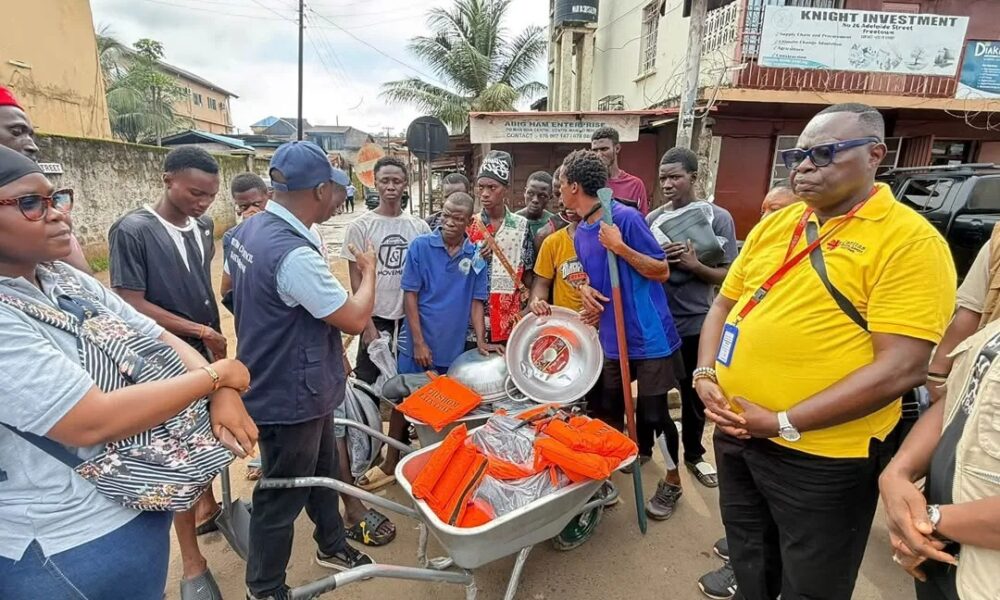
Caritas Freetown has carried out a three-day community and main street cleaning exercise in selected areas of the Western Area to support flood preparedness and address clogged drainage.
The exercise took place on September 17, 19 and 20, 2026, as part of a CAFOD-funded project focused on strengthening community flood preparedness and early humanitarian response in vulnerable communities and households across the Western Area Urban and Rural Districts.
The project is being implemented in eight flood-prone communities. They are Culvert, Portee, Kroo Bay and Gray Bush in the Western Area Urban District, and Goderich-Crab Town, Levuma, Waterloo Bofla and Grafton in the Western Area Rural District.
Drainage and waste management
Community cleaning activities were conducted in Bassa Town, Campbell Town, Jui and Regent in the Western Area Rural District. In the urban district, teams worked along Wilberforce Street, Priscilla Street and Gabriel Street, as well as at Salad Ground Market.
Alimatu Turay, Project Officer at Caritas Freetown, said a needs assessment in disaster-prone communities had identified blocked drainage as one factor contributing to flooding. She said the exercise was designed to promote preparation before disasters occur.
“We’re doing this as a preparedness mechanism and not always reacting to disaster,” Turay said.
She also identified indiscriminate waste disposal as a major challenge for communities and linked responsible waste management to flood prevention.
“Indiscriminate waste disposal poses a risk to our communities. People should understand that a healthy environment is a safe environment,” Turay said.
Calls for sustained local action
Caritas Freetown conducted the initiative in collaboration with the National Disaster Management Agency and Freetown City Council. The three organizations have also trained Community Disaster Management Committees on disaster preparedness and response.
Gabriel John Hallowel, Deputy Disaster Officer at Freetown City Council, said community ownership was important because residents are often among those most affected when flooding occurs. He described Caritas’s support as significant to the Council’s flood mitigation efforts, particularly before and during the rainy season.
Hallowel said Catholic Relief Services had supported the Council with tricycles to help some communities remove household waste. He also called for continued cooperation between the Council, communities and organizations involved in similar work.
“Beyond this exercise, we look forward to more coordination with other NGOs with similar initiatives and expect communities to take responsibility of waste management within their household and the community,” he said.
In Grafton, Community Disaster Management Committee volunteer Rachael Dumbuya said the community remained vulnerable to flooding and needed continued interventions to improve its drainage system. She raised concerns that structures constructed in waterways were worsening the community’s vulnerability.
Dumbuya called for additional support, including the use of machinery to clear and deepen some drainage. She also urged stronger community bylaws to discourage indiscriminate waste disposal and called for police support in enforcing them.
Caritas Freetown has not provided figures for the amount of waste or drainage cleared, or for the number of participants and households involved in the exercise.



No Comment! Be the first one.