
Oromo Gather in Addis Ababa, Call for Peace Amid Tigray Tensions
Tens of thousands of Oromo gathered in Addis Ababa for Irreecha, using the festival to appeal for peace and civilian protection as reports pointed to federal forces entering Mekelle.

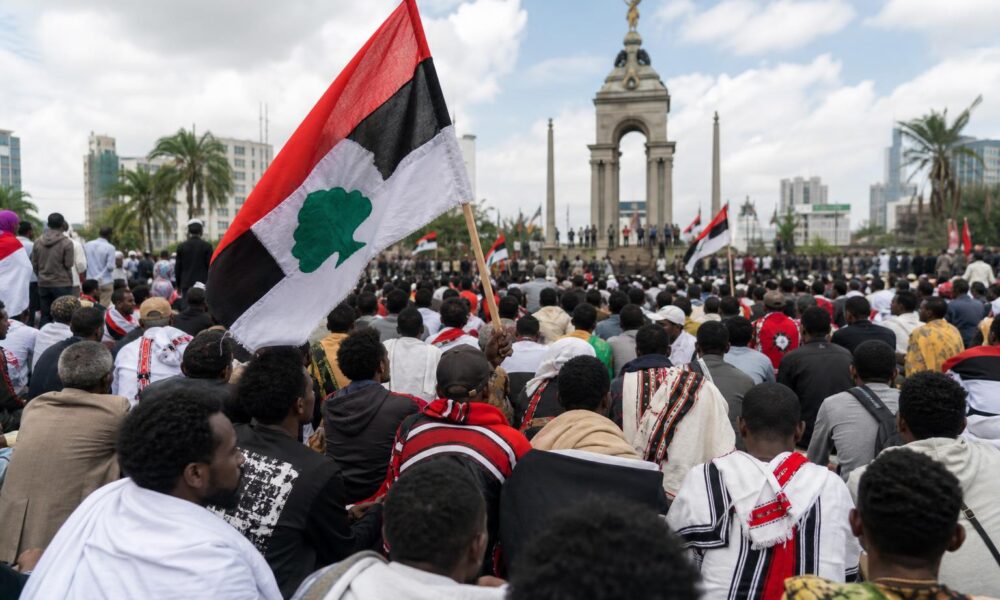
Tens of thousands of Oromo gathered in Addis Ababa on Saturday for the Irreecha thanksgiving festival, with participants using the occasion to call for peace and protection for civilians.
Table Of Content
The gathering took place amid reports that federal forces had entered Mekelle, the capital of the northern Tigray region. Tigrayan forces had reportedly withdrawn from the city, while the Tigrayan leader implied that guerrilla-style attacks would continue.
Calls to protect civilians
The festival unfolded as fears of renewed conflict between the Ethiopian government and Tigrayan rebels continued to grow. Fighting reportedly began 10 days earlier after the Tigrayan People’s Liberation Front launched attacks on neighbouring states.
Simert Ababa, a student attending the gathering, said the celebrations were taking place despite conflict in several parts of the country.
“Even though peace has been disturbed in the past years, the Oromo are now celebrating Irreecha beautifully, but there are wars in various places,” Ababa said.
She called for the situation to be stabilised and said the government had a responsibility to protect children, mothers and education.
“I say that needs to be stabilised as much as possible, and this government has a role in that. Children should not miss their education, mothers should not be harmed, children should not be harmed,” she said.
Another student, Bilise Mohammed, appealed to the parties involved in the fighting to reach an agreement.
“For those in the north, create an agreement so the war stops,” Mohammed said. “To the government and to those who are fighting, peace comes first. The people are the ones that are dying, this won’t take you anywhere.”
Merchant Carra Mekonen also called for peace and freedom of movement across the country, including between Oromia, Tigray and the Amhara region.
“I want everyone to agree, whether in Ethiopia or Oromia. I want us to live freely everywhere, regardless of the borders, from Wollega (in Oromia) to Tigray and the Amhara region, so that we can go about our business as usual,” Mekonen said.
Regional diplomatic strain
The renewed fighting has also been accompanied by a deterioration in Ethiopia’s relations with Eritrea and Egypt. Ethiopia expelled 10 Eritrean diplomats and closed its embassy in Asmara on Thursday. Eritrea responded by saying it would “sever all diplomatic ties.”
Ethiopia also expelled an Egyptian diplomat without providing an explanation, prompting a reciprocal action by Cairo. Ethiopia has accused Eritrea and Egypt of supporting the rebels, while Eritrea has accused Ethiopia of planning to invade and seize access to its coastline.
In a video message, Debretsion said the conflict was regional and concerned control of the Red Sea.
Conflict background
The Tigrayan People’s Liberation Front ruled Ethiopia from 1991 to 2018 before being marginalised following the rise of Prime Minister Abiy Ahmed, who comes from the Oromia region.
Tensions between Tigray and Addis Ababa erupted in 2020, leading to a two-year civil war that, according to the source, killed more than 600,000 people. A 2022 peace agreement brought an uneasy calm until the previous year but was never fully implemented.



No Comment! Be the first one.