
Safaricom Brings M-PESA Tap-to-Pay to 30,000 Pesapal Terminals
Safaricom and Pesapal are rolling out M-PESA tap-to-pay and QR payments on 30,000 compatible terminals across Kenya, with no additional merchant fee.

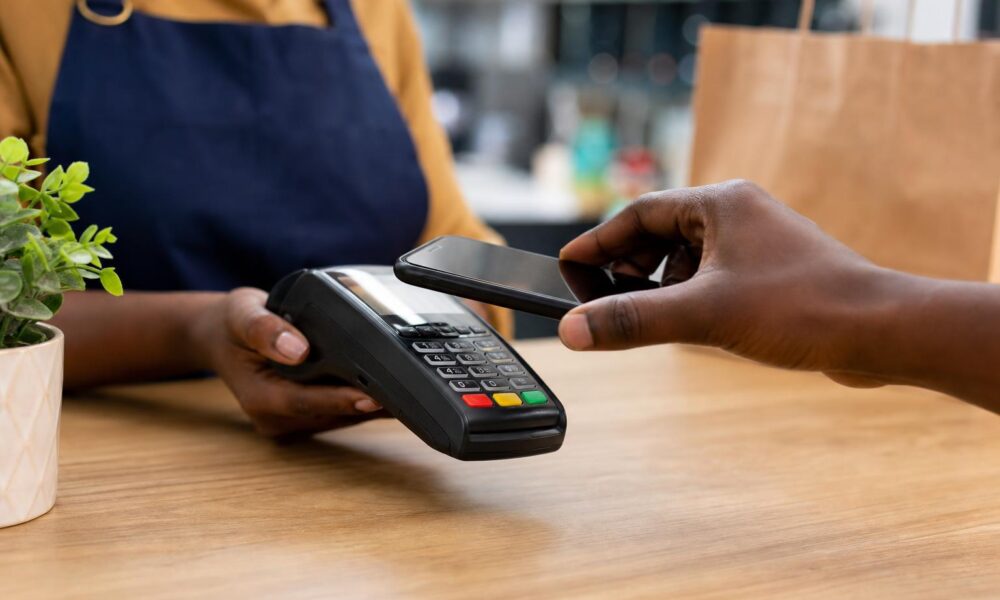
Safaricom is expanding M-PESA payment options in Kenya through a partnership with Pesapal, allowing customers to pay at compatible point-of-sale terminals by tapping their phones or scanning a QR code.
Table Of Content
The initial rollout covers 30,000 Pesapal terminals, according to Agosta Liko, founder of Pesapal. Most of the terminals are deployed at restaurants, hotels and selected supermarkets.
How the payment system works
Customers using NFC-enabled Android phones or iPhones can tap their devices on a compatible Pesapal terminal to initiate an M-PESA payment. Those whose phones do not support NFC can instead scan a QR code displayed on the terminal.
During checkout, a cashier enters the purchase amount into the Pesapal device. My OneApp then opens with the merchant’s Buy Goods number and the payment amount already populated. Customers review the information and authorise the transaction using an M-PESA PIN or biometric verification.
The payment process does not replace the merchant’s existing M-PESA account details. The merchant’s current Till Number remains the account that receives the funds.
The service is available to Pesapal merchants with compatible terminals and carries no additional merchant fee, according to Safaricom and Pesapal. Consumers also pay no extra charge when using the service.
Pesapal rollout and wider integration
Liko said Pesapal spent six months testing the service before making it available to merchants with compatible terminals.
“Thousands of businesses trust our platform, and by teaming up with Safaricom, we are delivering the faster, error-free transactions their customers expect. Today, we activate the future of payments,” Liko said.
Tap-to-pay is currently exclusive to Pesapal among point-of-sale providers. A Safaricom representative said the company is discussing possible integration with other providers.
“For now, Pesapal is the partner on board, but there are ongoing discussions with other POS providers to integrate,” the representative said.
Safaricom’s scan-to-pay expansion
Safaricom says its scan-to-pay service is already available at more than 60,000 merchant outlets and is targeting 500,000 outlets within the next year. The company also says My OneApp has recorded more than 7 million downloads.
The partnership adds phone-based tap payments to a market where M-PESA customers have traditionally entered a merchant’s Till Number, payment amount and PIN on their phones. It also builds on Kenya’s QR payment framework, introduced in 2023 through the Kenya Quick Response Code Standard.
James Maitai, Safaricom’s group chief technology officer, described the partnership as part of the company’s broader payments strategy.
“Our partnership with Pesapal is an important part of that journey, bringing together our respective capabilities to shape the next generation of everyday payments,” Maitai said.
Pesapal said about 30,000 of Kenya’s point-of-sale terminals operate on its platform. Central Bank of Kenya data provided by the companies puts the country’s total number of POS terminals at more than 57,000 in August 2026, compared with 54,454 at the end of 2025. The figures are not directly comparable, according to the source information.
Safaricom previously introduced M-PESA 1Tap in 2017 using NFC-enabled cards, wristbands and stickers, but discontinued the product that year after it failed to gain sufficient adoption. The new service uses customers’ smartphones and also supports QR payments.






No Comment! Be the first one.