
EU Suspends Imports of Namibian Meat Over Foot-and-Mouth Disease Concerns
The European Union has temporarily suspended entry of specified Namibian meat products following a foot-and-mouth disease outbreak in southern Namibia.

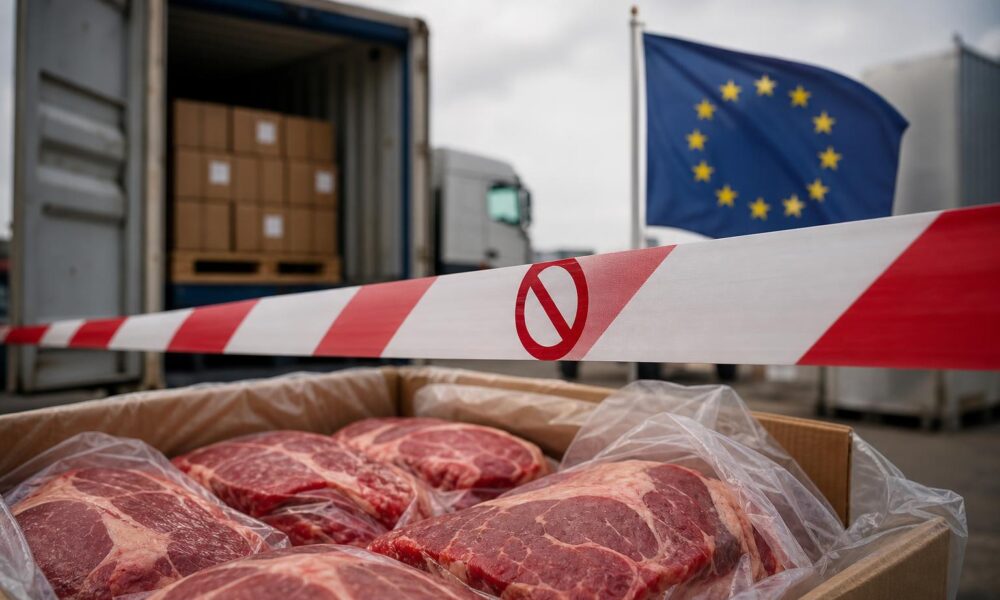
The European Union has temporarily suspended the entry of specified Namibian meat products into its territory following a foot-and-mouth disease outbreak, a decision that could affect one of Namibia’s most important export markets.
In a statement, the EU delegation said the measure covers fresh meat from cattle, sheep and goats, along with meat from relevant farmed and wild hooved animals and certain processed meat products.
“The EU has decided to temporarily suspend the entry into its territory of fresh meat of cattle, sheep and goats,” the delegation said.
Processed meat that has undergone “the most severe risk-mitigating treatment” remains eligible for entry, according to the delegation. No end date for the temporary suspension was provided.
Pressure on Namibia’s beef exports
The European Union is Namibia’s largest beef market and accounts for more than 80 percent of the country’s beef exports, according to the source report.
EU ambassador Ana Beatriz Martins told Namibia’s NMH media that around 10 million kilogrammes of Namibian beef are sent to Europe each year. She said the suspension could affect a quarter of the 40,000 direct jobs involved in exports to Europe.
Namibia announced its first foot-and-mouth disease outbreak in its primary commercial livestock zone in 60 years. The outbreak prompted a nationwide ban on livestock movement and meat exports.
Officials said the outbreak in southern Namibia had spread to 11 farms after it was declared on September 22. The available information does not specify the year of that declaration.
Disease-control measures intensified
Romeo Muyunda, a spokesman for Namibia’s agriculture ministry, said the country’s response included surveillance, tracing, testing, movement controls, veterinary roadblocks and biosecurity measures.
Foot-and-mouth disease causes fever and blisters around the hoof and in the mouth. These symptoms can prevent affected animals from feeding and may sometimes result in death.
The disease has also struck Botswana, Eswatini, Lesotho, Mozambique, South Africa, Zambia and Zimbabwe.
The EU delegation said the last major foot-and-mouth disease outbreak in the bloc, in 2001, led to the culling of more than six million animals. The suspension of Namibian products reflects the bloc’s effort to limit the risk of the disease entering its territory while allowing some products that have received the highest level of risk-reducing treatment.
For Namibia, the measure comes as authorities continue efforts to contain the outbreak and protect livestock production. Its effect on beef shipments and employment will depend in part on how long the restrictions remain in place.





No Comment! Be the first one.