
Henri B. Kagan and Kenso Soai Win Nobel Chemistry Prize
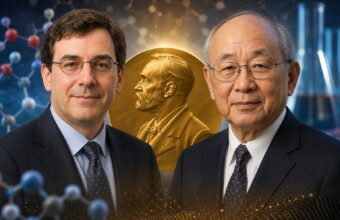
Henri B. Kagan of France and Kenso Soai of Japan have been awarded the Nobel Prize in Chemistry for discoveries about how nature produces one molecular version rather than its mirror image.


French scientist Henri B. Kagan and Japan’s Kenso Soai have been awarded the Nobel Prize in Chemistry for discoveries concerning the molecular asymmetry found in nature.
Their work examined how nature produces one version of a molecule instead of its mirror image, a process with significance for the development of pharmaceuticals.
Understanding molecular mirror images
Amino acids, which are described as existing in two mirrored variants, can be compared to a pair of hands. Although the two forms resemble each other, they are not identical. The supplied account notes that only one of the two variants is found in the body’s cells.
Researchers have long sought to understand how this process unfolds. The discoveries recognised by the Nobel jury address that question by advancing understanding of how chemical reactions can produce a preferred molecular form.
Relevance to medicine
The distinction between mirrored molecular versions is important in pharmaceutical development. The recognised research is therefore significant for efforts to produce medicines with the intended molecular structure.
The chemistry award followed the physics prize and came before the peace prize, which was due to be announced on Friday, according to the supplied account.





No Comment! Be the first one.