
Kidnappings deepen financial and education crisis in Nigeria’s Borno State
Kidnappings in Nigeria’s Borno State are forcing families to sell livestock, seek loans and exhaust savings, while attacks have led to school closures and prolonged separations.

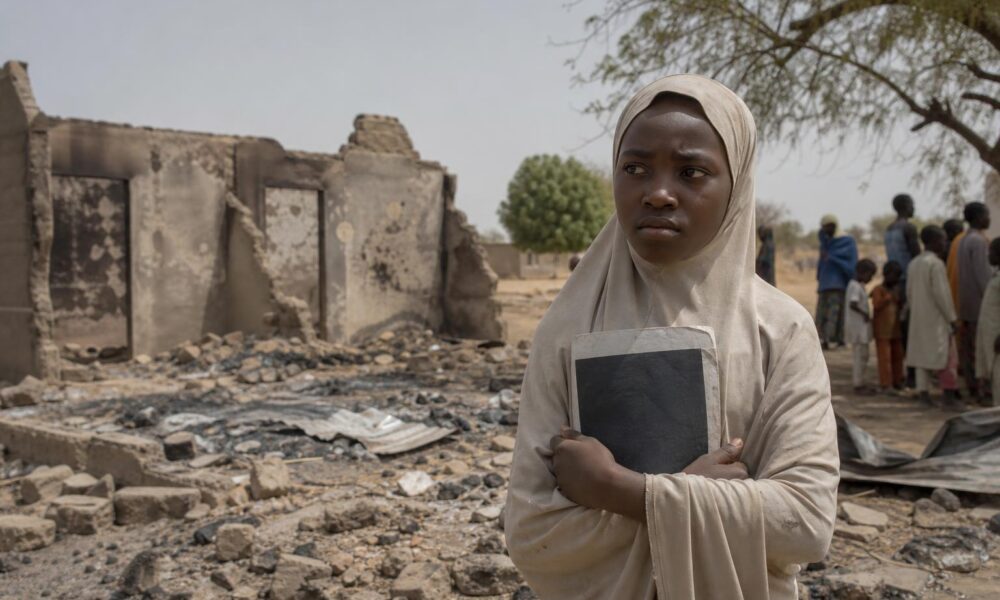
Families in Nigeria’s northeastern Borno State are facing severe financial and emotional strain as kidnappings leave relatives in prolonged captivity and disrupt access to education.
Table Of Content
Households have sold livestock, sought loans, disposed of property and used up savings in efforts to raise ransom payments. In some cases, families that sacrifice assets to secure one relative’s release later face another demand after a further abduction.
Families left waiting for news
Laraba Dauda said her younger sister was abducted on January 13, 2026, along the Biu–Buratai road. Months later, the family still did not know where she was being held or whether she was safe.
Dauda recalled receiving a call from her sister shortly after the abduction. “Aunty, unknown people have kidnapped us and taken us somewhere in the bush. We don’t know where they are taking us. At this moment, Aunty, please just help me with your prayers,” the sister said, according to Dauda.
“We need the government to come to our aid and help rescue our relatives who have spent more than six months in captivity,” Dauda said.
Anjikwi Hena said his son was abducted on March 30, 2026, while preparing to travel to Maiduguri in search of work. The available information does not establish where Hena’s son is being held or whether he has been rescued.
Musa Abdullahi Wakawa’s wife and seven-year-old son were also abducted, and a ransom was demanded for their release. It is not known from the available information whether they have been freed.
School closures and missing children
The violence has also damaged education in Askira-Uba Local Government Area. Fasuma Askira said 56 of the area’s 113 primary schools were functioning.
Before an attack on Mussa on May 15, 76 primary schools were operating. Suspected rebel fighters abducted dozens of children during the attack, and the closure of another 20 schools left 56 functioning.
A register obtained by news services identified 40 missing children, although community and government figures differed. The Borno State government later referred to about 44 children still missing from Mussa.
Junior secondary students were moved from Mussa to a government boarding school in Uba. The education authority also advised the local government to deploy community vigilantes around schools. Soldiers and local vigilantes were deployed in Mussa and Lassa, according to Askira.
On June 29, armed rebels attacked Government Day Secondary School in Lassa while students were taking National Examinations Council examinations. Some students were recovered, but 36 students and a teacher were reported to remain in captivity.
Broader scale of the crisis
Amnesty International Nigeria said at least 1,100 people were abducted across the country between January and April 2026. The organisation warned that the actual figure could be considerably higher because incidents in remote communities often go unreported.
Isa Sanusi, director of Amnesty International Nigeria, said gunmen were carrying out abductions largely for ransom. He said some victims “stay months at the mercy of gunmen in punishing situations.” Amnesty also warned that abducted people may face torture, starvation and sexual violence, while relatives are placed under extreme pressure to raise money.
Professor Khalifa Dikwa described kidnapping for ransom as having “metamorphosed into a profit-making venture”. He said ransom payments can sustain criminal networks, finance weapons purchases and attract younger recruits.
Government response
Usman Tar, Borno’s commissioner for information and internal security, said the state was combining military and nonmilitary measures. These include logistical support for the armed forces, civilian volunteers and drones equipped with thermal capabilities to monitor criminals’ movements.
Tar said attacks had reduced in some affected areas and that security forces had been able to dominate hotspot areas, although those claims were not independently verified. He also said authorities were advising commuters to avoid dangerous routes when necessary and working to prosecute people involved in kidnapping and other crimes.
The Borno State government, Tar said, provides financial assistance to affected families through the State Emergency Management Agency and the State Humanitarian Agency. “There are fixed sums that are provided through the State Emergency Management Agency and the State Humanitarian Agency,” he said.
Dikwa called for stronger intelligence- and technology-led operations, modern weapons, night-vision equipment, tracking technology and improved welfare for security personnel. Tar said poverty, unemployment and illiteracy could also contribute to insecurity, underscoring the crisis’s wider social and economic consequences.





No Comment! Be the first one.