
Mekelle Falls to Ethiopian Forces as Tigray Fighting Raises Regional Fears
Ethiopian federal forces have captured Mekelle after nearly two weeks of fighting, while rebel forces, including the TPLF, withdrew and pledged to continue their resistance.

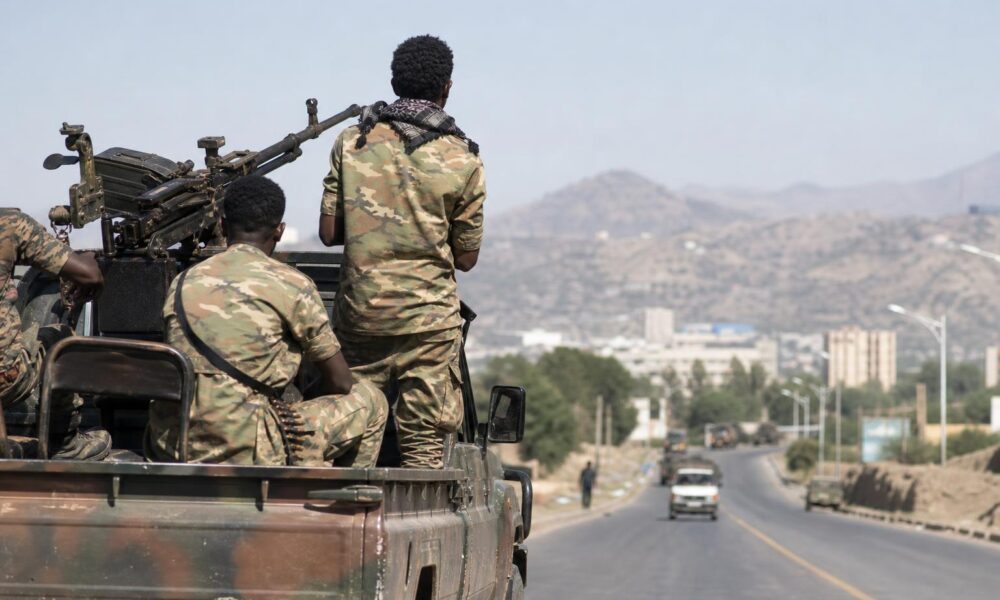
Ethiopian federal forces have entered and captured Mekelle, the capital of Tigray, after nearly two weeks of intense fighting, in a development that has effectively ended the 2022 Pretoria ceasefire and the fragile peace that followed the previous Tigray war.
Table Of Content
Forces from an alliance of rebel groups, including the Tigray People’s Liberation Front (TPLF), withdrew from the city after successive defeats around Alamata and Kobo. Fighting has continued elsewhere in Tigray, leaving open the possibility that the conflict could shift from conventional warfare to a prolonged insurgency.
TPLF leader Debretsion Gebremichael pledged continued resistance after the withdrawal, saying: “We will confront the enemy on our terms and where we choose.”
Unclear extent of Eritrean involvement
Reports of Eritrean troop movements have added to concern that the fighting could draw in neighbouring countries. The Associated Press reported that Eritrean troops had entered northern Tigrayan towns, including Adigrat and Idaga Hamus. Eritrea has neither confirmed nor denied the reports.
The extent of any Eritrean military involvement remains unclear. Eritrean forces fought alongside Ethiopian troops during the 2020–22 Tigray war, which continued for nearly a year and a half after Tigrayan forces retook Mekelle during the earlier conflict.
Relations between Addis Ababa and Asmara have deteriorated sharply since the Pretoria ceasefire. Ethiopia closed its embassy in Eritrea and expelled Eritrean diplomats on October 1. Eritrea responded by severing diplomatic ties.
Etana H Dinka, an assistant professor of African history at the University of Miami, said the Ethiopian army’s advance in Tigray “directly threatens” Eritrean President Isaias Afwerki and the Eritrean state.
Mohamed Kheir Omer, a researcher focused on the Horn of Africa, said Eritrea might prefer to support withdrawing TPLF forces so that any confrontation between Ethiopian and Eritrean soldiers takes place in Tigray rather than on Eritrean territory. That assessment remains unconfirmed.
Regional rivalry surrounds the conflict
The fighting is unfolding amid wider disputes over Ethiopia’s regional ambitions and security relationships. Ethiopia has been landlocked since Eritrea won independence in 1991 and relies heavily on Djibouti for maritime trade, while also pursuing alternative arrangements involving Kenya and Somaliland.
Prime Minister Abiy Ahmed said after being sworn in for another five-year term that Ethiopia would work to secure an outlet to the sea “based on the principle of give and take.” Eritrea regards Ethiopia’s pursuit of sea access as an existential threat, according to Hossamaldeen Ibrahim, an African analyst at the Bloomsbury Intelligence and Security Institute.
Ibrahim also said Egypt considers the Grand Ethiopian Renaissance Dam and any Ethiopian army move towards the Red Sea strategic threats. He described Egypt as working with Eritrea, Sudan and Somalia against what he called Ethiopian unilateralism.
Egypt, Eritrea, Sudan and Somalia held a quadrilateral consultative summit in New Alamein, Egypt, on October 4. The countries pledged to strengthen political, economic and trade cooperation, along with consultation and coordination. Their joint declaration also called for respect for sovereignty and territorial integrity, noninterference in internal affairs and the peaceful settlement of disputes.
The meeting was not described as a formal military alliance, and it remains uncertain whether any of the countries will provide direct support to forces fighting Ethiopia’s federal government.
Potential for a wider conflict
Ethiopia is already facing insurgencies involving the TPLF, Amhara Fano and the Oromo Liberation Army in different parts of the country. The fall of Mekelle could therefore represent only the first phase of a longer conflict if rebel forces maintain pressure while withdrawing from major population centres.
Regional tensions are also linked to Sudan’s civil war. Reuters reported that Ethiopia was hosting a camp in western Benishangul-Gumuz where thousands of fighters linked to Sudan’s Rapid Support Forces were allegedly being trained. Reuters cited eight sources, including a senior Ethiopian government official. The United Arab Emirates denied allegations concerning its role, and Reuters could not independently verify that involvement.
Reuters has also reported that Egypt provided political backing and logistical and technical support to Sudan’s army. Claims that Egypt, Sudan or Eritrea are supporting the rebel alliance remain disputed or denied by the countries concerned.
With fighting continuing outside Mekelle and Eritrean movements still unconfirmed, it remains uncertain whether the capture of the Tigrayan capital will bring an end to the conflict or mark the start of a new and more protracted phase.




No Comment! Be the first one.