
Navi Pillay Wins 2026 Nobel Peace Prize for Defending International Law
South African judge Navanethem "Navi" Pillay has received the 2026 Nobel Peace Prize for decades of work defending international law and pursuing accountability for genocide and war crimes.

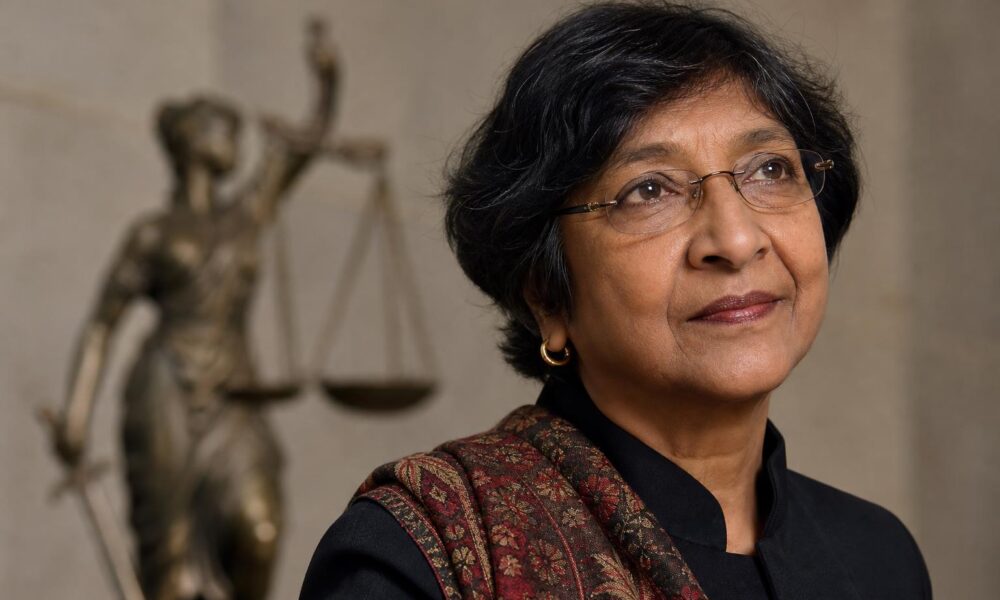
South African judge Navanethem “Navi” Pillay has been awarded the 2026 Nobel Peace Prize, becoming the fifth South African to receive the honour.
The Norwegian Nobel Committee praised Pillay’s decades-long efforts to prosecute genocide and war crimes, while promoting peace and international law. It described her work as marked by “judicial rigour, personal integrity and considerable courage”.
Pillay, 85, said she would dedicate the award to “all of the survivors of international crimes”. She added that the recognition had strengthened her belief in defending the rule of law, independent courts and an international legal order based on principle.
A career shaped by apartheid and international justice
Born in Durban in 1940 to parents of Tamil descent, Pillay studied law at the University of Natal. She became the first woman in Natal province to establish her own law firm and later became the first woman of colour to serve on South Africa’s High Court.
During apartheid, she defended activists including Phyllis Naidoo and Strini Moodley. In 1973, she took on a case concerning political prisoners on Robben Island that helped secure basic rights, including access to legal representation.
Pillay later presided over the International Criminal Tribunal for Rwanda. The Nobel Committee said her work there helped establish that rape and sexual violence could constitute crimes against humanity and genocide. It also credited her with a legal breakthrough involving charges of incitement to genocide based solely on the distribution of propaganda.
She served as United Nations High Commissioner for Human Rights from 2008 to 2014. Pillay also chaired the UN Independent International Commission of Inquiry on the Occupied Palestinian Territory. The commission concluded in 2025 that Israel had committed genocide in Gaza, according to the source report.
Pillay is currently a judge at the International Court of Justice in a case involving allegations that Myanmar committed genocide against its mostly Muslim Rohingya minority.
Reactions to the award
UN High Commissioner for Human Rights Volker Turk said the prize reaffirmed that human rights, the rule of law, justice and accountability are fundamental to peace, security and prosperity.
International Criminal Court President Tomoko Akane said the award carried particular significance amid “profound challenges to the international legal order and the rule of law”. The ICC has described United States sanctions against its members as a “flagrant attack against the independence of an impartial judicial institution” and said it would continue its work without regard to restriction, pressure or threat.
South African President Cyril Ramaphosa praised the honour as a tribute to Pillay’s “courage, integrity and lifelong commitment to justice”.
Haakon Gjerlow of the Peace Research Institute Oslo said the decision showed that peace depends not only on political leadership, but also on strong international institutions and people willing to defend them.
Ashok Swain, a professor of peace and conflict research at Uppsala University, called Pillay’s selection a “pleasant surprise” and the “best possible choice”. Swain said the award could also be interpreted as a message to United States President Donald Trump, although that was his assessment and not an explanation issued by the Nobel Committee.
As reports about the prize circulated, Pillay jokingly told supporters, “If you clap a little bit more, I may share this prize with Trump.” Nobel Committee Chair Jorgen Watne Frydnes said the committee had struggled to reach her and urged her to answer if she saw a Norwegian number calling.
The Nobel Committee said Pillay belonged among “the great defenders of international legal principles in our time”, adding that the award came as international law and its institutions faced intense pressure.





No Comment! Be the first one.