
Zimbabwe Mobile Clinic Protects Adolescent Access to Contraception Amid Aid Cuts
A mobile clinic in Epworth is helping Zimbabwean adolescents access contraception and reproductive health services privately as funding reductions and supply disruptions threaten outreach.

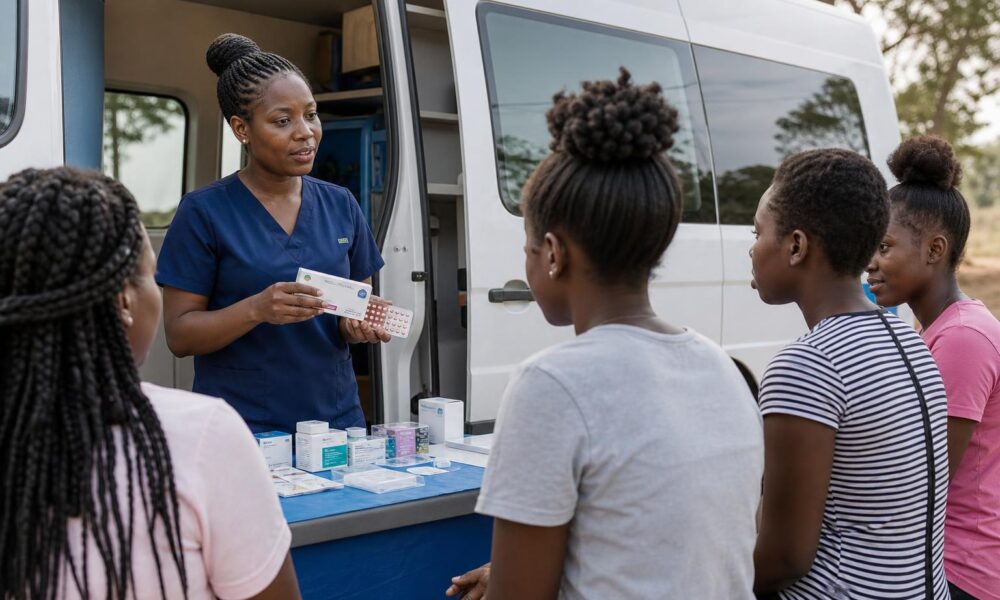
EPWORTH, Zimbabwe — An aging blue-and-white caravan positioned in a discreet section of a hospital in Epworth is providing adolescents with private access to contraception and reproductive health support as international funding declines and supply chains face disruption.
Table Of Content
Operated by Population Services Zimbabwe, the mobile clinic offers contraceptives, treatment for sexually transmitted infections, counseling and sexual and reproductive health information. Its location is intended to reduce the risk of young people being seen by relatives, neighbors, church colleagues or other patients when seeking care.
Privacy helps overcome access barriers
Kelly Nhedega, 18, became pregnant at 16 and left school. She recently obtained contraception discreetly as she works toward returning to the classroom.
“I have no intention of adding more children because I want to go back to school,” Nhedega said. “So if I have more children I will not have time to return to school.”
She said stigma surrounding young women seeking contraception at crowded clinics had previously kept her away from services. The source also identifies parental opposition, restrictive policies, fear of being recognized at a clinic and distance from supplies as barriers facing adolescents.
Since 2021, the caravan has provided contraceptives and related services to more than 100,000 adolescents in Epworth, nearby farming communities and informal settlements, according to Pester Siraha, director of Population Services Zimbabwe.
Population Services Zimbabwe is an affiliate of MSI Reproductive Choices, which provides abortion and contraceptive services in 36 countries, mainly in Africa and Asia.
Funding losses threaten outreach
Population Services Zimbabwe said it lost a five-year grant worth $9 million that had been awarded in 2023, after the Trump administration dismantled many aid programs in 2025. More than $6 million of the grant remained unspent, the organization said.
The group turned to Swedish funding to cover part of the resulting gap, but that support ended in August. The Swedish government has phased out development assistance to several countries, including Zimbabwe, Tanzania, Mozambique, Liberia and Bolivia, to prioritize Ukraine.
Population Services Zimbabwe said the funding reductions could force it to close its outreach activities. The organization has not specified a date for any possible closure of the Epworth clinic.
Zimbabwe’s health minister, Douglas Mombeshora, said the country had spent $6.3 million on contraceptives since 2022. He also pledged an additional $2.25 million each year in 2026 and 2027.
Supply disruptions add pressure
Funding challenges have been compounded by uncertainty over deliveries. A contraceptive shipment ordered in November arrived in Zambia more than three months late, while global shipping disruptions have affected the movement of medical supplies.
Inonge Wina Chinyama, a director at MSI Zambia, said uncertainty over parental consent rules and the lack of preferred contraceptive options can obstruct adolescent access. She said the loss of U.S. support had particularly affected the “last mile” movement of contraceptives from central warehouses and provincial hubs to rural health centers.
The United Nations Population Fund has estimated that aid reductions will create a $185 million shortfall in global contraceptive funding. The International Planned Parenthood Federation reported that nearly 1,400 reproductive health facilities had closed globally by December, including 1,175 in Africa, leaving an estimated 5.9 million women without services.
The figures are reported estimates from the named organizations. In Zimbabwe, the Epworth caravan remains an example of how discreet, community-based services are being used to address privacy and access concerns among adolescents while providers face financial and logistical constraints.





No Comment! Be the first one.