
Zimbabwe Mobile Clinic Offers Private Contraception Access as Aid Shrinks
A discreet mobile clinic in Epworth is helping Zimbabwean adolescents obtain contraception and reproductive-health services as funding cuts, stigma and supply disruptions threaten access.

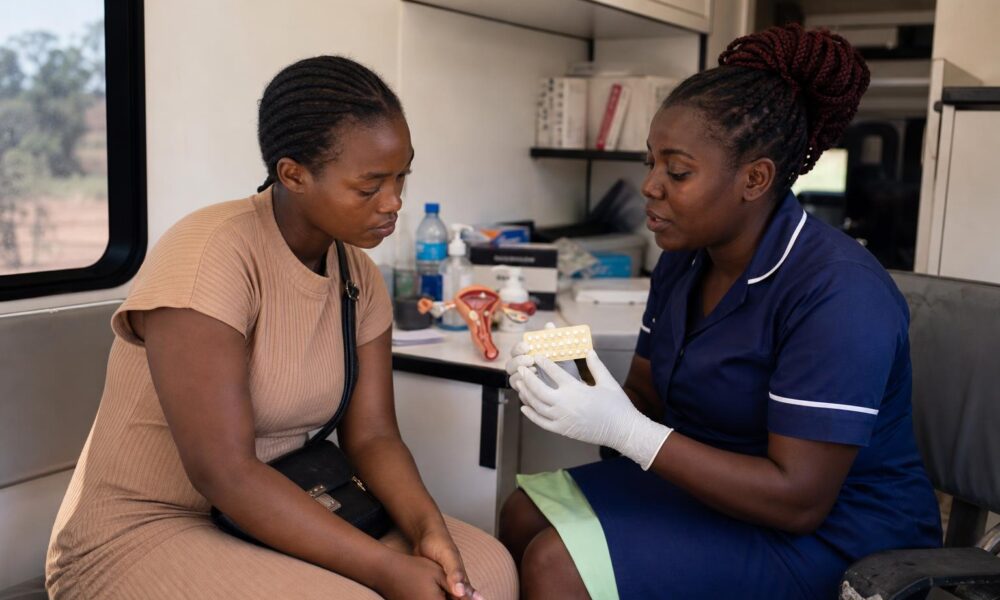
A mobile clinic in Epworth, Zimbabwe, is giving adolescents a private way to obtain contraception and reproductive-health support as international aid reductions and supply disruptions put services under pressure.
Table Of Content
The aging blue-and-white caravan, operated by Population Services Zimbabwe, is positioned in a discreet corner of a hospital in Epworth. The service provides contraceptives, treatment for sexually transmitted infections, counseling and sexual and reproductive health information.
A private option for adolescents
Kelly Nhedega, now 18, became pregnant at 16 after avoiding a crowded clinic because she feared being judged by patients or health workers and worried that her parents might be told. She subsequently left school.
Nhedega later obtained contraception discreetly. She is caring for an 18-month-old child while trying to return to education.
“I have no intention of adding more children because I want to go back to school,” she said. “So if I have more children I will not have time to return to school.”
According to Pester Siraha, director of Population Services Zimbabwe, the caravan has reached more than 100,000 adolescents in Epworth and nearby farming communities and informal settlements since 2021.
However, stigma, parental opposition, restrictive policies and concerns about being seen at a clinic continue to discourage some adolescents from seeking contraception. The availability of contraceptives does not always mean young people can obtain their preferred method.
Funding pressure
Population Services Zimbabwe, an affiliate of MSI Reproductive Choices, says its outreach work is facing financial pressure as international assistance declines.
The organization said it lost a five-year grant worth $9 million that was awarded in 2023 after the Trump administration dismantled many U.S. aid programs in 2025. More than $6 million of the grant was reportedly still unspent.
Swedish funding helped cover part of the resulting gap, but Population Services Zimbabwe said that support ended in August after Sweden phased out development assistance to Zimbabwe, Tanzania, Mozambique, Liberia and Bolivia while prioritizing Ukraine. The organization has warned that the funding reductions could force it to close its outreach activities.
Zimbabwe’s Health Minister Douglas Mombeshora said the country has spent $6.3 million on contraceptives since 2022. He also pledged an additional $2.25 million annually for contraceptives in 2026 and 2027.
Regional supply challenges
The difficulties extend beyond Zimbabwe. In Zambia, uncertainty over parental-consent requirements, problems distributing supplies and the unavailability of preferred contraceptive methods can create barriers for adolescent girls, according to Inonge Wina Chinyama, a director at MSI Zambia.
Chinyama said the loss of U.S. support had particularly affected the “last mile” of delivery, referring to the movement of contraceptives from central warehouses and provincial hubs to rural health centers.
Global shipping disruptions have added to the uncertainty. The United Nations Population Fund said carriers had rerouted shipments to avoid waterways affected by conflict. Chinyama said a contraceptive shipment ordered in Zambia in November arrived more than three months late.
The United Nations Population Fund estimates that aid cuts have created a global contraceptive-funding shortfall of $185 million this year. The International Planned Parenthood Federation has also reported that nearly 1,400 reproductive-health facilities had closed worldwide by December, including 1,175 in Africa, leaving an estimated 5.9 million women without services.
For adolescents in Epworth, the mobile clinic remains a discreet point of access while organizations and governments attempt to manage the effects of reduced funding and disrupted supply chains.





No Comment! Be the first one.