
Navi Pillay Wins Nobel Peace Prize for Promoting International Law
Navi Pillay, a South African-born jurist and former United Nations human rights chief, has received the Nobel Peace Prize for her work promoting international law.

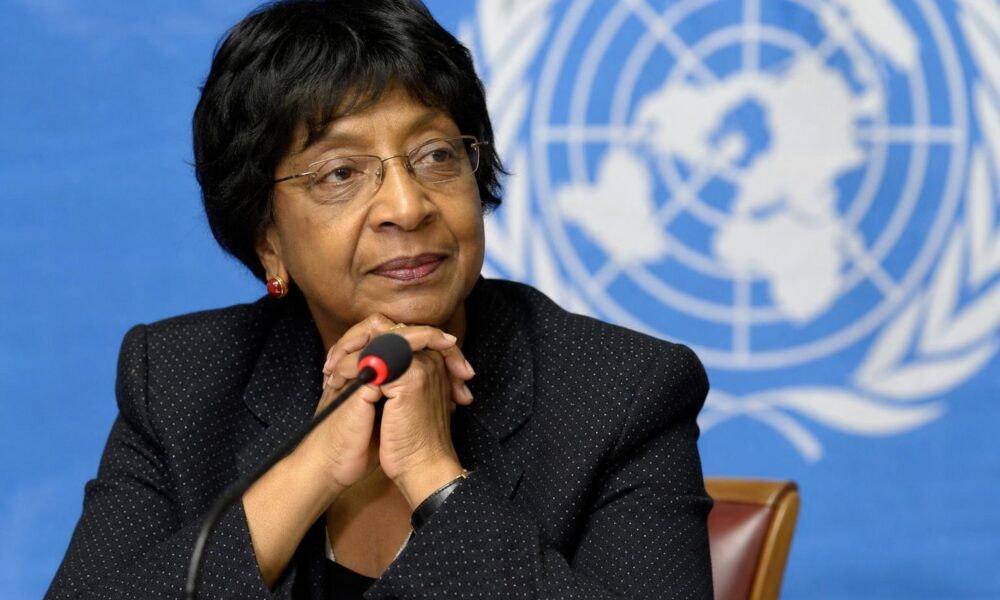
South African-born jurist and former United Nations human rights chief Navi Pillay has won the Nobel Peace Prize for her efforts to advance international law.
Table Of Content
The Norwegian Nobel Committee announced the award on Friday, highlighting Pillay’s work at a time when international rules and institutions face sustained criticism and pressure.
Jørgen Watne Frydnes, chair of the committee, said Pillay’s work “is a source of hope and inspiration to all those who seek to bring about a more peaceful world.” He described the award as a message to those seeking to undermine “the international rules based system and the institutions.”
A career in international justice
Pillay’s legal career has included defending the rights of an imprisoned Nelson Mandela. She later worked at both the International Court of Justice and the International Criminal Court, and served as the United Nations human rights chief from 2008 to 2014.
She was attending the Nuremberg Forum in Nuremberg, Germany, when she received news of the prize. The Nuremberg trials of Nazi war criminals helped establish foundations for modern international law.
After receiving a standing ovation at the forum, Pillay said, “Firstly, at this venue, your applause means a great deal to me.” She also joked that, as a lawyer and judge, she wanted to verify the information before fully accepting the news.
Dispute over Gaza commission findings
Pillay previously chaired the Commission of Inquiry on the Occupied Palestinian Territory and Israel. The body was established by the U.N.-backed Human Rights Council.
The commission concluded that Israel was responsible for genocide in Gaza and alleged that there was a specific intent to destroy Palestinians in the territory. It also found that Israel’s president, prime minister and former defense minister had “incited the commission of genocide.”
Those findings are disputed. Israel has strongly denied the genocide and incitement allegations and refused to cooperate with the commission since it was established in 2021.
Pillay has also rejected accusations of antisemitism and claims that she ignored the Hamas attacks in Israel. She has recalled working with Jewish lawyers during the struggle against apartheid in South Africa and was invited to Israel while serving as the U.N. rights chief.
Defence of international courts
The award comes amid wider debate over the future of international justice. Alphons Orie, a former judge of the International Tribunal for the former Yugoslavia, said international courts remain necessary when national legal systems cannot prosecute senior political leaders.
“Where domestic jurisdictions cannot try, for example, heads of state, we still need international courts and tribunals, and I think finally they’ll survive despite the attacks,” Orie said in an interview with The Associated Press.
At 85, Pillay becomes the latest recipient to be recognised for work connecting human rights, accountability and the international rule of law.





No Comment! Be the first one.