
UN Official Warns Unequal AI Access Could Deepen Global Inequality
Unequal access to artificial intelligence could widen the gap between developed and developing countries, a senior United Nations official has warned.

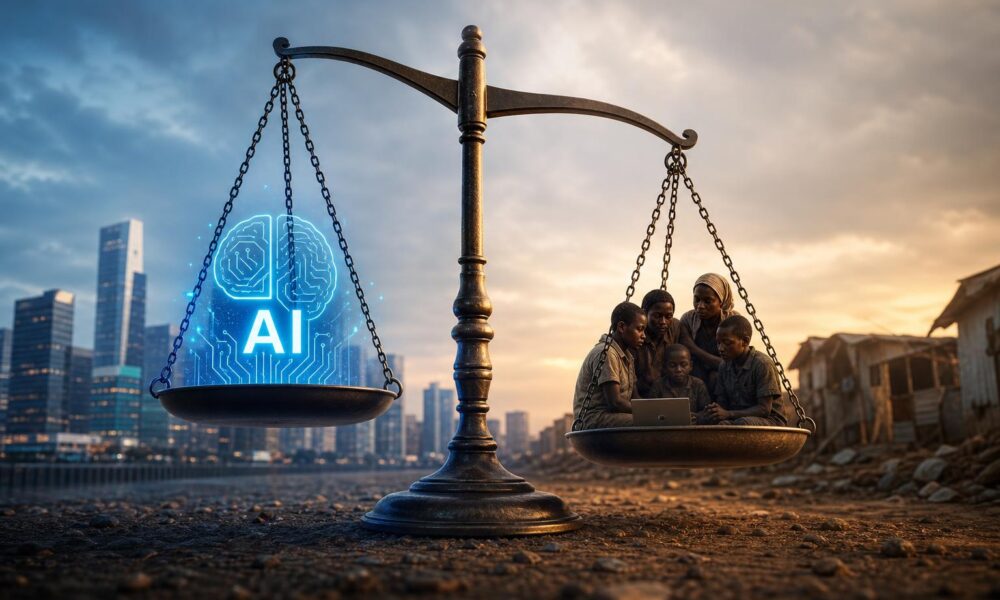
Unequal access to artificial intelligence could widen the gap between developed and developing countries and deepen existing social and economic inequalities, a senior United Nations official has warned.
Table Of Content
Tomas Lamanauskas, deputy secretary-general of the International Telecommunication Union, said developing countries face substantial obstacles to gaining from the expansion of AI. He made the remarks on the sidelines of the UN Conference on Trade and Development World Investment Forum in Doha, Qatar, on Sunday.
Lamanauskas said the issue extended beyond the traditional digital divide. “There is a risk … I think the AI divide is really the big concern because it’s really not just about the digital divide,” he told Al Jazeera.
Infrastructure and access gaps
Among the disparities he identified were differences in digital infrastructure, internet access, AI adoption, workplace skills and the availability of language tools.
Africa and Latin America together account for 3.3 percent of global data centre capacity, according to figures cited by Lamanauskas. He also said that 2.2 billion people worldwide remain without internet access.
Bridging the digital infrastructure gap would require an estimated $2.8 trillion in investment by 2030, he said.
The United Nations Development Programme warned in a December 2025 report that countries with unreliable power, limited connectivity and insufficient technological skills could miss out on the economic benefits associated with AI.
Lamanauskas said generative AI was used by approximately 29 percent of working-age people in developed countries, compared with 16 percent in developing nations. He argued that the difference could affect people’s ability to be productive and access employment opportunities.
Concerns over jobs and skills
Lamanauskas cited estimates that AI could displace 90 million jobs while creating 170 million new ones. He also said approximately 40 percent of workplace skills could change by 2030, potentially causing disruption for many workers.
Fazl Barez, a senior researcher at the University of Oxford who specialises in AI safety and governance, said concerns about job losses were legitimate. However, he cautioned that automating individual tasks was not the same as replacing entire jobs.
Barez said routine cognitive work was particularly exposed to potential losses, although the scale of the impact remained uncertain. He also warned that AI-driven automation could erode government tax bases, lower living standards and weaken citizens’ influence.
The 2026 International AI Safety Report estimated that about one billion people use AI for tasks including seeking medical guidance and writing. It also estimated that AI-related impacts could reach 60 percent of jobs in advanced economies and 40 percent in emerging economies, while noting that concrete data was not available for those estimates.
Calls for investment and wider participation
Language access is another area of concern. Lamanauskas said only seven percent of African languages are represented in AI translation tools, highlighting the risk that communities could be excluded from emerging services and systems.
He called for increased investment in digital infrastructure, education and regulation, saying developing countries should be able to participate in shaping AI technology.
“AI has the huge potential of powering health, education, public services, industries, agriculture, trade. So a great divide could really mean an opportunity divide, and really could deepen the socioeconomic divide,” Lamanauskas said.
He said 104 countries now have AI strategies, compared with four a decade ago, but argued that the technology’s rapid development could not simply be halted. “AI is not a technology that can be controlled by one person or organisation or one company,” he said.



No Comment! Be the first one.