
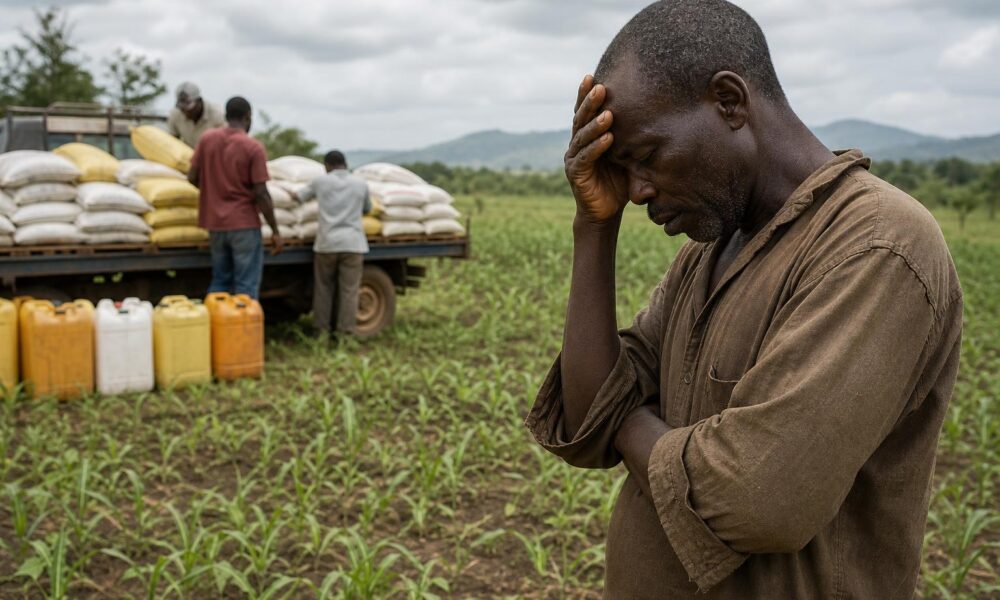
Higher fuel and fertiliser costs linked to the crisis around the Strait of Hormuz are threatening food security and adding to economic pressures across Africa, trade officials and a United Nations official have warned.
Table Of Content
The concerns were raised at the UN Trade and Development (UNCTAD) World Investment Forum, held in Doha on October 25 and 26. The gathering brought together policymakers, business leaders and investors to discuss investment and sustainable development.
The report links the Strait of Hormuz crisis to the United States and Israel’s war on Iran. The strategic waterway previously carried one-fifth of global oil and liquefied natural gas trade, according to the report.
Fertiliser costs raise food concerns
Luz Maria de la Mora, director of UNCTAD’s Division on International Trade and Commodities, said fertiliser prices had risen dramatically. She said many countries had responded by reducing fertiliser use, a decision that could affect crops, food availability and food prices in the following year.
“Prices of fertilisers have risen dramatically … so many countries have decided to reduce the use of fertilisers, which will have an effect next year in terms of crops,” de la Mora said.
She added: “It may have an effect on availability of food and prices of food.”
De la Mora also said the impact of higher oil prices and supply-chain disruption was continuing for longer than expected. In her words, “The effects are lasting longer than we would have expected or would have wanted,” while arguing that the crisis should be resolved “sooner rather than later”.
Pressure on Uganda and Zimbabwe
Zimbabwe’s Minister of Women Affairs, Community, Small and Medium Enterprise Development, Monica Mutsvangwa, said higher fuel and fertiliser prices were a critical concern for a country where more than 70 percent of the population depends on agriculture.
Uganda’s Minister of Trade, Industry and Cooperatives, Sanjay Tanna, said fuel prices in Uganda had more than doubled. He also said the country’s currency had lost 10 percent of its value against the United States dollar.
Tanna said Uganda’s domestic food production and reliance on subsistence farming had provided some protection from volatility in international markets. However, he said the international trading system did not treat all countries equally.
“The world cannot be equal … It’s unfair, but we believe that, within the space that we are in, we are in a good space,” Tanna said.
Investment and local processing
The officials also discussed how African countries could attract investment and strengthen domestic economies amid global uncertainty.
De la Mora said investment remained concentrated in a relatively small number of countries because investors wanted confidence that their capital would produce returns. “Capital is risk averse,” she said. “Capital needs to have certainty that its investment is going to yield returns and it’s going to come to fruition.”
Mutsvangwa said Zimbabwe wanted investors from either side of the United States-China trade tensions, provided they complied with the country’s laws and regulations. Zimbabwe has deposits of more than 60 critical minerals, including lithium and graphite.
“We are a friend to all and an enemy to none,” Mutsvangwa said. She added that Zimbabwe was interested in investors who followed national rules, earned returns and contributed to the country’s development.
Jean-Jacques Bouya, the Republic of Congo’s deputy prime minister for coordination, development infrastructure and land planning, said the country had aligned its Vision 2063 development plan with wider African Union ambitions.
He said the strategy prioritised electricity, digital and physical connectivity, as well as greater local processing of natural resources. Bouya said Africa and Congo could no longer remain places where raw materials were extracted, exported for processing and later sold back at higher prices.





No Comment! Be the first one.