
African Agritech Push Faces Test of Food Security, Digital Resilience and Trade Balance
Investment in West African agritech, stronger cybersecurity cooperation and changing Africa-China trade figures are shaping a wider debate about the continent's economic future.

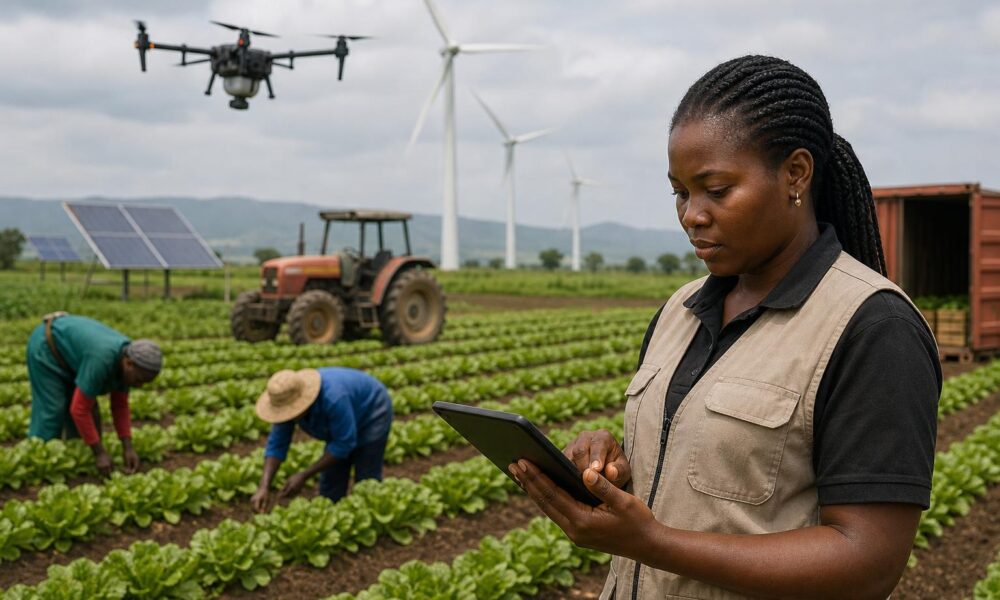
A $650 million investment push in West Africa is intensifying debate over whether agritech can help the continent increase food production, reduce reliance on imports and become a major supplier to global markets.
Table Of Content
The development was highlighted in an Africanews Business Africa report examining agricultural technology, digital security and Africa-China trade. The report presents investment and regional integration as potential tools for addressing some of the structural challenges facing African businesses and farmers.
Technology and finance for smallholder farmers
Ghanaian agritech companies are using technology, data and innovative financing to respond to difficulties affecting smallholder farmers. These include limited access to finance and weak connections to markets.
Desmond Koney, chief executive officer of Complete Farmer, took part in the Africanews discussion. He highlighted the importance of expanding financial access, strengthening agricultural value chains and creating more market opportunities for farmers.
Koney also examined the potential role of the African Continental Free Trade Area in improving cross-border supply chains. Regional integration could allow agritech companies to move beyond national markets and support wider access to agricultural products, according to the report.
Whether these solutions can reach more farmers, increase productivity and improve food security remains unresolved. The investment push is therefore being viewed as an opportunity, but its wider impact will depend on how effectively technology and financing can be scaled.
Cybersecurity cooperation under discussion
The sixth edition of the Cyber Africa Forum was held in Cotonou, Benin, on November 16 and 17. Discussions focused on cybersecurity, artificial intelligence, data protection and digital sovereignty.
The forum discussions, as reported by Africanews, highlighted the need for closer cooperation between African countries and increased investment in local cybersecurity skills and infrastructure.
Artificial intelligence is creating new opportunities for businesses and governments, while also contributing to more sophisticated cyber threats. As online business activity grows, protecting customer information, financial transactions and digital infrastructure has become increasingly important.
The report did not identify specific cybersecurity measures or commitments adopted at the forum, but it linked digital security to the continent’s broader economic transformation.
Trade with China remains uneven
Chinese customs data reported by Africanews showed that Africa-China bilateral trade reached $346.8 billion between January and October 2026, a 22.7 per cent increase from the same period of the previous year.
However, the figures also showed a substantial imbalance. Chinese exports to Africa totalled $224.14 billion during the first ten months of the year, while imports from Africa reached $122.72 billion. This produced a reported African trade deficit of $101.4 billion with China.
African countries continue to export raw materials, including oil, copper and other minerals, while importing higher-value manufactured goods, machinery and electronics. The pattern remains a structural challenge for efforts to expand domestic production and capture more value from trade.
Together, the agritech investment drive, cybersecurity discussions and trade figures point to interconnected questions for African policymakers and businesses: how to improve production, protect increasingly digital economies and build stronger regional and international trading positions.





No Comment! Be the first one.