
Bio Calls for Peace Investment and Greater African Influence at UN
President Julius Maada Bio has urged world leaders to invest more in conflict prevention and development, while backing reforms to give Africa a stronger voice in global institutions.
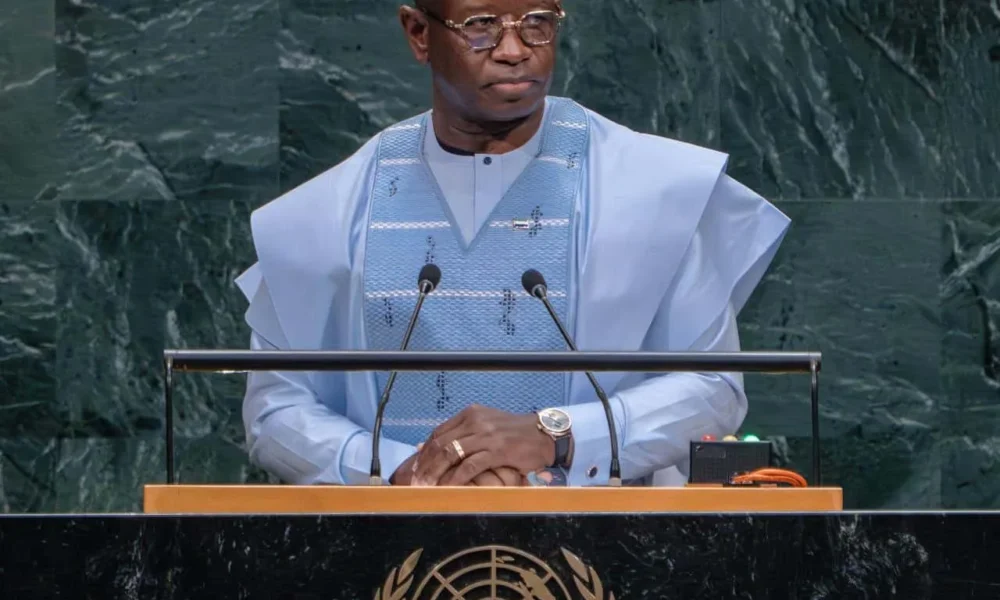
President Julius Maada Bio has called for greater investment in conflict prevention, development and improved living conditions, arguing that military force alone cannot deliver lasting peace.
Table Of Content
Speaking in New York on 22 September 2026 during the General Debate of the 81st United Nations General Assembly, Bio linked global security to the conditions in which people live and to the fairness of international institutions.
He cited global military expenditure of almost US$2.9 trillion in 2025, which he said had risen for the 11th consecutive year. At the same time, he argued, hunger, exclusion, unemployment and weak institutions create conditions in which insecurity can take root.
“The connection between peace and development must therefore move from our resolutions into our budgets,” Bio said.
Call for Security Council reform
Bio renewed Sierra Leone’s support for reform of the United Nations Security Council and stronger African representation. He said Africa, with more than 1.6 billion people, has no permanent seat on the council.
As coordinator of the African Union Committee of Ten, Sierra Leone will continue pressing for reform, according to the president. He called on UN member states to produce a consolidated reform model before the end of the current General Assembly session.
Bio said the Common African Position seeks at least two permanent African seats and five non-permanent seats on the council, reflecting the position set out in the Ezulwini Consensus and Sirte Declaration.
He also referred to Sierra Leone’s 2024–2025 term on the Security Council, saying it drew attention to Africa’s historical exclusion, conflict-related food insecurity and the role of young people in peace and security.
International law and financial reform
Bio urged consistent application of international law, protection for civilians and humanitarian access in the Middle East. He also called for progress towards nuclear disarmament through diplomacy.
On the global financial system, he advocated stronger voting power for developing countries, affordable finance, concessional resources and fairer treatment on debt. He said unequal representation also affects international financial institutions.
Sierra Leone supports a proposed United Nations Framework Convention on International Tax Cooperation, Bio said.
Reparatory justice and new economic transitions
Bio called for acknowledgement, a formal apology, the return of cultural heritage and fair redress for the trafficking and enslavement of Africans. He said the effects of slavery remain visible in disparities in wealth, power and opportunity.
Referencing Sierra Leone’s history, he noted that thousands of Africans were transported into enslavement from Bunce Island, while Freetown later became home to formerly enslaved and liberated Africans.
He also urged countries producing critical minerals to process resources locally, secure technology transfers and develop domestic industries. “The green transition must not reproduce the extractive terms of the past,” he said.
Bio said artificial intelligence could improve education, healthcare, agriculture and public administration, but warned that inequality could widen if knowledge and decision-making remain concentrated in a small number of countries. He called for developing countries to participate in setting international AI rules.
On climate change, he sought predictable climate finance, support for adaptation and effective arrangements addressing loss and damage. He described families in Shenge as watching the sea take land, fishing grounds and ancestral graves.
UN leadership and ICJ election
Bio backed reforms intended to make the United Nations more effective and urged member states to consider appointing a woman as the organisation’s next Secretary-General.
He also sought support for Sierra Leone’s nominee, Professor Charles Chernor Jalloh, in the November election for a judge of the International Court of Justice.




No Comment! Be the first one.