
Sierra Leone Opens FY2027 Budget Process with Focus on Revenue and Fiscal Reform
Sierra Leone has formally begun preparing its FY2027 budget, with the Government placing domestic revenue mobilisation, fiscal sustainability and public resource management at the centre of the...
Sierra Leone has formally started preparations for its FY2027 National Budget, with the Government highlighting domestic revenue mobilisation, fiscal sustainability and public resource management as central priorities.
Table Of Content
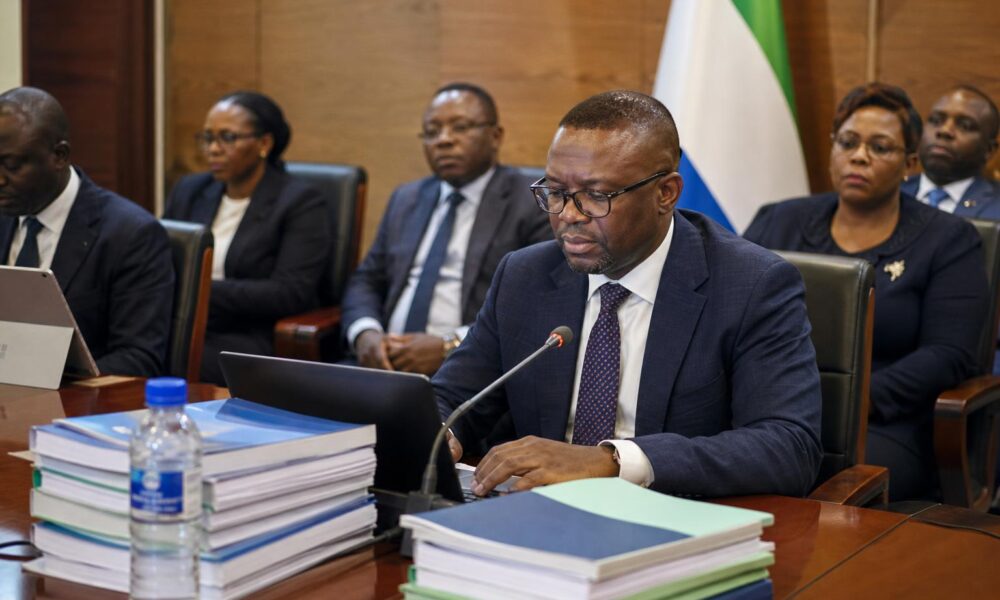
The National Policy Hearings were held on 16 September 2026 at the Miatta Civic Centre, Youyi Building, in Freetown. The hearings marked the formal opening of the budget preparation process and brought together representatives of Ministries, Departments and Agencies, Local Councils, development partners and the private sector.
Finance Minister Karefa A.F. Kargbo said the 2027–2029 Medium Term Expenditure Framework would focus on economic growth, fiscal sustainability, employment creation, private-sector participation, infrastructure, technology and public service delivery.
Revenue mobilisation and tax compliance
Domestic revenue mobilisation was presented as a major priority amid declining external development financing. Kargbo said the Ministry of Finance and the National Revenue Authority would introduce a more rigorous performance contract system for revenue mobilisation, moving beyond passive target-setting towards stricter collection benchmarks.
He also outlined plans for stronger enforcement and expanded use of electronic tax systems. These measures are intended to address businesses that fail to issue proper sales invoices or undervalue sales, with electronic systems expected to support the collection of legally mandated taxes at the point of sale.
The Finance Minister said tax exemptions would be limited to strategic investments that provide demonstrable benefits, including employment creation and technology transfer. Proposed warehouse controls would include electronic access systems, automated tracking and mandatory audit trails to help prevent goods from entering the local market without the appropriate duties being paid.
On the extractive sector, Kargbo said the Government would seek greater economic benefits from natural resources through increased production, diversification of mining products and improved export value.
Public finance and development funding
The Ministry of Finance is revising the Public Financial Management Act to strengthen fiscal governance, transparency, accountability and the management of public resources. The Public Procurement Act is also under review, with stated objectives including improved efficiency, transparency, value for money, sustainable development and greater use of technology.
Kargbo referred to instances in which funds allocated to development projects reportedly remained unspent and were eventually returned. The Ministry of Finance and the Ministry of Planning and Economic Development will now move to bilateral discussions and further consultations on budget submissions.
Planning and Economic Development Minister Kenyeh Barlay said the financing gap for Sierra Leone’s national development plan had increased from approximately US$2.56 billion in 2024 to more than US$5 billion.
The Government is also exploring debt-related financing arrangements to create additional resources for health and education while maintaining fiscal sustainability. Kargbo said budget support is generally linked to agreed conditions, performance indicators and prior actions.
Energy, jobs and private-sector concerns
Energy-sector obligations were reported by Kargbo at about US$150 million. He said the figure represented existing obligations rather than planned spending on new infrastructure. The Government also provided about NLe196.8 million in fuel subsidies between February and the end of August 2026.
Private-sector representatives raised concerns about taxation, access to finance, infrastructure, port operations, fuel costs, land and local content during the broader budget discussions.
Vice President Dr. Mohamed Juldeh Jalloh highlighted the Government’s target of creating 500,000 jobs for young people by 2030, with at least 30 percent expected to benefit women. The budget process will be aligned with the Medium Term National Development Plan and will consider priorities including agriculture, health, education, energy, infrastructure and technology.
The National Policy Hearings were held under the theme “Building Resilience to Create Jobs.” Further consultations and bilateral discussions are expected as institutions develop and refine their budget submissions.



No Comment! Be the first one.