
EU Gives Technical Explanation for Delayed €18m Sierra Leone Support
EU Commissioner Magnus Brunner said the delayed €18 million budget-support payment to Sierra Leone was held for technical reasons, while Dutch Minister David Van Weel linked the issue to Jos...

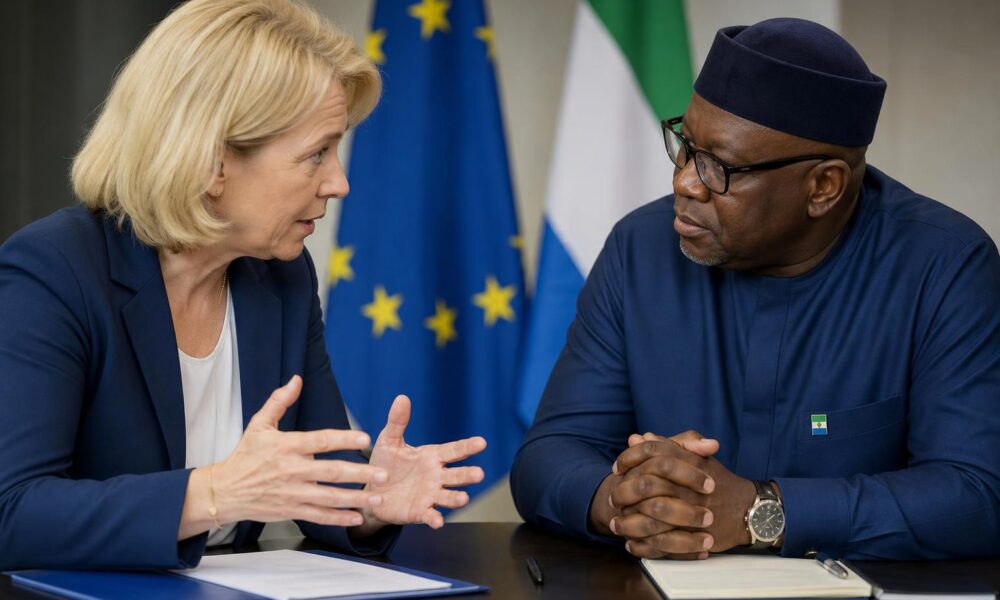
The European Union has attributed the delayed disbursement of €18 million in budget support to Sierra Leone to technical reasons, while separate comments from a Dutch minister linked the funding dispute to pressure over wanted drug trafficker Jos Leijdekkers.
Table Of Content
Magnus Brunner, the EU Commissioner for Internal Affairs and Migration, spoke after a meeting of EU Justice and Home Affairs Ministers in Luxembourg on 1 October 2026. Asked about the support payment, Brunner said: “When it comes to the suspension of the support, that’s due to technical reasons.”
Different accounts of the funding delay
David Van Weel, the Dutch Minister of Justice and Security, told Dutch media that the €18 million payment had been withheld as part of efforts to pressure Sierra Leone over Leijdekkers. The Netherlands has been seeking the arrest and extradition of Leijdekkers, described as a convicted Dutch cocaine trafficker wanted by European authorities.
Van Weel later acknowledged that the European Commission’s formal explanation was administrative or technical. He nevertheless maintained that discussions concerning Leijdekkers and drug-related organised crime had taken place alongside the funding issue.
European Commission sources disputed the characterization of the payment as a sanction over Leijdekkers. The formal basis for the hold, according to the verified account, was administrative rather than a measure imposed over the individual.
Sierra Leone cites Financing Agreement procedures
The Government of Sierra Leone said the delay resulted from the timing of its request to amend the Financing Agreement and the difficulty of completing the required procedures within the 2026 reporting cycle.
In a statement issued through the Ministry of Information and Civic Education on 1 October, the Government said the European Commission had proposed rescheduling the 2026 and 2027 disbursements to 2027 and 2028, respectively. It also said targets for the 2027 disbursement had already been agreed.
The Government reported that EU representatives indicated during subsequent engagements that the decision concerning the 2026 disbursement was not taken because of discussions involving any particular individual. It also said the postponement did not represent a suspension of the broader relationship between Sierra Leone and the EU.
Broader EU concerns over organised crime
Brunner separately called for action against countries that harbour drug traffickers and expressed concern about drug trafficking, transnational organised crime and organised crime trends in Sierra Leone.
His remarks did not publicly establish a direct link between those concerns and the delayed €18 million payment. The available accounts therefore leave disputed whether broader political concerns surrounding Leijdekkers influenced the funding decision beyond the formal technical grounds.
Van Weel also said an additional €22.5 million expected in 2027 could be affected if the dispute remained unresolved. The Government’s account, however, focused on procedural requirements connected to the Financing Agreement and the proposed rescheduling of payments.




No Comment! Be the first one.