
Sierra Leone Finance Ministry Sets FY2027 Targets on Revenue, Debt and Deficit
Sierra Leone’s Ministry of Finance has proposed a NLe232.6886 million FY2027 budget, with targets to raise domestic revenue, reduce debt and narrow the fiscal deficit.

Sierra Leone’s Ministry of Finance has presented its proposed FY2027 budget and strategic framework, placing increased domestic revenue, debt reduction and stronger public financial oversight at the centre of its plans.
Table Of Content
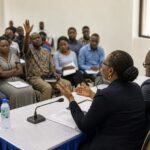
The presentation was made on 1 October 2026 during the ongoing Bilateral Budget Hearings. Representatives of District Budget Oversight Committees, Non-State Actors and Civil Society Organisations examined the Ministry’s proposed allocations and their consistency with the country’s development priorities.
The proposed FY2027 budget totals NLe232.6886 million, almost matching the approved ceiling of NLe232.6887 million. The allocations cover the Corporate Services Directorate, the Office of the Financial Secretary, the Economic Policy Management Directorate, the Fiscal Operations Directorate, and the Project Fiduciary Management and Coordination Directorate.
Fiscal targets
The Ministry’s framework sets a target of raising domestic revenue to at least 12.3 percent of gross domestic product in 2027. The presentation recorded domestic revenue at 10.7 percent of GDP, equivalent to NLe18 billion, in 2025, and associated the 2027 target with revenue of NLe25.99 billion.
The Ministry also aims to reduce the debt-to-GDP ratio from 49.3 percent in 2025 to 43.5 percent by 2027. Its target for the overall budget deficit, including grants, is below 3 percent of GDP, compared with 4.4 percent reported for 2025.
Other planned measures include operationalising the National Electronic Single Window, including replacing the ASYCUDA system, and increasing project portfolio disbursement from 26 percent to at least 30 percent.
The Ministry said it intends to improve fiscal risk management and fiduciary oversight of State-Owned Enterprises, Ministries, Departments and Agencies, as well as public sector projects. Its priorities also include better budget planning and execution, stronger accounting and reporting of public funds, improved internal controls and further fiscal decentralisation.
Officials outline accountability measures
Director of Budget Tasima Jah said stakeholders would lead the engagement as part of efforts to promote participation and accountability in the national budget process.
Deputy Minister of Finance I Kadiatu Allie said Ministry officials were prepared to have their proposals examined under the same scrutiny applied to other institutions. She encouraged participants to raise questions about the plans.
Financial Secretary Matthew Dingie described the hearings as a way for citizens and stakeholders to understand how public resources are allocated, used and monitored. He said Sierra Leone’s economy had been growing at about 3 to 4 percent annually, while the Government was pursuing measures to support industrial activity, manage inflation and maintain exchange-rate stability.
Dingie also identified developments in the Middle East, petroleum price movements and changes in international interest rates as external pressures. The Government’s responses, according to the presentation, include measures involving fuel, social protection and the energy sector.
Spending performance and programmes
Acting Director of Research and Delivery Alhaji Abu Komeh presented the Ministry’s mandate, recent achievements, expenditure performance, FY2027 deliverables and its 2027–2029 Strategic Plan. His presentation also covered contract payment analysis and the procurement programme.
The Ministry reported continued implementation of domestic capital and donor-funded projects, including the Medium-Term Expenditure Framework, the Project Fiduciary Management Unit, the Sierra Leone Urban Resilient Project and Accountable Governance for Basic Service Delivery.
For 2025, the Ministry reported an approved budget of NLe164.1 million and actual expenditure of NLe164.2 million, a stated variance of NLe0.1 million. Its approved 2026 budget was NLe269.3 million, of which NLe188.5 million had been spent by the end of September, leaving NLe80.8 million.
Participants questioned officials about the Ministry’s priorities, expenditure and proposed programmes. Matthew Dingie and Ministry directors responded during the interactive session. The Ministry also identified commitments to enact a revised Public Financial Management Act, produce regular macroeconomic projections and evidence-based research, and prepare periodic reports on the implementation of audit recommendations.


No Comment! Be the first one.