
IMF Projects 0.3% Economic Contraction for Middle East and Central Asia
The IMF has revised its 2026 outlook for the Middle East and Central Asia from 1.9 percent growth to a 0.3 percent contraction, citing prolonged disruption to shipping through the Strait of Hormuz.

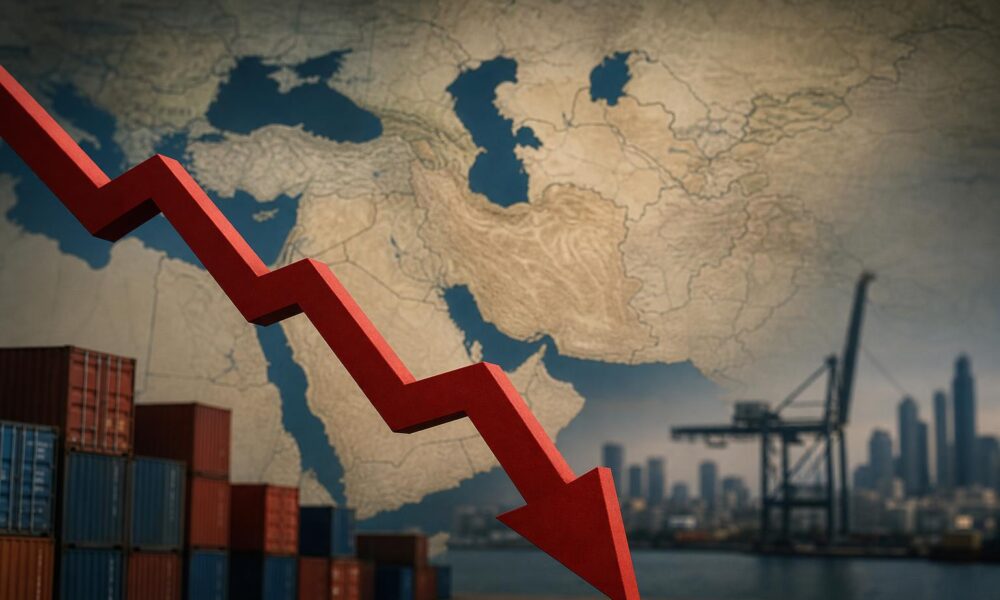
The International Monetary Fund has sharply downgraded its economic outlook for the Middle East and Central Asia, forecasting that the region’s gross domestic product will contract by 0.3 percent in 2026.
Table Of Content
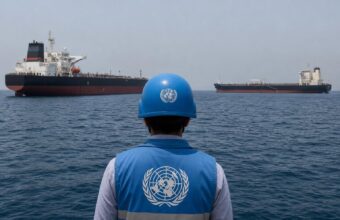
The new projection compares with the 1.9 percent growth forecast issued by the IMF in April. The fund attributed the deterioration largely to prolonged disruption to shipping through the Strait of Hormuz, amid the fallout from the US-Israel war on Iran.
Largest projected declines
Kuwait, Iraq and Qatar are expected to face the most severe economic contractions in the region. The IMF forecasts GDP declines of 16.7 percent for Kuwait, 16 percent for Iraq and 15.6 percent for Qatar.
Bahrain’s economy is projected to shrink by 11.3 percent, while Iran’s GDP is expected to fall by 7.6 percent. Saudi Arabia is forecast to record negative growth of 3.3 percent.
The IMF’s figures are projections rather than final economic results for 2026. The fund said Saudi Arabia had partially cushioned the impact on its energy sector by increasing oil exports through the East-West pipeline.
Regional and global outlook
The Middle East and Central Asia is the only region the IMF expects to experience negative growth in 2026. Kyrgyzstan is projected to record the strongest expansion in the region, with GDP forecast to grow by 9 percent.
Beyond the region, emerging and developing Asia is expected to expand by 5.1 percent, while Sub-Saharan Africa is projected to grow by 4.5 percent. Latin America and the Caribbean are forecast to grow by 2.3 percent.
The IMF projects growth of 2.3 percent in the United States, 4.5 percent in China and 1.1 percent in the eurozone. Global GDP is expected to grow by 3.1 percent, slightly higher than the 3 percent forecast in the fund’s previous outlook.
Risks to growth
The Strait of Hormuz is a major energy route, carrying a share of global oil supplies equivalent to one-fifth of peacetime shipments, according to the source material. Disruptions there have contributed to the weaker outlook for economies exposed to energy and trade pressures.
The IMF also warned that further conflict escalation, changing expectations around artificial intelligence, renewed trade tensions and fiscal vulnerabilities could weaken global growth.
It said stronger investment in artificial intelligence, productivity gains linked to the technology, or a sustained easing of geopolitical and trade tensions could instead support economic activity.


No Comment! Be the first one.