
Cameroon awaits government reshuffle as Biya leaves vice presidency vacant
Cameroon remains without the government reshuffle and vice-presidential appointment expected after President Paul Biya returned from about 10 weeks abroad.

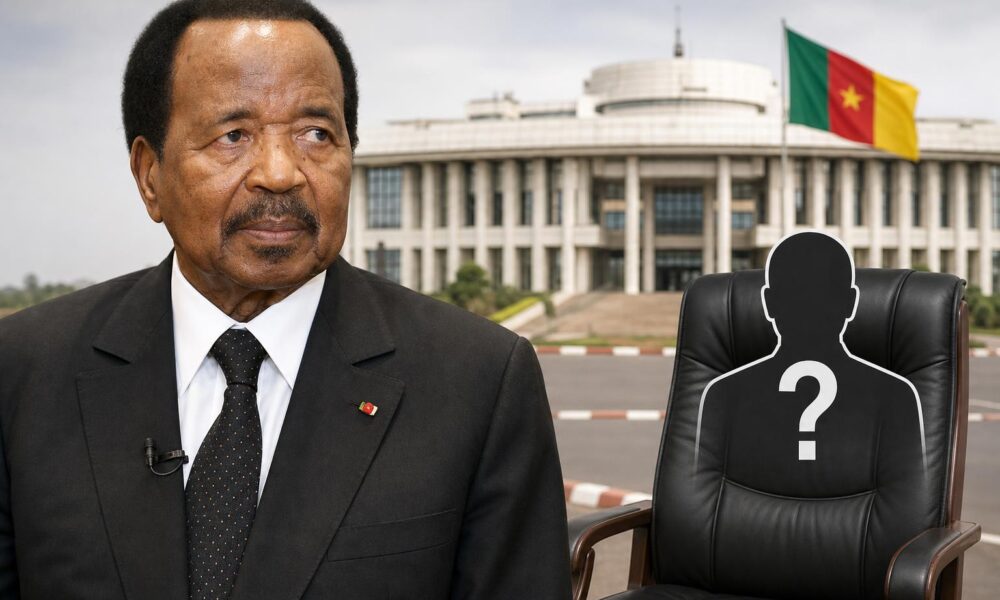
YAOUNDE — Cameroon remained without a new government or vice president after President Paul Biya returned to the country on August 20 following about 10 weeks abroad.
Table Of Content
By October 6, Biya had not announced the expected reshuffle, despite promising in his December 31, 2025, address that a new government would be formed “in the coming days”. The delay has kept attention focused on the president’s plans and on the country’s succession arrangements.
Biya’s absence had prompted speculation about his health and whereabouts, including unverified claims that he had died. The reason for the prolonged absence has not been stated.
Vice-presidency remains unfilled
The vice presidency was restored through a constitutional amendment approved in April. The office had been abolished in 1972.
Under Law No. 2026/002, promulgated on April 14, the president may appoint and dismiss a vice president. The amendment also provides for the vice president to assume the presidency on an interim basis if the office becomes vacant because of the president’s death, resignation or permanent incapacity.
However, the law does not establish a deadline for filling the post. The vice president would serve the remainder of the president’s seven-year term.
Elvis Mbi, a citizen who follows the state broadcaster’s flagship radio bulletin at 5pm every weekday, said many Cameroonians had expected changes after Biya’s return.
“Every Cameroonian was expecting that upon his return home, he was going to change government, but nothing up to this moment,” Mbi said.
He also expressed disappointment that the vice presidency remained vacant. “We all know the president needs assistance in order to execute state duties and that’s why we are anxiously waiting for the appointment, but nothing has happened yet to our greatest dismay,” he said.
Jude Mutah said public interest in the evening bulletin reflected expectations of political change, adding that rumours can spread when clear information is unavailable.
Disputed decree and succession concerns
In June, an individual delivered a sealed envelope to Cameroon Radio Television in Yaounde. The envelope reportedly contained a presidential decree appointing a vice president.
The government said the document had not been issued through the required official process. It also said the individual had been detained and that an investigation was under way. The authenticity of the purported decree remains disputed.
Opposition figure Cabral Libii has argued that the vice presidency carries significance beyond the creation of another administrative office.
“The vice presidency is not just another administrative post to be filled. Appointing your vice president means securing your leadership,” Libii said in a public appeal. He added that a vice president “could help to mitigate the succession struggles that are currently paralysing collective action”.
Cameroon is dealing with a separatist conflict in its English-speaking regions and an armed rebellion linked to Boko Haram around the Lake Chad Basin.
Economic and administrative implications
Jason Healy of the Corporate Council on Africa said uncertainty over political leadership could affect investor confidence and discourage some investors from committing to large, long-term projects.
He also suggested that delaying appointments could be a political calculation that allows Biya to retain control over the timing and composition of any changes. That remains an assessment rather than an established explanation for the delay.
Mbi Aziseh Azimboh of the Policy Lab for Civic Innovation and Community Solutions said prolonged uncertainty could slow government decision-making and postpone reforms and public policies.
Government officials have defended Biya’s authority to determine when appointments are made. Rene Emmanuel Sadi said in an August interview with RFI that the president has the authority to form a government and decide when to do so.
“It is surely quite normal for him to take his time when entrusting such a high office to one of his fellow citizens,” Sadi said.
Elvis Ngolle Ngolle likewise said the president has the constitutional prerogative to act when he chooses.
The presidency did not respond to a request for comment.



No Comment! Be the first one.