
The Sierra Leone Association of Journalists has reaffirmed its support for universal access to accurate, timely and credible information, urging public institutions to strengthen transparency and meet their access-to-information obligations.
The association made the call as Sierra Leone joined the global community on 28 September 2026 to mark the International Day for Universal Access to Information. The commemoration was held under the theme, “Upholding Information Integrity in the Digital Age: The Role of Access to Information in Addressing Information Disorder.”
Call for stronger institutional openness
SLAJ said the right to information is fundamental to democracy, accountability and meaningful public participation. It urged public institutions to proactively release information of public interest and build a stronger culture of openness, accountability and transparency.
The association said digital platforms have widened opportunities for people to access, produce and share information, while also increasing the challenges posed by misinformation, disinformation and malinformation. It warned that rapid circulation of inaccurate content can undermine public trust.
SLAJ also appealed to journalists and media organisations to maintain professional standards when gathering, verifying and disseminating information. Technology platforms and citizens, it said, should likewise act responsibly when producing, sharing and consuming information.
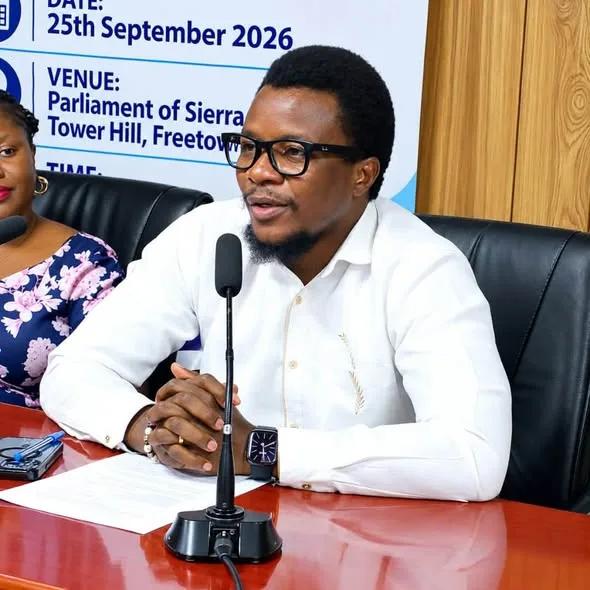
Alhaji Manika Kamara, SLAJ president, said journalists have a duty to verify information, observe professional and ethical standards and provide accurate, contextualised reporting. He added that journalists could not perform that role effectively without timely access to credible information and responsive public institutions.
“When accurate information is accessible, false information has less room to thrive. Transparency is one of our strongest defences against information disorder,” Kamara said.
He also said, “Information integrity begins with access. When Governments communicate openly and institutions provide timely information, citizens are better equipped to distinguish facts from falsehoods.”
Parliamentary access and journalistic independence
Kamara’s remarks also addressed the relationship between Parliament and the media. On 25 September 2026, he called on the Speaker of Parliament to reconsider the decision barring journalist Melvin Tejan Mansaray from entering the premises of Parliament of Sierra Leone. The source information does not identify the Speaker or give the reason for the decision.
Kamara made the appeal while addressing members of the Sierra Leone Parliamentary Press Gallery during an extraordinary general meeting in Committee Room 1 of the Parliament Building. The meeting was held under the theme, “From Draft to Covenant: Securing the Gallery’s Future.”
He told the journalists that the media is an independent institution with a public-interest responsibility. According to Kamara, it is not an extension of Parliament’s Public Relations wing, but has a role in informing citizens and holding public institutions accountable through professional journalism.
SLAJ said it would continue constructive engagement with Parliament and other public institutions while defending journalists’ professional independence and access to information.
Kamara said the response to information disorder could not be left to journalists alone. He identified government institutions, the media, technology platforms and citizens as having shared responsibilities in protecting the public’s right to know and the integrity of information.



No Comment! Be the first one.