
Kenya Reports First Ebola Death After Patient Travels Through Uganda
Kenya has reported its first death from the Bundibugyo strain of Ebola after a patient travelled from the Democratic Republic of the Congo through Uganda to Nairobi.
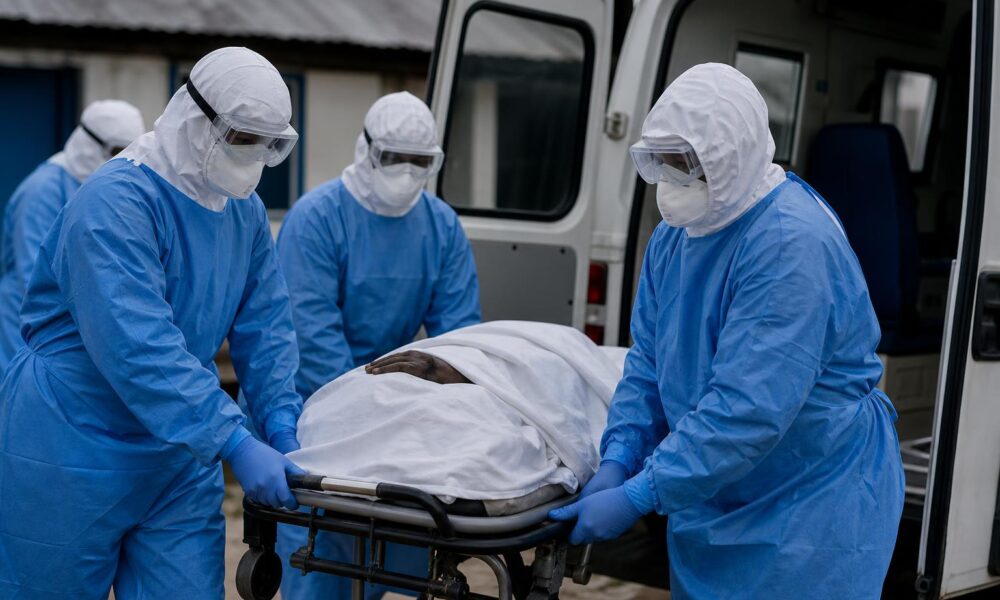
Kenya has reported its first death from the Bundibugyo strain of Ebola after a patient travelled from the Democratic Republic of the Congo through Uganda to Nairobi, highlighting the difficulty of detecting cross-border transmission.
The patient, who had been living in the Democratic Republic of the Congo for several years, first became ill there and received treatment before travelling onward, according to information attributed to the World Health Organization and Kenyan Health Minister Aden Duale.
Duale said the patient travelled by road through Beni to Kampala on October 2 and flew to Nairobi, arriving the following day. After reaching Kenya, a relative and a friend took the patient to a hospital, where the patient was isolated and tests confirmed Ebola.
The patient died on the Monday before the report was published despite receiving care and was buried the following day under Kenya’s Ebola protocol. The patient’s name was not disclosed.
Contact tracing and airport checks
Kenyan health authorities have identified 28 potential contacts, including family members and health workers. The WHO also said authorities were tracking 23 passengers and four crew members from the patient’s flight.
The WHO said Kenya was strengthening disease surveillance and introducing more targeted screening at high-risk points of entry. It also said about 1,000 Ebola tests and 1,000 personal protective equipment kits had been delivered to high-risk counties.
Uganda’s Ministry of Health said the patient had a normal temperature when screened at Entebbe airport before departure. Kenyan authorities said the patient may have taken medication to conceal symptoms during screening at Nairobi airport, although that possibility had not been established and investigations were continuing.
Ugandan officials said they were seeking the patient’s digital health declaration and reviewing airport security footage to identify the driver who took the patient to Entebbe. Government spokesperson Alan Kasujja rejected suggestions that Uganda was responsible for the infection, saying: “Leave Uganda out of this conversation. We don’t have Ebola here.”
Pressure from the outbreak in the DRC
The case comes as an Ebola outbreak in the Democratic Republic of the Congo continues to affect the country’s north and east. The outbreak began in Ituri province and spread to seven provinces, with the WHO reporting at least 4,148 deaths among 8,300 cases.
Doctors Without Borders said North Kivu accounted for 40 percent of new cases. Stephanie Hoffmann, a coordinator at an MSF Ebola treatment centre in Butembo, compared the response to “fighting a megafire”. The area served by the centre includes Butembo and surrounding communities, with a population of about 2 million and four Ebola treatment centres.
Wolfgang Preiser, a professor and head of medical virology at Stellenbosch University, said the scale and speed of the outbreak were placing many health systems under severe pressure. He said he expected cases to continue reaching other provinces and neighbouring countries until transmission was reversed and case numbers began to fall.
Jean Bisimwa Nachenga, a professor in infectious diseases at Stellenbosch University, said the virus does not “respect national borders”. He called for regional cooperation, training for frontline health workers, rapid laboratory diagnosis, prompt isolation of suspected cases and contact tracing and monitoring.
The Bundibugyo strain was first detected in Uganda in 2007. The source information says there is no vaccine for this strain. Ebola can spread through contact with bodily fluids from infected people or wild animals, contaminated surfaces and contaminated meat. Symptoms may include fever, fatigue and headache and can progress to bleeding, impaired liver and kidney function and organ failure.
WHO Regional Director for Africa Mohamed Janabi said Kenya’s emergency preparedness had given the country “a head start”. He said Kenya had introduced important control measures and that rapid, coordinated action was needed to detect further cases before the virus gained a foothold.


No Comment! Be the first one.