
WWF Finds 73% Decline in Monitored Wildlife Since 1970, but Sees Hope
WWF’s latest Living Planet Report records a 73 per cent decline in average monitored wildlife populations since 1970, while pointing to conservation recoveries and calling for faster action.

The World Wide Fund for Nature (WWF) has reported a 73 per cent decline in average monitored wildlife populations worldwide since 1970, while saying that successful conservation efforts show nature can still recover.
The findings appear in the organisation’s latest Living Planet Report, titled Science of Hope, published on Thursday. The report examined 35,803 monitored populations representing 5,790 species of mammals, birds, reptiles, amphibians and fish over a 52-year period.
Declines across ecosystems
According to the report, monitored populations declined across all three major ecosystem groups. Marine species fell by 59 per cent, freshwater species by 85 per cent and terrestrial species by 69 per cent.
Latin America and the Caribbean recorded a 95 per cent decline, while Africa recorded an 80 per cent decline, the report said.
Habitat loss and degradation was identified as the most frequently reported threat to wildlife. Other threats listed were overexploitation, climate change, pollution, invasive species and disease.
WWF said the figures illustrate the continuing pressure on nature but do not mean that recovery is impossible. The report identified the recovery of tigers, turtles, tuna and elephants as examples of how wildlife losses can be reversed when action is taken.
Africa’s conservation examples
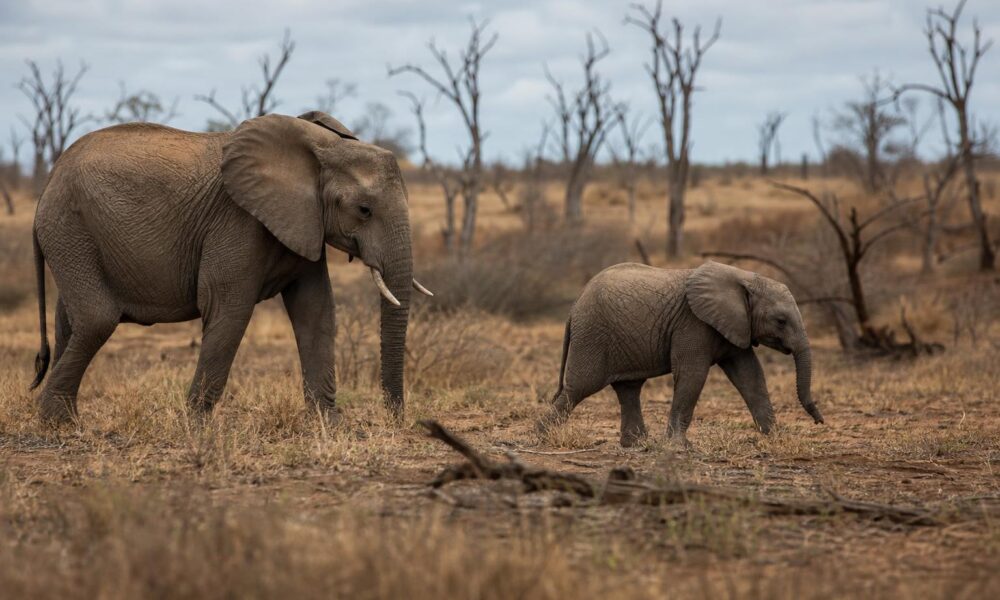
In Africa, targeted conservation efforts have helped populations including black rhinos and southern African elephants recover, according to the report.
African countries have also developed legal frameworks that give local communities a direct stake in elephant stewardship through community-based natural resource management. Anti-trafficking efforts, judicial reform and measures to reduce corruption have further supported conservation work, WWF said.
However, the organisation cautioned that such gains remain fragile. It said governments, businesses, organisations and communities all have a role in ensuring that solutions are implemented at the speed and scale required.
Mike Barrett, WWF’s chief scientific advisor and the report’s lead author, said: “The science is telling us that although humanity has done the most appalling things to this planet for many decades, it’s not too late.”
Economic consequences
The report also presented nature loss as an economic and social challenge. WWF said half of global gross domestic product depends on nature in some way.
It reported that around $7.3 trillion flowed into activities that harm nature in 2023, while $220 billion went towards activities that protect or restore it.
WWF said changes in energy, food and finance systems are needed to halt nature loss. The report’s central message is that recovery remains possible, but only if conservation and broader economic changes are delivered on a much larger and faster scale.





No Comment! Be the first one.