
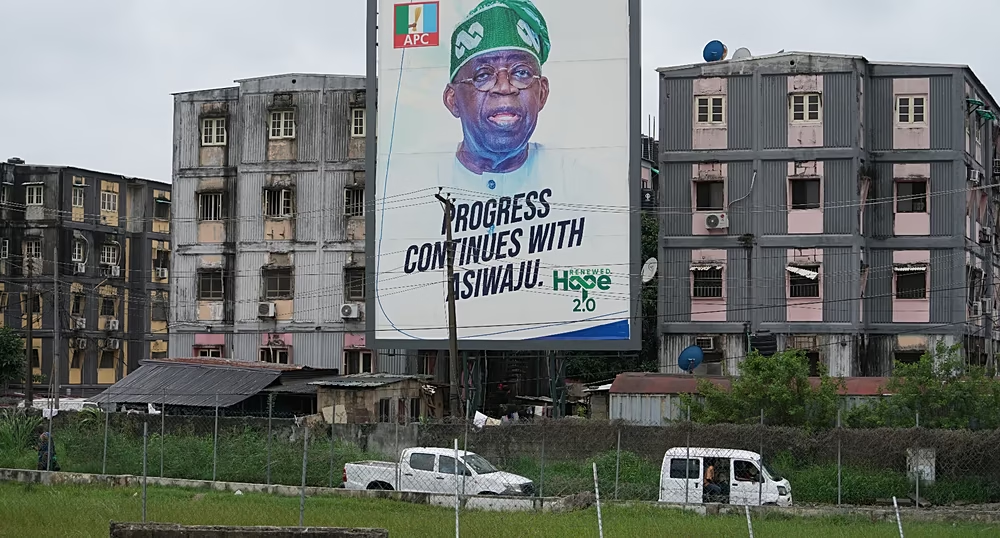
Nigerian President Bola Tinubu has used his latest Independence Day address to defend his government’s economic record ahead of his bid for a second term.
Tinubu said Nigeria had overcome major challenges since he assumed office in 2023. He pointed to economic growth of “over four per cent this year,” contributions from both the oil and non-oil sectors, lower oil theft and a substantial decline in inflation from its peak.
The president described the improvements as “undeniable,” presenting them as evidence that his administration’s reforms are beginning to produce results. His government argues that the measures helped protect the economy and increased the funds available to the state.
Promises of jobs and wider benefits
Tinubu said Nigerians would soon begin to feel the benefits of economic growth. He also outlined a vision of a country where young people could find employment, an issue with particular significance in a nation facing widespread poverty and hunger.
However, the economic figures and claims about the impact of the reforms were presented by Tinubu and his government. The source material does not provide independent figures for the growth rate, inflation decline or reduction in oil theft.
Tinubu began his administration by announcing the removal of the decades-long fuel subsidy in May 2023. He later allowed the naira to float after ending what was described as a distorted foreign exchange rate, leading to a major devaluation. The changes were welcomed by investors but were followed by soaring inflation, according to the source.
Security and political pressure
The president’s economic message comes as Nigeria continues to face serious security problems. Mass kidnappings and killings have spread to areas that had previously been spared from the violence, while concerns about corruption and living conditions remain part of the country’s wider challenges.
Tinubu is seeking reelection on January 16, 2027, and faces 18 opposition candidates. Analysts expect the contest to be shaped primarily by Tinubu, Atiku Abubakar and Peter Obi.
Abubakar, a former vice president and candidate of the African Democratic Congress, was one of the leading contenders Tinubu defeated in the 2023 election. He is described as a serial presidential candidate.
Obi, a former state governor and candidate of the Nigeria Democratic Congress, was also among Tinubu’s main opponents in 2023. His appeal to young Nigerians influenced that election, according to the source.
With the next vote approaching, Tinubu is seeking to make economic reform a central part of his case for another term, while opposition candidates are expected to challenge his record on prices, security and living conditions.





No Comment! Be the first one.