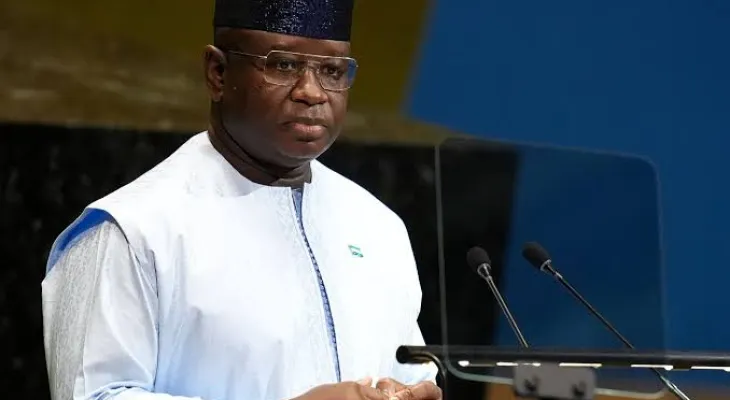
Debate Grows as Minister Defends President Bio’s Controversial Remark
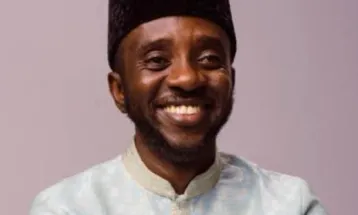
Sierra Leone’s Minister of Information and Civic Education, Chernor Bah, has responded to public backlash over a viral video in which President Julius Maada Bio made a controversial comment directed at supporters of the opposition All Peoples Congress (APC).
The statement, delivered during the launch of the Sierra Leone People’s Party (SLPP) district office in Mattru Jong on April 5, quickly sparked criticism from opposition leaders, civil society groups, and legal experts. Many argued that the remark could be interpreted as a threat and questioned its alignment with the President’s constitutional duty as a unifying national figure.
In response, Bah dismissed the outrage, explaining that the President’s words were rooted in cultural expression rather than literal intent. According to him, the phrase reflects a traditional Mende idiom often used in everyday speech, particularly when calling out dishonesty, without any real wish for harm.
He emphasized that such expressions are part of local language nuances and accused critics of deliberately misinterpreting the statement for political reasons. Bah also referenced similar sentiments shared by the Presidential Press Secretary, suggesting that the controversy was being amplified unnecessarily.
The explanation aligns with earlier comments from State House Communications Director Myk Berewa, who also described the President’s statement as metaphorical within the Mende language context.
However, the clarification has done little to calm critics. Among those pushing back is Sylvia Olayinka Blyden, who argued that even metaphorical or culturally rooted statements can carry serious implications when made by a national leader. She expressed concern over what she described as a growing pattern of hostile rhetoric toward opposition supporters.
The situation gained further attention after AYV Media, which initially broadcast the clip, removed the video from its platforms. The outlet later acknowledged that its translation from Mende to English may not have fully captured the intended meaning, noting that cultural and linguistic context is critical in such interpretations.
Despite this, the lack of a revised translation has left many questions unanswered, keeping the debate active across political and public spaces.
Comment / Reply From
You May Also Like


Recent News


Popular Posts